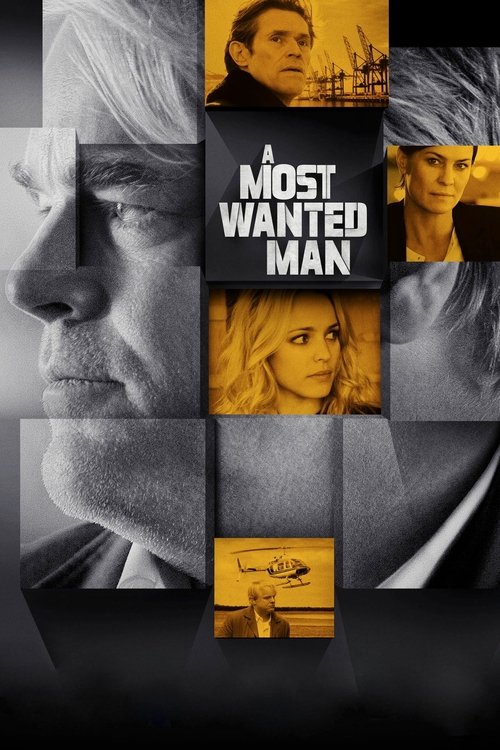
A Most Wanted Man
A Chechen Muslim illegally immigrates to Hamburg and becomes a person of interest for a covert government team tracking the movements of potential terrorists.
Despite a respectable budget of $15.0M, A Most Wanted Man became a financial success, earning $31.6M worldwide—a 110% return.
3 wins & 6 nominations


Plot Structure
Story beats plotted across runtime


Narrative Arc
Emotional journey through the story's key moments
Story Circle
Blueprint 15-beat structure
Arcplot Score Breakdown
Weighted: Precision (70%) + Arc (15%) + Theme (15%)
A Most Wanted Man (2014) showcases precise narrative architecture, characteristic of Anton Corbijn's storytelling approach. This structural analysis examines how the film's 15-point plot structure maps to proven narrative frameworks across 2 hours and 1 minutes. With an Arcplot score of 6.5, the film balances conventional beats with creative variation.
Characters
Cast & narrative archetypes

Günther Bachmann
Issa Karpov
Annabel Richter
Tommy Brue
Martha Sullivan
Dr. Faisal Abdullah
Dieter Mohr
Irna Frey
Main Cast & Characters
Günther Bachmann
Played by Philip Seymour Hoffman
Head of a covert German intelligence unit tracking terrorists in Hamburg. Weary, cynical, but deeply committed to protecting innocents.
Issa Karpov
Played by Grigoriy Dobrygin
A half-Chechen, half-Russian political refugee who illegally enters Hamburg seeking asylum and his father's fortune.
Annabel Richter
Played by Rachel McAdams
An idealistic human rights lawyer who represents Issa and believes in his innocence despite intelligence suspicions.
Tommy Brue
Played by Willem Dafoe
A British banker managing the private bank holding Issa's father's illegal fortune. Torn between duty and morality.
Martha Sullivan
Played by Robin Wright
A CIA agent working in Hamburg who pressures Bachmann's team for results and represents American intelligence interests.
Dr. Faisal Abdullah
Played by Homayoun Ershadi
A respected Muslim philanthropist and scholar suspected of funneling money to terrorist organizations.
Dieter Mohr
Played by Rainer Bock
Bachmann's superior in German intelligence who supports his unconventional methods despite political pressure.
Irna Frey
Played by Nina Hoss
A member of Bachmann's intelligence team, loyal and competent in surveillance operations.
Structural Analysis
The Status Quo at 1 minutes (1% through the runtime) establishes Issa Karpov emerges from beneath a cargo ship in the Hamburg harbor, a tortured refugee smuggling himself into Germany. His desperate, hunted existence establishes the shadow world of espionage and human trafficking that defines this story.. The analysis reveals that this early placement immediately immerses viewers in the story world.
The inciting incident occurs at 15 minutes when Bachmann learns that Issa Karpov has surfaced in Hamburg carrying a letter that could give him access to millions in a local bank. This illegal immigrant becomes the key to a larger operation Bachmann has been building against suspected terrorist financier Dr. Abdullah.. At 12% through the film, this Disruption aligns precisely with traditional story structure. This beat shifts the emotional landscape, launching the protagonist into the central conflict.
The First Threshold at 30 minutes marks the transition into Act II, occurring at 25% of the runtime. This illustrates the protagonist's commitment to Bachmann commits to using Issa as bait to catch Dr. Abdullah. He actively chooses to manipulate this vulnerable refugee and everyone around him, crossing a moral line. He promises Annabel he will protect Issa if she cooperates, a promise he may not be able to keep., moving from reaction to action.
At 61 minutes, the Midpoint arrives at 50% of the runtime—precisely centered, creating perfect narrative symmetry. Of particular interest, this crucial beat Issa agrees to donate his entire inheritance to Dr. Abdullah's charity. Bachmann's plan is working—he has successfully manipulated everyone into position. This false victory shows the operation coming together perfectly, but Bachmann has built his success on the trust of people he is betraying., fundamentally raising what's at risk. The emotional intensity shifts, dividing the narrative into clear before-and-after phases.
The Collapse moment at 91 minutes (75% through) represents the emotional nadir. Here, The operation reaches its climax as Abdullah accepts the money, providing the evidence Bachmann needs. But immediately after, the CIA and German forces move in against Bachmann's explicit wishes. Abdullah, Issa, and Annabel are all seized. Bachmann realizes he has been outmaneuvered—the Americans never intended to let him run his operation., shows the protagonist at their lowest point. This beat's placement in the final quarter sets up the climactic reversal.
The Second Threshold at 97 minutes initiates the final act resolution at 80% of the runtime. Bachmann realizes the horrible truth: he was the little fish all along. The CIA used him just as he used Issa. There is no synthesis, no redemption—only the recognition that the system he served never intended to play by his rules. He has been complicit in the very injustice he thought he was preventing., demonstrating the transformation achieved throughout the journey.
Emotional Journey
A Most Wanted Man's emotional architecture traces a deliberate progression across 15 carefully calibrated beats.
Narrative Framework
This structural analysis employs structural analysis methodology used to understand storytelling architecture. By mapping A Most Wanted Man against these established plot points, we can identify how Anton Corbijn utilizes or subverts traditional narrative conventions. The plot point approach reveals not only adherence to structural principles but also creative choices that distinguish A Most Wanted Man within the thriller genre.
Anton Corbijn's Structural Approach
Among the 3 Anton Corbijn films analyzed on Arcplot, the average structural score is 6.6, demonstrating varied approaches to story architecture. A Most Wanted Man takes a more unconventional approach compared to the director's typical style. For comparative analysis, explore the complete Anton Corbijn filmography.
Comparative Analysis
Additional thriller films include The Warriors, Thunderball and Rustom. For more Anton Corbijn analyses, see The American, Control.
Plot Points by Act
Act I
SetupStatus Quo
Issa Karpov emerges from beneath a cargo ship in the Hamburg harbor, a tortured refugee smuggling himself into Germany. His desperate, hunted existence establishes the shadow world of espionage and human trafficking that defines this story.
Theme
Günther Bachmann tells his team that to catch the big fish, you must be patient and let the little ones swim. This establishes the theme: the moral cost of using vulnerable people as pawns in the intelligence game.
Worldbuilding
The world of post-9/11 Hamburg intelligence is established. We meet Bachmann's covert team operating outside official channels, the Muslim community under surveillance, and the competing German and American agencies. Issa hides in the immigrant community while multiple intelligence services become aware of his presence.
Disruption
Bachmann learns that Issa Karpov has surfaced in Hamburg carrying a letter that could give him access to millions in a local bank. This illegal immigrant becomes the key to a larger operation Bachmann has been building against suspected terrorist financier Dr. Abdullah.
Resistance
Bachmann debates how to handle Issa. He must protect the refugee from German authorities who want to arrest him and CIA who want to rendition him. Bachmann recruits lawyer Annabel Richter as his unwitting asset, using her genuine desire to help Issa. He negotiates with banker Tommy Brue to verify Issa's inheritance claim.
Act II
ConfrontationFirst Threshold
Bachmann commits to using Issa as bait to catch Dr. Abdullah. He actively chooses to manipulate this vulnerable refugee and everyone around him, crossing a moral line. He promises Annabel he will protect Issa if she cooperates, a promise he may not be able to keep.
Mirror World
Annabel Richter becomes Bachmann's conscience in the story. Her genuine compassion for Issa and belief in human rights represents the moral path Bachmann has abandoned. Their developing relationship shows what Bachmann has sacrificed for his work—she embodies the idealism he has lost.
Premise
Bachmann orchestrates an elaborate intelligence operation. Issa claims his inheritance from Tommy Brue. Bachmann maneuvers to have Issa donate the money to Abdullah's Islamic charity, creating evidence of terrorist financing. The cat-and-mouse game intensifies as Bachmann manages competing interests from German intelligence and the CIA's Martha Sullivan.
Midpoint
Issa agrees to donate his entire inheritance to Dr. Abdullah's charity. Bachmann's plan is working—he has successfully manipulated everyone into position. This false victory shows the operation coming together perfectly, but Bachmann has built his success on the trust of people he is betraying.
Opposition
Pressure mounts as the operation nears completion. The CIA grows impatient and threatens to intervene. German authorities want immediate arrests. Bachmann struggles to maintain control while his superiors question his methods. Annabel grows suspicious of Bachmann's true intentions. Tommy Brue processes the money transfer under increasing scrutiny.
Collapse
The operation reaches its climax as Abdullah accepts the money, providing the evidence Bachmann needs. But immediately after, the CIA and German forces move in against Bachmann's explicit wishes. Abdullah, Issa, and Annabel are all seized. Bachmann realizes he has been outmaneuvered—the Americans never intended to let him run his operation.
Crisis
Bachmann watches helplessly as his carefully constructed operation is hijacked. The people he promised to protect are taken away—Issa for rendition, Abdullah arrested. Everything Bachmann built collapses. He confronts the betrayal by his own government and the Americans he thought were partners.
Act III
ResolutionSecond Threshold
Bachmann realizes the horrible truth: he was the little fish all along. The CIA used him just as he used Issa. There is no synthesis, no redemption—only the recognition that the system he served never intended to play by his rules. He has been complicit in the very injustice he thought he was preventing.
Synthesis
Bachmann confronts Martha Sullivan, demanding to know why. She offers no satisfying explanation—this is simply how the game is played. Bachmann wanders the empty streets of Hamburg, the weight of his moral compromises crushing him. There is no victory, no resolution, only the bitter realization of what he has become.
Transformation
Bachmann stands alone on the Hamburg streets, defeated. His final anguished cry—"Fuck!"—echoes into the night. The man who believed he could use the system for good has been destroyed by it. Unlike the opening image of Issa emerging from darkness with hope, Bachmann ends consumed by the darkness he thought he could control.