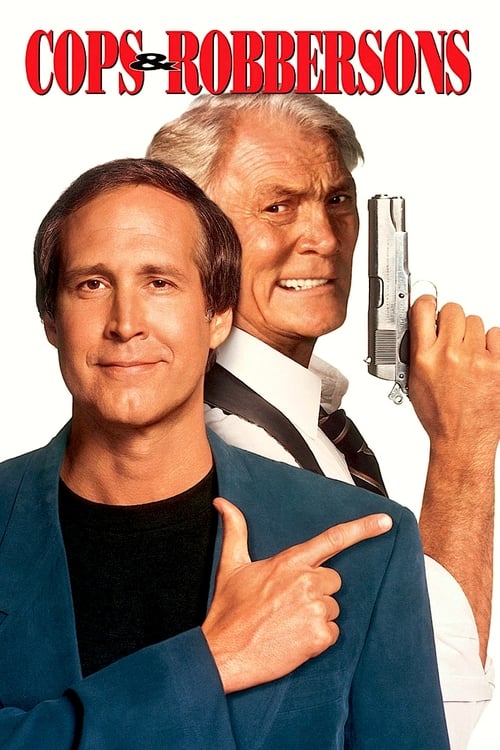
Cops & Robbersons
When the police discover that a mob hitman has moved in next door to the Robbersons, they set up a stakeout in the Robbersons' home. Hard-nosed, tough-as-nails Jake Stone and his young partner Tony Moore are assigned to the stakeout, but now it is a question of whether Jake can last long enough to capture the bad guys. The Robbersons want to help, and by doing so, drive Jake crazy.
The film underperformed commercially against its moderate budget of $20.0M, earning $11.4M globally (-43% loss). While initial box office returns were modest, the film has gained appreciation for its bold vision within the comedy genre.


Plot Structure
Story beats plotted across runtime


Narrative Arc
Emotional journey through the story's key moments
Story Circle
Blueprint 15-beat structure
Arcplot Score Breakdown
Weighted: Precision (70%) + Arc (15%) + Theme (15%)
Cops & Robbersons (1994) demonstrates strategically placed plot construction, characteristic of Michael Ritchie's storytelling approach. This structural analysis examines how the film's 15-point plot structure maps to proven narrative frameworks across 1 hour and 33 minutes. With an Arcplot score of 6.7, the film balances conventional beats with creative variation.
Characters
Cast & narrative archetypes

Jake Stone
Norman Robberson
Helen Robberson
Tony Moore
Osborn
Cindy Robberson
Main Cast & Characters
Jake Stone
Played by Chevy Chase
A hardened NYPD detective who must conduct surveillance from a suburban family's home while tracking dangerous criminals.
Norman Robberson
Played by Jack Palance
An enthusiastic, cop-obsessed accountant who turns the stakeout into an opportunity to live out his police fantasies.
Helen Robberson
Played by Dianne Wiest
Norman's patient wife who tries to maintain normalcy while her home is occupied by police conducting surveillance.
Tony Moore
Played by David Barry Gray
Jake Stone's detective partner who assists with the stakeout operation from the Robberson home.
Osborn
Played by Robert Davi
The dangerous criminal mastermind that Jake Stone is surveilling, living across the street from the Robbersons.
Cindy Robberson
Played by Fay Masterson
The teenage daughter of the Robberson family who becomes romantically interested in the younger detective.
Structural Analysis
The Status Quo at 1 minutes (1% through the runtime) establishes Norman Robberson lives a mundane suburban life as an accountant with his wife Helen and three kids, content in his safe, predictable routine but secretly craving excitement and adventure like his TV cop heroes.. Notably, this early placement immediately immerses viewers in the story world.
The inciting incident occurs at 12 minutes when Hardened detective Jake Stone and his partner Tony Moore arrive to set up a stakeout in the Robberson home to surveil dangerous criminal Osborn across the street. Norman is thrilled by the prospect of real police work happening in his house.. At 13% through the film, this Disruption is delayed, allowing extended setup of the story world. This beat shifts the emotional landscape, launching the protagonist into the central conflict.
The First Threshold at 23 minutes marks the transition into Act II, occurring at 25% of the runtime. This shows the protagonist's commitment to Norman decides to fully commit to "helping" Jake with the investigation, inserting himself into the stakeout as an unofficial partner despite Jake's objections. Norman crosses from passive observer to active participant in what he believes is real detective work., moving from reaction to action.
At 47 minutes, the Midpoint arrives at 51% of the runtime—precisely centered, creating perfect narrative symmetry. Structural examination shows that this crucial beat Norman's interference causes a critical mistake in the stakeout, nearly blowing Jake's cover and allowing Osborn to become suspicious. The stakes raise as Norman realizes this isn't a game, and Jake angrily confronts him about treating real police work like entertainment while his family suffers from his neglect., fundamentally raising what's at risk. The emotional intensity shifts, dividing the narrative into clear before-and-after phases.
The Collapse moment at 70 minutes (76% through) represents the emotional nadir. Here, Norman's meddling leads to disaster: the stakeout is completely compromised, Osborn discovers the surveillance, and the criminals take the Robberson family hostage. Norman's family is in mortal danger because of his selfish fantasy, and he must face that his hero delusions have destroyed what actually mattered., shows the protagonist at their lowest point. This beat's placement in the final quarter sets up the climactic reversal.
The Second Threshold at 74 minutes initiates the final act resolution at 80% of the runtime. Norman realizes that being a real hero means protecting his family using his actual skills and knowledge of his own home, not imitating cop shows. He combines his knowledge of the house with Jake's guidance to formulate a plan to save his family, finally working as a true partner., demonstrating the transformation achieved throughout the journey.
Emotional Journey
Cops & Robbersons's emotional architecture traces a deliberate progression across 15 carefully calibrated beats.
Narrative Framework
This structural analysis employs systematic plot point analysis that identifies crucial turning points. By mapping Cops & Robbersons against these established plot points, we can identify how Michael Ritchie utilizes or subverts traditional narrative conventions. The plot point approach reveals not only adherence to structural principles but also creative choices that distinguish Cops & Robbersons within the comedy genre.
Michael Ritchie's Structural Approach
Among the 9 Michael Ritchie films analyzed on Arcplot, the average structural score is 7.4, reflecting strong command of classical structure. Cops & Robbersons takes a more unconventional approach compared to the director's typical style. For comparative analysis, explore the complete Michael Ritchie filmography.
Comparative Analysis
Additional comedy films include The Bad Guys, Ella Enchanted and The Evening Star. For more Michael Ritchie analyses, see The Bad News Bears, A Simple Wish and Diggstown.
Plot Points by Act
Act I
SetupStatus Quo
Norman Robberson lives a mundane suburban life as an accountant with his wife Helen and three kids, content in his safe, predictable routine but secretly craving excitement and adventure like his TV cop heroes.
Theme
Helen tells Norman that real life isn't like the movies and that being a good father and husband is what really matters, establishing the theme of fantasy versus reality and finding heroism in everyday life.
Worldbuilding
We see the Robberson family dynamics: Norman's obsession with cop shows, Helen's frustration with his detachment, teenage daughter Cindy's rebellious phase, son Kevin's aloofness, and young Tony's hero worship of his dad. The family is disconnected and Norman is checked out, living vicariously through television.
Disruption
Hardened detective Jake Stone and his partner Tony Moore arrive to set up a stakeout in the Robberson home to surveil dangerous criminal Osborn across the street. Norman is thrilled by the prospect of real police work happening in his house.
Resistance
Norman eagerly tries to help Jake with the stakeout despite being told to stay out of it. Jake is annoyed by Norman's enthusiasm and interference. The family debates whether having cops in their home is a good idea, with Helen worried about danger and Norman insisting this is a once-in-a-lifetime opportunity.
Act II
ConfrontationFirst Threshold
Norman decides to fully commit to "helping" Jake with the investigation, inserting himself into the stakeout as an unofficial partner despite Jake's objections. Norman crosses from passive observer to active participant in what he believes is real detective work.
Mirror World
Jake begins spending time with the Robberson family, particularly bonding with young Tony and observing Norman's family life. This relationship will teach both men what they're missing: Jake needs family connection, Norman needs to be present with his actual family.
Premise
Norman bumbles through playing detective, getting in Jake's way while neglecting his family. Comic misadventures ensue as Norman tries surveillance, tails suspects, and imitates cop show tactics. Meanwhile, Jake slowly warms to the family, teaching Tony about police work and connecting with Helen and the kids in ways Norman doesn't.
Midpoint
Norman's interference causes a critical mistake in the stakeout, nearly blowing Jake's cover and allowing Osborn to become suspicious. The stakes raise as Norman realizes this isn't a game, and Jake angrily confronts him about treating real police work like entertainment while his family suffers from his neglect.
Opposition
The situation deteriorates: Osborn grows more dangerous and suspicious, Helen grows frustrated with Norman's obsession, Jake becomes increasingly protective of the family Norman is neglecting, and Norman's fantasy of being a hero crumbles as he realizes he's failing as both detective and father.
Collapse
Norman's meddling leads to disaster: the stakeout is completely compromised, Osborn discovers the surveillance, and the criminals take the Robberson family hostage. Norman's family is in mortal danger because of his selfish fantasy, and he must face that his hero delusions have destroyed what actually mattered.
Crisis
Norman sits helpless as his family is held at gunpoint, realizing he's been the worst kind of fool. He reflects on how he abandoned his real responsibilities for a fantasy, and how Jake became more of a father to his kids than he was. He must find real courage, not the TV version.
Act III
ResolutionSecond Threshold
Norman realizes that being a real hero means protecting his family using his actual skills and knowledge of his own home, not imitating cop shows. He combines his knowledge of the house with Jake's guidance to formulate a plan to save his family, finally working as a true partner.
Synthesis
Norman and Jake work together to outsmart Osborn and his gang. Norman uses his knowledge of his home, his family, and ordinary dad skills to help rescue his wife and kids. He finally shows up as a real father and husband, taking genuine risks to protect what matters while Jake handles the actual police work.
Transformation
Norman sits with his family, TV off, fully present and engaged with his wife and children. He's learned that real heroism is being there for the people you love, not living in fantasies. The family is reconnected, and Norman has become the father and husband they needed.