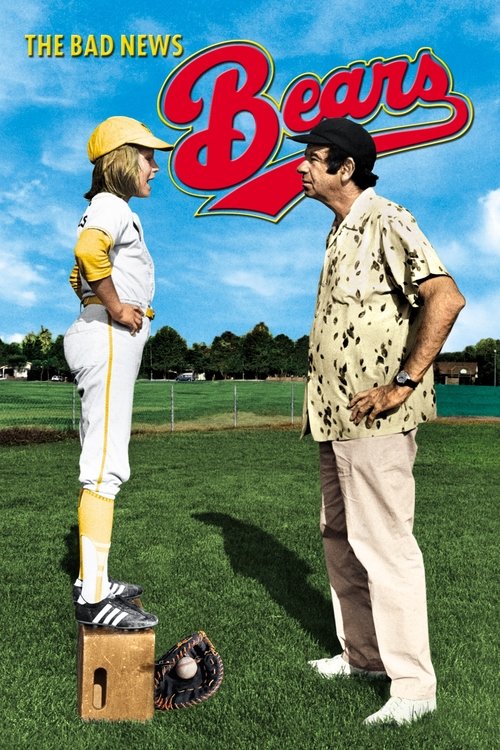
The Bad News Bears
An aging, down-on-his-luck ex-minor leaguer coaches a team of misfits in an ultra-competitive California little league.
Despite its modest budget of $9.0M, The Bad News Bears became a box office success, earning $42.3M worldwide—a 371% return. The film's bold vision found its audience, proving that strong storytelling can transcend budget limitations.
Nominated for 1 BAFTA Award1 win & 2 nominations


Plot Structure
Story beats plotted across runtime


Narrative Arc
Emotional journey through the story's key moments
Story Circle
Blueprint 15-beat structure
Arcplot Score Breakdown
Weighted: Precision (70%) + Arc (15%) + Theme (15%)
The Bad News Bears (1976) showcases strategically placed narrative design, characteristic of Michael Ritchie's storytelling approach. This structural analysis examines how the film's 15-point plot structure maps to proven narrative frameworks across 1 hour and 42 minutes. With an Arcplot score of 7.4, the film balances conventional beats with creative variation.
Characters
Cast & narrative archetypes

Morris Buttermaker
Amanda Whurlitzer
Kelly Leak
Roy Turner
Councilman Whitewood
Engelberg
Tanner Boyle
Ahmad Abdul-Rahim
Main Cast & Characters
Morris Buttermaker
Played by Walter Matthau
A washed-up minor league baseball player turned pool cleaner who reluctantly coaches a ragtag Little League team. Alcoholic and cynical but ultimately caring.
Amanda Whurlitzer
Played by Tatum O'Neal
A talented 11-year-old pitcher and Buttermaker's former girlfriend's daughter. Confident, skilled, and becomes the team's ace.
Kelly Leak
Played by Jackie Earle Haley
A rebellious teenage motorcycle-riding troublemaker who becomes the team's star player. Cool, independent, and naturally athletic.
Roy Turner
Played by Vic Morrow
The overly competitive, win-at-all-costs coach of the Yankees. Represents everything wrong with youth sports through his aggressive tactics.
Councilman Whitewood
Played by Ben Piazza
A pompous local politician who organizes the league and initially wants to disband the Bears. Represents establishment authority.
Engelberg
Played by Gary Lee Cavagnaro
The overweight catcher with a good arm but poor athleticism. Enthusiastic despite constant ridicule about his weight.
Tanner Boyle
Played by Chris Barnes
A foul-mouthed, hot-tempered short kid who compensates for his size with aggression. The team's scrappy fighter.
Ahmad Abdul-Rahim
Played by Erin Blunt
One of the team's few Black players who faces racism from opponents. Dignified and stands up for himself.
Structural Analysis
The Status Quo at 1 minutes (1% through the runtime) establishes Buttermaker is cleaning a pool, drinking beer - a washed-up former minor leaguer living a directionless life as a pool cleaner in Southern California.. Notably, this early placement immediately immerses viewers in the story world.
The inciting incident occurs at 13 minutes when The Bears play their first game and lose 26-0 to the Yankees in a humiliating defeat. The kids are traumatized and parents are furious at the spectacle.. At 12% through the film, this Disruption aligns precisely with traditional story structure. This beat shifts the emotional landscape, launching the protagonist into the central conflict.
The First Threshold at 26 minutes marks the transition into Act II, occurring at 26% of the runtime. This demonstrates the protagonist's commitment to Buttermaker makes the active choice to really coach the team. He recruits Amanda Whurlitzer, his ex-girlfriend's daughter who is an excellent pitcher, deciding to bend the rules to give the kids a fighting chance., moving from reaction to action.
At 52 minutes, the Midpoint arrives at 51% of the runtime—precisely centered, creating perfect narrative symmetry. Of particular interest, this crucial beat The Bears make it to the championship game against the Yankees (false victory). They've achieved success, but Buttermaker is becoming obsessed with winning, mirroring the win-at-all-costs coach Roy Turner he despises., fundamentally raising what's at risk. The emotional intensity shifts, dividing the narrative into clear before-and-after phases.
The Collapse moment at 77 minutes (75% through) represents the emotional nadir. Here, During the championship game, Buttermaker has become exactly what he fought against - he won't let the bench players play. The team's spirit dies. His relationship with Amanda breaks down when he cruelly dismisses her concerns., reveals the protagonist at their lowest point. This beat's placement in the final quarter sets up the climactic reversal.
The Second Threshold at 83 minutes initiates the final act resolution at 81% of the runtime. Buttermaker has his realization: he pulls his stars and puts in all the bench players, even though they're only down by one run in the championship. He chooses the kids' dignity over victory., demonstrating the transformation achieved throughout the journey.
Emotional Journey
The Bad News Bears's emotional architecture traces a deliberate progression across 15 carefully calibrated beats.
Narrative Framework
This structural analysis employs proven narrative structure principles that track dramatic progression. By mapping The Bad News Bears against these established plot points, we can identify how Michael Ritchie utilizes or subverts traditional narrative conventions. The plot point approach reveals not only adherence to structural principles but also creative choices that distinguish The Bad News Bears within the family genre.
Michael Ritchie's Structural Approach
Among the 9 Michael Ritchie films analyzed on Arcplot, the average structural score is 7.4, reflecting strong command of classical structure. The Bad News Bears represents one of the director's most structurally precise works. For comparative analysis, explore the complete Michael Ritchie filmography.
Comparative Analysis
Additional family films include The Black Stallion, The Bad Guys and Ella Enchanted. For more Michael Ritchie analyses, see A Simple Wish, Diggstown and The Survivors.
Plot Points by Act
Act I
SetupStatus Quo
Buttermaker is cleaning a pool, drinking beer - a washed-up former minor leaguer living a directionless life as a pool cleaner in Southern California.
Theme
City councilman Whitewood tells Buttermaker the league needs to let 'all the kids' play, not just the good ones. This establishes the theme of inclusion vs. winning at all costs.
Worldbuilding
Introduction to the Bears - a ragtag group of misfits including overweight kids, uncoordinated kids, and social outcasts. Their first practice reveals they have no talent whatsoever. Buttermaker is coaching only for the money.
Disruption
The Bears play their first game and lose 26-0 to the Yankees in a humiliating defeat. The kids are traumatized and parents are furious at the spectacle.
Resistance
Buttermaker debates whether to continue. The kids want to quit. He tries half-hearted encouragement but remains cynical. He begins to see the kids' pain and considers actually trying to help them.
Act II
ConfrontationFirst Threshold
Buttermaker makes the active choice to really coach the team. He recruits Amanda Whurlitzer, his ex-girlfriend's daughter who is an excellent pitcher, deciding to bend the rules to give the kids a fighting chance.
Mirror World
Amanda joins the team - a tough, skilled girl who represents both Buttermaker's past and the possibility of redemption. Their relationship becomes the emotional B-story that carries the theme.
Premise
The fun and games: Buttermaker recruits Kelly Leak, a motorcycle-riding delinquent who can actually play. The Bears start winning games. Montage of practices and victories. The kids gain confidence and the team bonds.
Midpoint
The Bears make it to the championship game against the Yankees (false victory). They've achieved success, but Buttermaker is becoming obsessed with winning, mirroring the win-at-all-costs coach Roy Turner he despises.
Opposition
As the championship approaches, Buttermaker becomes increasingly ruthless. He benches weaker players, focuses only on stars, drinks more, and treats kids like pawns. The original Bears feel betrayed. Amanda and others question his methods.
Collapse
During the championship game, Buttermaker has become exactly what he fought against - he won't let the bench players play. The team's spirit dies. His relationship with Amanda breaks down when he cruelly dismisses her concerns.
Crisis
Buttermaker watches the kids' faces and sees their pain. He realizes he's lost sight of why they're playing. Dark moment of self-recognition that winning has corrupted him just like it corrupted Roy Turner.
Act III
ResolutionSecond Threshold
Buttermaker has his realization: he pulls his stars and puts in all the bench players, even though they're only down by one run in the championship. He chooses the kids' dignity over victory.
Synthesis
The finale: The Bears lose the championship 7-6, but they lose with dignity. Every kid got to play. They celebrate their second-place finish. Turner's team wins but learns nothing. The Bears hand out their own trophy - to themselves.
Transformation
The team celebrates together, drinking Buttermaker's beer (non-alcoholic for kids). The final image mirrors the opening - Buttermaker drinking beer - but now he's surrounded by kids who respect him, and he's at peace with himself. He chose people over winning.