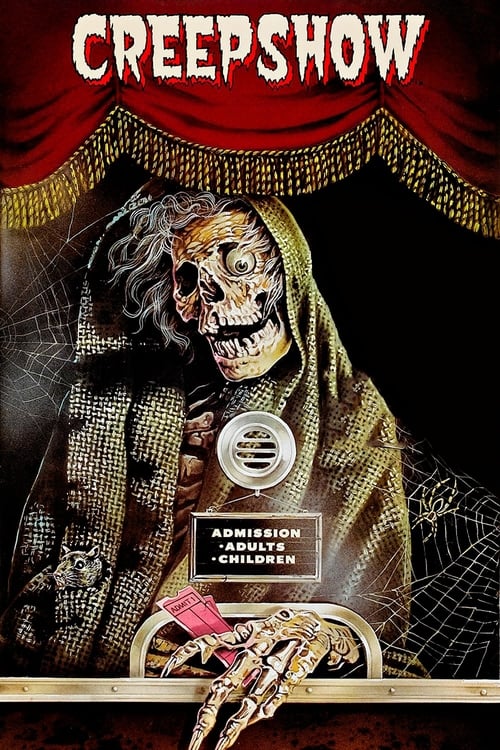
Creepshow
Five grisly tales from a 1950s-style comic, including a murdered father rising from beyond, a bizarre meteor, a vengeful husband, a mysterious crate's occupant, and a plague of cockroaches.
Despite its limited budget of $8.0M, Creepshow became a financial success, earning $21.0M worldwide—a 163% return.


Plot Structure
Story beats plotted across runtime


Narrative Arc
Emotional journey through the story's key moments
Story Circle
Blueprint 15-beat structure
Arcplot Score Breakdown
Weighted: Precision (70%) + Arc (15%) + Theme (15%)
Creepshow (1982) exhibits meticulously timed dramatic framework, characteristic of George A. Romero's storytelling approach. This structural analysis examines how the film's 15-point plot structure maps to proven narrative frameworks across 2 hours. With an Arcplot score of 5.6, the film takes an unconventional approach to traditional narrative frameworks.
Characters
Cast & narrative archetypes

Henry Northrup
Nathan Grantham

Jordy Verrill

Wilma Northrup

Richard Vickers

Harry Wentworth
Upson Pratt
Dexter Stanley

Billie Stanley
Main Cast & Characters
Henry Northrup
Played by Ed Harris
Jealous husband in "Father's Day" who murdered his wife's tyrannical father Nathan Grantham for his fortune.
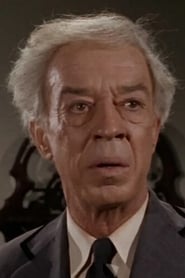
Nathan Grantham
Played by Jon Lormer
Cruel patriarch in "Father's Day" who returns from the grave seeking his Father's Day cake after being murdered.
Jordy Verrill
Played by Stephen King
Simple-minded farmer in "The Lonesome Death of Jordy Verrill" who touches a meteor and becomes consumed by alien vegetation.
Wilma Northrup
Played by Viveca Lindfors
Bitter aunt in "Father's Day" still haunted by guilt over her father's murder seven years prior.
Richard Vickers
Played by Leslie Nielsen
Sadistic husband in "Something to Tide You Over" who buries his wife and her lover up to their necks on the beach.
Harry Wentworth
Played by Ted Danson
Lover buried alive by Richard Vickers in "Something to Tide You Over" who returns as a waterlogged zombie for revenge.
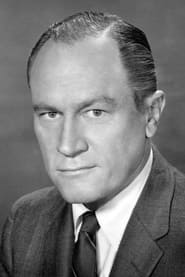
Upson Pratt
Played by E.G. Marshall
Germophobic, ruthless businessman in "They're Creeping Up on You" who is invaded by cockroaches in his sterile apartment.
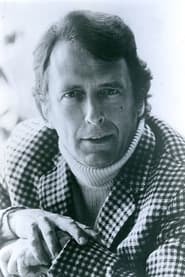
Dexter Stanley
Played by Fritz Weaver
Henpecked professor in "The Crate" who discovers an ancient crate containing a savage creature beneath the university stairs.
Billie Stanley
Played by Adrienne Barbeau
Overbearing, abusive wife of Professor Stanley in "The Crate" who becomes the creature's final victim.
Structural Analysis
The Status Quo at 1 minutes (1% through the runtime) establishes A young boy Billy reads his horror comic "Creepshow" in his bedroom, immersed in the macabre tales that delight him, establishing his ordinary world of escapist horror fantasy before his father's intrusion.. Structural examination shows that this early placement immediately immerses viewers in the story world.
The inciting incident occurs at 6 minutes when The Creep emerges from the comic pages in the trash, beginning the first tale "Father's Day" - launching the anthology's exploration of comeuppance and revenge, disrupting the notion of safe, ordered reality that Stan represents.. At 5% through the film, this Disruption arrives earlier than typical, accelerating the narrative momentum. This beat shifts the emotional landscape, launching the protagonist into the central conflict.
The First Threshold at 28 minutes marks the transition into Act II, occurring at 24% of the runtime. This demonstrates the protagonist's commitment to The third tale "Something to Tide You Over" begins with Richard systematically executing his revenge plot against his wife and her lover, crossing into the film's darkest territory where the sadistic torturer becomes the tormented, fully committing to exploring inescapable cosmic justice., moving from reaction to action.
At 63 minutes, the Midpoint arrives at 53% of the runtime—precisely centered, creating perfect narrative symmetry. Significantly, this crucial beat In "The Crate," Henry discovers the perfect solution to his problem - the ancient monster can eliminate his abusive wife Billie, representing a false victory as he believes he's found liberation through the creature, raising stakes as murder becomes justified as freedom., fundamentally raising what's at risk. The emotional intensity shifts, dividing the narrative into clear before-and-after phases.
The Collapse moment at 92 minutes (76% through) represents the emotional nadir. Here, Upson Pratt, the germophobic corporate villain in his sterile penthouse, is overwhelmed by thousands of cockroaches that burst from his body in the film's most visceral death, representing the complete collapse of control and the triumph of chaos over order., demonstrates the protagonist at their lowest point. This beat's placement in the final quarter sets up the climactic reversal.
The Second Threshold at 99 minutes initiates the final act resolution at 82% of the runtime. The film returns to Billy in his bedroom with the voodoo doll from the comic's mail-order ad, synthesizing the anthology's lesson: the oppressed child can fight back using the very "horror crap" his father condemned, transforming from victim to empowered protagonist., demonstrating the transformation achieved throughout the journey.
Emotional Journey
Creepshow's emotional architecture traces a deliberate progression across 15 carefully calibrated beats.
Narrative Framework
This structural analysis employs structural analysis methodology used to understand storytelling architecture. By mapping Creepshow against these established plot points, we can identify how George A. Romero utilizes or subverts traditional narrative conventions. The plot point approach reveals not only adherence to structural principles but also creative choices that distinguish Creepshow within the horror genre.
George A. Romero's Structural Approach
Among the 8 George A. Romero films analyzed on Arcplot, the average structural score is 6.7, demonstrating varied approaches to story architecture. Creepshow takes a more unconventional approach compared to the director's typical style. For comparative analysis, explore the complete George A. Romero filmography.
Comparative Analysis
Additional horror films include Thinner, A Nightmare on Elm Street and Mary Reilly. For more George A. Romero analyses, see Dawn of the Dead, Day of the Dead and Night of the Living Dead.
Plot Points by Act
Act I
SetupStatus Quo
A young boy Billy reads his horror comic "Creepshow" in his bedroom, immersed in the macabre tales that delight him, establishing his ordinary world of escapist horror fantasy before his father's intrusion.
Theme
Billy's father Stan declares the comic book "horror crap" and "garbage" while throwing it away, embodying the central theme: the conflict between repressive authority that dismisses dark imagination and the cathartic power of horror stories.
Worldbuilding
The framing story establishes the domestic conflict between Billy and his authoritarian father Stan, while the discarded comic comes to life in the garbage, setting up the anthology format where each tale represents revenge fantasies against various forms of tyranny and cruelty.
Disruption
The Creep emerges from the comic pages in the trash, beginning the first tale "Father's Day" - launching the anthology's exploration of comeuppance and revenge, disrupting the notion of safe, ordered reality that Stan represents.
Resistance
The first two tales ("Father's Day" and "The Lonesome Death of Jordy Verrill") establish the anthology's rules: authority figures and bullies face supernatural retribution, the greedy are punished, and the innocent suffer, teaching the audience the moral framework of EC Comics-style justice.
Act II
ConfrontationFirst Threshold
The third tale "Something to Tide You Over" begins with Richard systematically executing his revenge plot against his wife and her lover, crossing into the film's darkest territory where the sadistic torturer becomes the tormented, fully committing to exploring inescapable cosmic justice.
Mirror World
Richard's victims emerge from the ocean as waterlogged zombies seeking revenge, introducing the mirror relationship that defines the anthology: those who inflict cruelty become victims of their own methods, reflecting the comic's moral universe back at the audience.
Premise
The middle tales deliver the promise of the premise - gleeful horror revenge fantasies where "Something to Tide You Over" and "The Crate" showcase the anthology at its most entertaining, blending dark humor with gruesome supernatural justice.
Midpoint
In "The Crate," Henry discovers the perfect solution to his problem - the ancient monster can eliminate his abusive wife Billie, representing a false victory as he believes he's found liberation through the creature, raising stakes as murder becomes justified as freedom.
Opposition
The finale of "The Crate" and the entirety of "They're Creeping Up on You" intensify the horror as the monsters close in - the creature in the crate and the cockroaches represent unstoppable forces of nature and karma overwhelming the antagonists.
Collapse
Upson Pratt, the germophobic corporate villain in his sterile penthouse, is overwhelmed by thousands of cockroaches that burst from his body in the film's most visceral death, representing the complete collapse of control and the triumph of chaos over order.
Crisis
The final tale concludes with Pratt's horrific death, leaving the audience in the dark aftermath of the anthology's most intense horror sequence, processing the complete breakdown of sterile control and rationality before returning to the frame story.
Act III
ResolutionSecond Threshold
The film returns to Billy in his bedroom with the voodoo doll from the comic's mail-order ad, synthesizing the anthology's lesson: the oppressed child can fight back using the very "horror crap" his father condemned, transforming from victim to empowered protagonist.
Synthesis
Billy uses the voodoo doll to torment his father Stan, who suffers mysterious neck pain that grows unbearable, while the Creep watches approvingly - the framing story concludes by enacting the same revenge justice depicted in the five tales, completing the thematic circle.
Transformation
The Creep cackles in triumph as Stan writhes in pain, while Billy smiles knowing his tormentor suffers - the closing image mirrors the opening but transforms Billy from a passive victim into an agent of supernatural justice, vindicating horror's power.