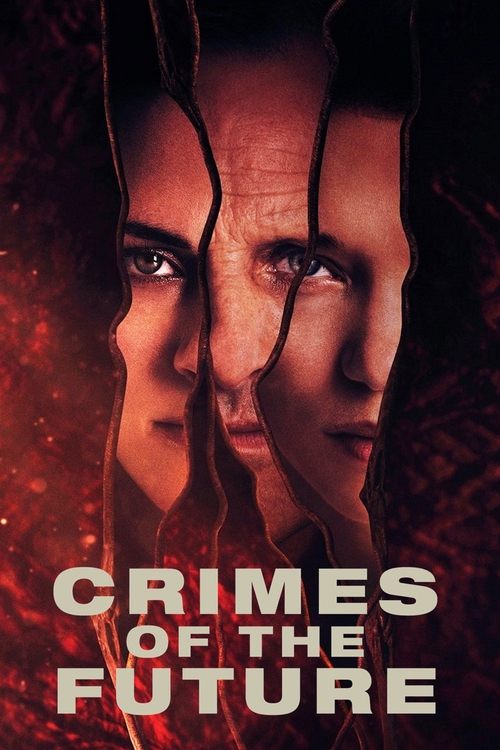
Crimes of the Future
With his partner, a celebrity performance artist publicly showcases the metamorphosis of his organs in avant-garde performances. An investigator from the National Organ Registry obsessively tracks their movements, which is when a mysterious group is revealed... Their mission — to use the artist's notoriety to shed light on the next phase of human evolution.
The film box office disappointment against its mid-range budget of $27.0M, earning $4.6M globally (-83% loss). While initial box office returns were modest, the film has gained appreciation for its innovative storytelling within the science fiction genre.
10 wins & 33 nominations


Plot Structure
Story beats plotted across runtime


Narrative Arc
Emotional journey through the story's key moments
Story Circle
Blueprint 15-beat structure
Arcplot Score Breakdown
Weighted: Precision (70%) + Arc (15%) + Theme (15%)
Crimes of the Future (2022) reveals deliberately positioned narrative architecture, characteristic of David Cronenberg's storytelling approach. This structural analysis examines how the film's 15-point plot structure maps to proven narrative frameworks across 1 hour and 47 minutes. With an Arcplot score of 6.5, the film balances conventional beats with creative variation.
Characters
Cast & narrative archetypes

Saul Tenser
Caprice
Timlin
Wippet
Lang Dotrice
Router
Main Cast & Characters
Saul Tenser
Played by Viggo Mortensen
A performance artist who grows new organs and publicly removes them as art in a dystopian future where pain has vanished.
Caprice
Played by Léa Seydoux
Saul's partner and surgical artist who performs live organ removals, documenting humanity's evolution.
Timlin
Played by Kristen Stewart
An investigator at the National Organ Registry who becomes obsessed with Saul's work and its revolutionary implications.
Wippet
Played by Don McKellar
Timlin's bureaucratic colleague at the National Organ Registry who is suspicious of evolutionary changes.
Lang Dotrice
Played by Scott Speedman
A former performance artist turned radical who seeks to make a political statement about human evolution through his son.
Router
Played by Welket Bungué
An underground plastic surgeon who creates experimental equipment and pushes the boundaries of bodily modification.
Structural Analysis
The Status Quo at 1 minutes (1% through the runtime) establishes A young boy is murdered by his mother for eating a plastic wastebasket, establishing a world where human biology has radically evolved and pain has disappeared.. The analysis reveals that this early placement immediately immerses viewers in the story world.
The inciting incident occurs at 13 minutes when Timlin and Wippet from the National Organ Registry reveal their obsessive interest in Saul's work and hint at a larger conspiracy involving inner beauty pageants and evolutionary resistance groups.. At 12% through the film, this Disruption aligns precisely with traditional story structure. This beat shifts the emotional landscape, launching the protagonist into the central conflict.
The First Threshold at 27 minutes marks the transition into Act II, occurring at 25% of the runtime. This illustrates the protagonist's commitment to Saul agrees to perform an autopsy on Lang Dotrice's murdered son Brecken, crossing from artist into investigator and entering a dangerous conspiracy about human evolution., moving from reaction to action.
At 54 minutes, the Midpoint arrives at 50% of the runtime—precisely centered, creating perfect narrative symmetry. Structural examination shows that this crucial beat Saul reveals to Caprice that he's been recruited as an informant by the government, marking a false defeat as his artistic integrity is compromised and his relationship with Caprice becomes strained., fundamentally raising what's at risk. The emotional intensity shifts, dividing the narrative into clear before-and-after phases.
The Collapse moment at 81 minutes (76% through) represents the emotional nadir. Here, Router is killed, the plastic-eating experiment fails violently, and Saul realizes his informant role has led to death and destruction - his attempt to serve both art and authority collapses., demonstrates the protagonist at their lowest point. This beat's placement in the final quarter sets up the climactic reversal.
The Second Threshold at 86 minutes initiates the final act resolution at 80% of the runtime. Saul discovers he may be developing the ability to digest plastic himself, understanding that he is not documenting evolution but embodying it - he must accept his transformation rather than perform it., demonstrating the transformation achieved throughout the journey.
Emotional Journey
Crimes of the Future's emotional architecture traces a deliberate progression across 15 carefully calibrated beats.
Narrative Framework
This structural analysis employs proven narrative structure principles that track dramatic progression. By mapping Crimes of the Future against these established plot points, we can identify how David Cronenberg utilizes or subverts traditional narrative conventions. The plot point approach reveals not only adherence to structural principles but also creative choices that distinguish Crimes of the Future within the science fiction genre.
David Cronenberg's Structural Approach
Among the 12 David Cronenberg films analyzed on Arcplot, the average structural score is 7.1, reflecting strong command of classical structure. Crimes of the Future takes a more unconventional approach compared to the director's typical style. For comparative analysis, explore the complete David Cronenberg filmography.
Comparative Analysis
Additional science fiction films include The Postman, Mad Max 2 and AVP: Alien vs. Predator. For more David Cronenberg analyses, see The Brood, The Dead Zone and Eastern Promises.
Plot Points by Act
Act I
SetupStatus Quo
A young boy is murdered by his mother for eating a plastic wastebasket, establishing a world where human biology has radically evolved and pain has disappeared.
Theme
Timlin tells Saul "Surgery is the new sex" - introducing the film's central theme that physical transformation and body modification have replaced traditional human intimacy.
Worldbuilding
Introduction to Saul Tenser and Caprice's world: Saul grows new organs which Caprice removes in live performance art shows; they register with the National Organ Registry; the world has adapted to accelerated evolution syndrome.
Disruption
Timlin and Wippet from the National Organ Registry reveal their obsessive interest in Saul's work and hint at a larger conspiracy involving inner beauty pageants and evolutionary resistance groups.
Resistance
Saul and Caprice navigate competing interests: government registrars want to track evolution, the underground wants to accelerate it, and Lang Dotrice offers them a dark commission involving his dead son.
Act II
ConfrontationFirst Threshold
Saul agrees to perform an autopsy on Lang Dotrice's murdered son Brecken, crossing from artist into investigator and entering a dangerous conspiracy about human evolution.
Mirror World
Detective Cope enters the story, representing the law's interest in evolutionary crimes - he becomes Saul's counterpoint, seeking truth through investigation rather than art.
Premise
Saul performs the autopsy-as-art on Brecken's body, discovering the boy had evolved to digest plastic; underground groups vie for control of this evolutionary breakthrough while Saul becomes increasingly compromised.
Midpoint
Saul reveals to Caprice that he's been recruited as an informant by the government, marking a false defeat as his artistic integrity is compromised and his relationship with Caprice becomes strained.
Opposition
Pressure mounts from all sides: the government demands information, the evolutionary activists become more extreme, Caprice questions Saul's loyalties, and Saul's own body betrays him with increasingly strange mutations.
Collapse
Router is killed, the plastic-eating experiment fails violently, and Saul realizes his informant role has led to death and destruction - his attempt to serve both art and authority collapses.
Crisis
Saul withdraws into himself, confronting the possibility that his own body is evolving beyond his control and that his art has become complicit in violence and governmental oppression.
Act III
ResolutionSecond Threshold
Saul discovers he may be developing the ability to digest plastic himself, understanding that he is not documenting evolution but embodying it - he must accept his transformation rather than perform it.
Synthesis
Saul embraces his evolution by attempting to eat the plastic candy bar, choosing to participate in humanity's transformation rather than merely observe or exploit it for art.
Transformation
Saul eats the plastic candy bar with visible emotion and tears - where the opening showed a child murdered for this ability, the closing shows Saul embracing evolution with something like ecstasy or terror.