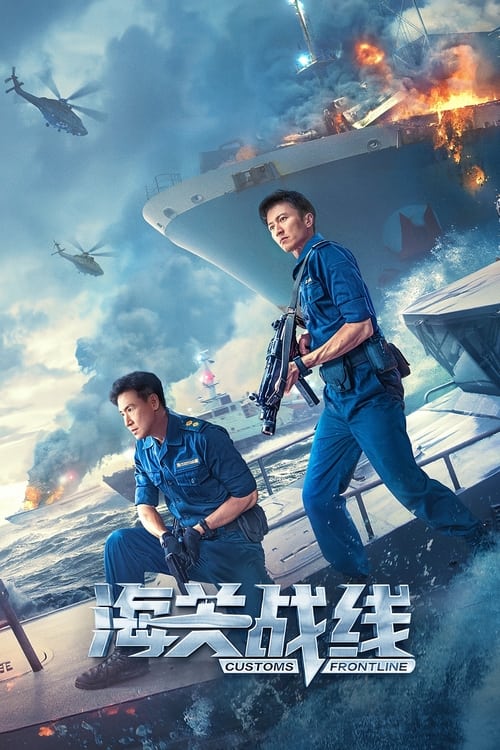
Customs Frontline
Hong Kong Customs and Excise Department officers Chow Ching-lai and Cheung Wan-nam share a close mentor-student relationship. On a case involving seized smuggled arms, Ching-lai is sent to take part in a joint operation with Interpol to capture a reclusive arms dealer. However, Wan-nam makes a drastic decision that further complicates the case.
The film earned $18.3M at the global box office.









Plot Structure
Story beats plotted across runtime


Narrative Arc
Emotional journey through the story's key moments
Story Circle
Blueprint 15-beat structure
Arcplot Score Breakdown
Weighted: Precision (70%) + Arc (15%) + Theme (15%)
Customs Frontline (2024) demonstrates precise dramatic framework, characteristic of Herman Yau's storytelling approach. This structural analysis examines how the film's 15-point plot structure maps to proven narrative frameworks across 1 hour and 55 minutes. With an Arcplot score of 7.1, the film balances conventional beats with creative variation.
Structural Analysis
The Status Quo at 1 minutes (1% through the runtime) establishes Customs officer Cheung Wan-nam leads his dedicated team through routine inspections at Hong Kong's border, showcasing their efficiency and commitment to preventing smuggling operations.. Notably, this early placement immediately immerses viewers in the story world.
The inciting incident occurs at 14 minutes when A massive smuggling operation is uncovered involving high-level corruption, and Cheung's investigation leads to threats against his family, forcing him to confront dangers beyond routine enforcement.. At 12% through the film, this Disruption aligns precisely with traditional story structure. This beat shifts the emotional landscape, launching the protagonist into the central conflict.
The First Threshold at 29 minutes marks the transition into Act II, occurring at 25% of the runtime. This reveals the protagonist's commitment to Cheung makes the decisive choice to lead a full-scale investigation into the syndicate, committing himself and his team to take down the organization despite the personal risks., moving from reaction to action.
At 57 minutes, the Midpoint arrives at 50% of the runtime—precisely centered, creating perfect narrative symmetry. The analysis reveals that this crucial beat A major bust appears to break the case wide open, with key arrests made and evidence secured. The team celebrates their apparent victory, but hints emerge that they've only scratched the surface., fundamentally raising what's at risk. The emotional intensity shifts, dividing the narrative into clear before-and-after phases.
The Collapse moment at 85 minutes (74% through) represents the emotional nadir. Here, A team member is killed in an ambush, and Cheung's family is directly attacked. The investigation is ordered shut down by corrupted superiors, and Cheung is suspended, losing everything he's fought for., shows the protagonist at their lowest point. This beat's placement in the final quarter sets up the climactic reversal.
The Second Threshold at 92 minutes initiates the final act resolution at 80% of the runtime. The informant provides crucial intelligence revealing the syndicate's final operation. Cheung realizes he must combine official authority with street-level tactics, synthesizing his principles with pragmatic action to end this., demonstrating the transformation achieved throughout the journey.
Emotional Journey
Customs Frontline's emotional architecture traces a deliberate progression across 15 carefully calibrated beats.
Narrative Framework
This structural analysis employs proven narrative structure principles that track dramatic progression. By mapping Customs Frontline against these established plot points, we can identify how Herman Yau utilizes or subverts traditional narrative conventions. The plot point approach reveals not only adherence to structural principles but also creative choices that distinguish Customs Frontline within the action genre.
Herman Yau's Structural Approach
Among the 3 Herman Yau films analyzed on Arcplot, the average structural score is 6.9, demonstrating varied approaches to story architecture. Customs Frontline represents one of the director's most structurally precise works. For comparative analysis, explore the complete Herman Yau filmography.
Comparative Analysis
Additional action films include The Ministry of Ungentlemanly Warfare, The Bad Guys and Lake Placid. For more Herman Yau analyses, see Crisis Negotiators, Shock Wave 2.
Plot Points by Act
Act I
SetupStatus Quo
Customs officer Cheung Wan-nam leads his dedicated team through routine inspections at Hong Kong's border, showcasing their efficiency and commitment to preventing smuggling operations.
Theme
A senior officer remarks that "the law protects everyone, but only if we have the courage to enforce it without compromise," establishing the film's exploration of duty versus personal cost.
Worldbuilding
Introduction to the customs department's operations, the team dynamics, Cheung's reputation as an incorruptible officer, and the escalating sophistication of smuggling networks threatening Hong Kong's border security.
Disruption
A massive smuggling operation is uncovered involving high-level corruption, and Cheung's investigation leads to threats against his family, forcing him to confront dangers beyond routine enforcement.
Resistance
Cheung debates whether to pursue the dangerous case or protect his family. His mentor advises caution while his team pledges support. He gathers intelligence on the criminal syndicate's operations and weaknesses.
Act II
ConfrontationFirst Threshold
Cheung makes the decisive choice to lead a full-scale investigation into the syndicate, committing himself and his team to take down the organization despite the personal risks.
Mirror World
Cheung forms an unlikely alliance with a reformed smuggler-turned-informant who understands the criminal world, creating a relationship that challenges his black-and-white view of justice.
Premise
The team executes thrilling customs raids, uses surveillance technology, and infiltrates smuggling operations. Action-packed sequences showcase their skills as they dismantle the syndicate's network piece by piece.
Midpoint
A major bust appears to break the case wide open, with key arrests made and evidence secured. The team celebrates their apparent victory, but hints emerge that they've only scratched the surface.
Opposition
The syndicate retaliates viciously. Evidence disappears, witnesses are intimidated, team members are targeted, and internal corruption is revealed. The informant's loyalty becomes questionable as pressure mounts from all sides.
Collapse
A team member is killed in an ambush, and Cheung's family is directly attacked. The investigation is ordered shut down by corrupted superiors, and Cheung is suspended, losing everything he's fought for.
Crisis
Cheung grapples with guilt over his fallen colleague and the danger he's brought to his loved ones. He questions whether his rigid adherence to duty is worth the cost, contemplating abandoning the fight.
Act III
ResolutionSecond Threshold
The informant provides crucial intelligence revealing the syndicate's final operation. Cheung realizes he must combine official authority with street-level tactics, synthesizing his principles with pragmatic action to end this.
Synthesis
Cheung and his loyal team execute an unauthorized operation to intercept the syndicate's massive smuggling shipment. An intense climactic battle ensues, exposing the corrupt officials and dismantling the criminal network.
Transformation
Cheung returns to customs duty with his family safe and his integrity intact, but now with a deeper understanding that justice requires both unwavering principles and the wisdom to navigate moral complexity.