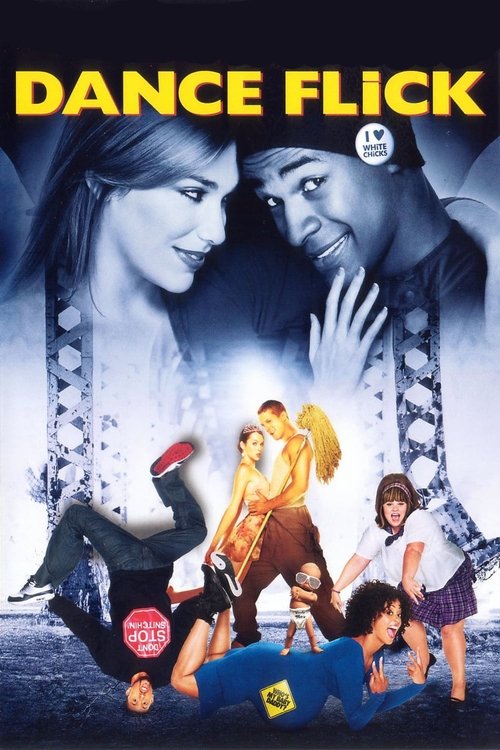
Dance Flick
Street dancer, Thomas Uncles is from the wrong side of the tracks, but his bond with the beautiful Megan White might help the duo realize their dreams as they enter in the mother of all dance battles.
Working with a respectable budget of $25.0M, the film achieved a steady performer with $31.4M in global revenue (+26% profit margin).


Plot Structure
Story beats plotted across runtime


Narrative Arc
Emotional journey through the story's key moments
Story Circle
Blueprint 15-beat structure
Arcplot Score Breakdown
Weighted: Precision (70%) + Arc (15%) + Theme (15%)
Dance Flick (2009) demonstrates carefully calibrated dramatic framework, characteristic of Damien Dante Wayans's storytelling approach. This structural analysis examines how the film's 15-point plot structure maps to proven narrative frameworks across 1 hour and 23 minutes. With an Arcplot score of 7.3, the film balances conventional beats with creative variation.
Characters
Cast & narrative archetypes

Megan
Thomas
Charity
Sugar
A-Con
Ms. Cameltoe
Main Cast & Characters
Megan
Played by Shoshana Bush
An aspiring street dancer from the suburbs who transfers to an inner-city performing arts school to pursue her dreams.
Thomas
Played by Damon Wayans Jr.
A talented hip-hop dancer struggling with family tragedy and finding love through dance.
Charity
Played by Essence Atkins
Megan's spoiled and manipulative rival dancer who will do anything to win.
Sugar
Played by Affion Crockett
Street-smart friend and mentor figure who helps guide the dance crew.
A-Con
Played by Shawn Wayans
Thomas's best friend and loyal dance crew member with comedic energy.
Ms. Cameltoe
Played by Amy Sedaris
The eccentric and inappropriate dance teacher at the performing arts school.
Structural Analysis
The Status Quo at 1 minutes (1% through the runtime) establishes Megan, a talented suburban dancer, lives with her wealthy family in a privileged world where dance is her passion and escape.. The analysis reveals that this early placement immediately immerses viewers in the story world.
The inciting incident occurs at 10 minutes when Megan's father loses all their money in a Ponzi scheme and commits suicide, forcing the family to move to the inner city.. At 12% through the film, this Disruption aligns precisely with traditional story structure. This beat shifts the emotional landscape, launching the protagonist into the central conflict.
The First Threshold at 20 minutes marks the transition into Act II, occurring at 24% of the runtime. This reveals the protagonist's commitment to Megan decides to audition for the school's street dance crew, actively choosing to embrace this new world and prove herself despite being an outsider., moving from reaction to action.
At 40 minutes, the Midpoint arrives at 48% of the runtime—precisely centered, creating perfect narrative symmetry. Of particular interest, this crucial beat The crew wins a preliminary dance battle, and Megan is fully accepted by the group - a false victory as tensions and challenges will soon escalate., fundamentally raising what's at risk. The emotional intensity shifts, dividing the narrative into clear before-and-after phases.
The Collapse moment at 60 minutes (72% through) represents the emotional nadir. Here, The crew falls apart due to internal conflict and betrayal, and Megan faces her lowest point, believing she's lost both her team and her chance at the competition - her dream metaphorically dies., illustrates the protagonist at their lowest point. This beat's placement in the final quarter sets up the climactic reversal.
The Second Threshold at 65 minutes initiates the final act resolution at 78% of the runtime. Megan realizes she doesn't have to choose between worlds - she can synthesize both classical and street dance, both privilege and authenticity, becoming herself., demonstrating the transformation achieved throughout the journey.
Emotional Journey
Dance Flick's emotional architecture traces a deliberate progression across 15 carefully calibrated beats.
Narrative Framework
This structural analysis employs structural analysis methodology used to understand storytelling architecture. By mapping Dance Flick against these established plot points, we can identify how Damien Dante Wayans utilizes or subverts traditional narrative conventions. The plot point approach reveals not only adherence to structural principles but also creative choices that distinguish Dance Flick within the music genre.
Comparative Analysis
Additional music films include South Pacific, Dirty Dancing: Havana Nights and Yesterday.
Plot Points by Act
Act I
SetupStatus Quo
Megan, a talented suburban dancer, lives with her wealthy family in a privileged world where dance is her passion and escape.
Theme
Megan's mother tells her "You can't dance your way through life" - establishing the central theme about following your passion versus practical expectations.
Worldbuilding
Establishing Megan's privileged suburban life, her dysfunctional wealthy family, her love of dance, and the contrasting world of the inner-city school she'll soon attend.
Disruption
Megan's father loses all their money in a Ponzi scheme and commits suicide, forcing the family to move to the inner city.
Resistance
Megan struggles to adapt to her new rough inner-city school, faces culture shock, and debates whether she can survive this new world while holding onto her dream of dance.
Act II
ConfrontationFirst Threshold
Megan decides to audition for the school's street dance crew, actively choosing to embrace this new world and prove herself despite being an outsider.
Mirror World
Megan meets Thomas, a talented street dancer who becomes her love interest and represents the authentic passion for dance she needs to rediscover.
Premise
Megan learns street dance, bonds with the crew, navigates romantic tension with Thomas, and experiences the fun of blending her classical training with street style - the promise of the premise.
Midpoint
The crew wins a preliminary dance battle, and Megan is fully accepted by the group - a false victory as tensions and challenges will soon escalate.
Opposition
Rival dance crews intensify their attacks, romantic complications arise, Megan's old life intrudes, and the stakes increase as the final competition approaches.
Collapse
The crew falls apart due to internal conflict and betrayal, and Megan faces her lowest point, believing she's lost both her team and her chance at the competition - her dream metaphorically dies.
Crisis
Megan processes her failure and loss, questioning whether she belongs in either world - suburban or inner-city, classical or street.
Act III
ResolutionSecond Threshold
Megan realizes she doesn't have to choose between worlds - she can synthesize both classical and street dance, both privilege and authenticity, becoming herself.
Synthesis
Megan reunites the crew, choreographs a hybrid routine combining all styles, and leads them to victory in the final competition, defeating the rivals and proving her transformation.
Transformation
Megan dances freely, fully herself - no longer the sheltered suburban girl or trying to be someone else, but a complete person who has integrated both worlds.