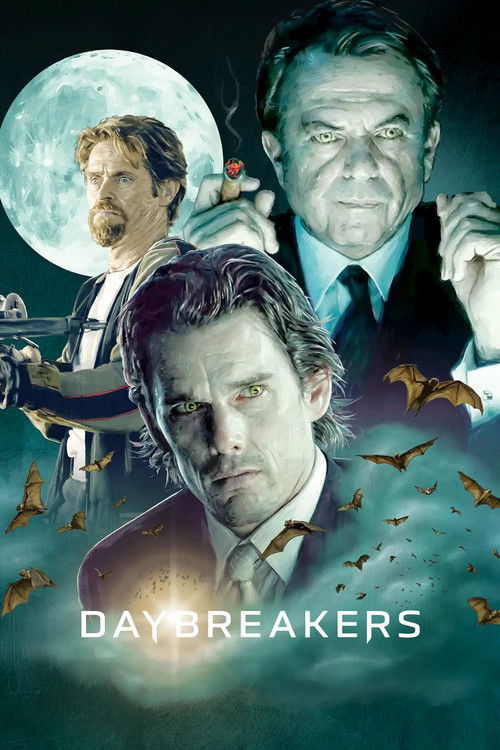
Daybreakers
In the year 2019, a plague has transformed almost every human into a vampire. Faced with a dwindling blood supply, the fractured dominant race plots their survival; meanwhile, a researcher works with a covert band of vampires on a way to save humankind.
Despite a moderate budget of $20.0M, Daybreakers became a commercial success, earning $51.4M worldwide—a 157% return.
3 wins & 6 nominations


Plot Structure
Story beats plotted across runtime


Narrative Arc
Emotional journey through the story's key moments
Story Circle
Blueprint 15-beat structure
Arcplot Score Breakdown
Weighted: Precision (70%) + Arc (15%) + Theme (15%)
Daybreakers (2010) showcases deliberately positioned story structure, characteristic of Michael Spierig's storytelling approach. This structural analysis examines how the film's 15-point plot structure maps to proven narrative frameworks across 1 hour and 38 minutes. With an Arcplot score of 7.3, the film balances conventional beats with creative variation.
Characters
Cast & narrative archetypes

Edward Dalton
Elvis Cormac
Charles Bromley
Audrey Bennett
Frankie Dalton
Alison Bromley
Main Cast & Characters
Edward Dalton
Played by Ethan Hawke
A vampire hematologist who secretly sympathizes with humans and seeks a blood substitute to save both species.
Elvis Cormac
Played by Willem Dafoe
A former vampire who was cured and now leads a group of human survivors seeking to reverse vampirism.
Charles Bromley
Played by Sam Neill
The ruthless CEO of Bromley Marks, a pharmaceutical company farming humans for blood.
Audrey Bennett
Played by Claudia Karvan
A human survivor who recruits Edward to help find a cure for vampirism.
Frankie Dalton
Played by Michael Dorman
Edward's younger brother, a soldier in the vampire army who embraces the vampire lifestyle.
Alison Bromley
Played by Isabel Lucas
Charles Bromley's human daughter who refuses to be turned into a vampire.
Structural Analysis
The Status Quo at 1 minutes (1% through the runtime) establishes 2019: A vampire-dominated world where humans are nearly extinct. Edward Dalton, a hematologist vampire, drives through the night in a world adapted for the undead. A young vampire girl commits suicide by sunlight, establishing the bleakness of this society.. The analysis reveals that this early placement immediately immerses viewers in the story world.
The inciting incident occurs at 12 minutes when Edward encounters a group of humans in a car chase. He deliberately crashes his own vehicle to avoid killing them, and they escape. He glimpses a human woman, Audrey, who will change everything.. At 12% through the film, this Disruption aligns precisely with traditional story structure. This beat shifts the emotional landscape, launching the protagonist into the central conflict.
The First Threshold at 25 minutes marks the transition into Act II, occurring at 26% of the runtime. This shows the protagonist's commitment to Edward makes an active choice to leave his vampire life behind and join the humans. He meets Elvis Cormac, who tells his story of accidental cure through sun exposure. Edward chooses to help find a cure rather than develop a substitute., moving from reaction to action.
At 49 minutes, the Midpoint arrives at 50% of the runtime—precisely centered, creating perfect narrative symmetry. Of particular interest, this crucial beat False victory: Edward successfully replicates the cure process, turning himself human again through controlled sun exposure. He experiences sunlight, a heartbeat, and mortality. The cure works—but now they must convince a vampire world that doesn't want to change., fundamentally raising what's at risk. The emotional intensity shifts, dividing the narrative into clear before-and-after phases.
The Collapse moment at 74 minutes (76% through) represents the emotional nadir. Here, Audrey is captured and exsanguinated by Bromley's forces, killed for her human blood. Edward's hope for a peaceful solution dies with her. Elvis is taken. Edward faces his darkest moment: the woman he loved is dead, and the cure seems meaningless., indicates the protagonist at their lowest point. This beat's placement in the final quarter sets up the climactic reversal.
The Second Threshold at 79 minutes initiates the final act resolution at 81% of the runtime. Edward realizes the cure can spread through vampire feeding: if vampires feed on cured humans, they become human too. Elvis returns, rescues Edward. New synthesis: they don't need to convince vampires—they need to trigger a chain reaction. Audrey's death will have meaning., demonstrating the transformation achieved throughout the journey.
Emotional Journey
Daybreakers's emotional architecture traces a deliberate progression across 15 carefully calibrated beats.
Narrative Framework
This structural analysis employs proven narrative structure principles that track dramatic progression. By mapping Daybreakers against these established plot points, we can identify how Michael Spierig utilizes or subverts traditional narrative conventions. The plot point approach reveals not only adherence to structural principles but also creative choices that distinguish Daybreakers within the action genre.
Michael Spierig's Structural Approach
Among the 3 Michael Spierig films analyzed on Arcplot, the average structural score is 7.3, reflecting strong command of classical structure. Daybreakers represents one of the director's most structurally precise works. For comparative analysis, explore the complete Michael Spierig filmography.
Comparative Analysis
Additional action films include The Bad Guys, Puss in Boots and Venom: The Last Dance. For more Michael Spierig analyses, see Jigsaw, Predestination.
Plot Points by Act
Act I
SetupStatus Quo
2019: A vampire-dominated world where humans are nearly extinct. Edward Dalton, a hematologist vampire, drives through the night in a world adapted for the undead. A young vampire girl commits suicide by sunlight, establishing the bleakness of this society.
Theme
Edward's brother Frankie, a vampire soldier, confronts Edward about his refusal to drink human blood: "We're running out of time. You can't save everyone." The theme: humanity vs. survival, compassion vs. predation.
Worldbuilding
Establishment of vampire society: underground walkways, UV-protected cars, corporate blood farming. Edward works for Bromley Marks, developing a blood substitute as supplies dwindle. Humans are farmed like cattle. Starving vampires devolve into mindless "subsiders."
Disruption
Edward encounters a group of humans in a car chase. He deliberately crashes his own vehicle to avoid killing them, and they escape. He glimpses a human woman, Audrey, who will change everything.
Resistance
Edward is conflicted about his role in farming humans. Audrey and human survivors capture Edward, revealing they know he let them escape. They offer him hope: a former vampire named Elvis Cormac claims to have been cured. Edward debates whether to trust them.
Act II
ConfrontationFirst Threshold
Edward makes an active choice to leave his vampire life behind and join the humans. He meets Elvis Cormac, who tells his story of accidental cure through sun exposure. Edward chooses to help find a cure rather than develop a substitute.
Mirror World
Elvis Cormac becomes Edward's mirror—a vampire who regained humanity. Their growing partnership represents the film's thematic heart: redemption is possible. Audrey represents human hope and the world worth saving.
Premise
Edward works with Elvis and Audrey to understand the cure mechanism. They conduct experiments, bonding as a makeshift family. Edward experiences what it means to fight for humanity rather than exploit it. The promise: science and compassion can save both species.
Midpoint
False victory: Edward successfully replicates the cure process, turning himself human again through controlled sun exposure. He experiences sunlight, a heartbeat, and mortality. The cure works—but now they must convince a vampire world that doesn't want to change.
Opposition
Charles Bromley, Edward's former boss, captures the group. He refuses the cure—vampirism means power and immortality. Bromley weaponizes Edward's blood substitute research. Frankie hunts his brother. The vampire military closes in. Society chooses extinction over transformation.
Collapse
Audrey is captured and exsanguinated by Bromley's forces, killed for her human blood. Edward's hope for a peaceful solution dies with her. Elvis is taken. Edward faces his darkest moment: the woman he loved is dead, and the cure seems meaningless.
Crisis
Edward processes the loss in Bromley's facility. He sees the complete moral bankruptcy of vampire society—subsiders harvested, humans tortured, his brother lost to fanaticism. The dark night: is there any hope left, or is humanity truly finished?
Act III
ResolutionSecond Threshold
Edward realizes the cure can spread through vampire feeding: if vampires feed on cured humans, they become human too. Elvis returns, rescues Edward. New synthesis: they don't need to convince vampires—they need to trigger a chain reaction. Audrey's death will have meaning.
Synthesis
Edward and Elvis infiltrate Bromley Marks. Elvis allows starving vampires to feed on him, turning them human, who are then fed upon by others—a exponential cure. Frankie feeds on Edward and is cured, finally seeing his brother's humanity. Bromley refuses and is consumed by his own starving employees. The finale: cascading redemption.
Transformation
Edward and Frankie, both human, watch the sunrise together. The closing image mirrors the opening suicide: but this time, facing the sun means rebirth, not death. Brothers reconciled. Humanity spreading. Hope restored through sacrifice.