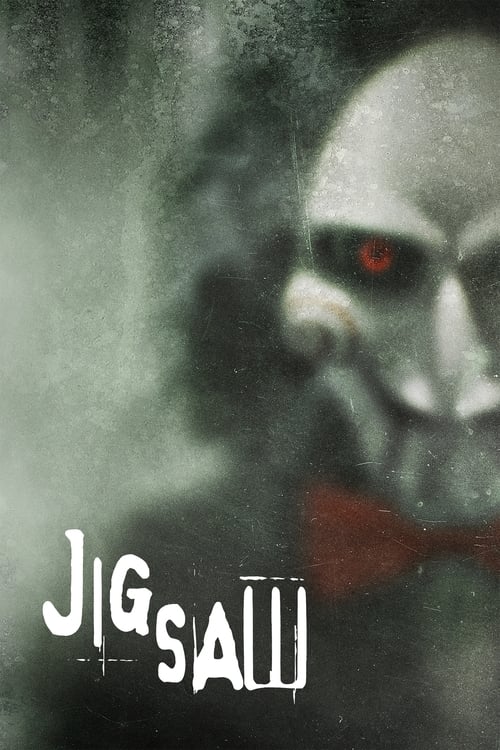
Jigsaw
Law enforcement finds itself chasing the ghost of a man dead for over a decade, embroiled in a diabolical new game that's only just begun.
Despite its tight budget of $10.0M, Jigsaw became a box office phenomenon, earning $104.2M worldwide—a remarkable 942% return. The film's unique voice attracted moviegoers, illustrating how strong storytelling can transcend budget limitations.


Plot Structure
Story beats plotted across runtime


Narrative Arc
Emotional journey through the story's key moments
Story Circle
Blueprint 15-beat structure
Arcplot Score Breakdown
Weighted: Precision (70%) + Arc (15%) + Theme (15%)
Jigsaw (2017) demonstrates deliberately positioned story structure, characteristic of Michael Spierig's storytelling approach. This structural analysis examines how the film's 15-point plot structure maps to proven narrative frameworks across 1 hour and 31 minutes. With an Arcplot score of 7.4, the film balances conventional beats with creative variation.
Characters
Cast & narrative archetypes

Logan Nelson
Eleanor Bonneville
Detective Keith Hunt
Detective Halloran
Mitch
Anna
Ryan
Carly
John Kramer / Jigsaw
Main Cast & Characters
Logan Nelson
Played by Matt Passmore
A forensic pathologist drawn into investigating a new series of Jigsaw murders, struggling with guilt over a past mistake.
Eleanor Bonneville
Played by Hannah Emily Anderson
A passionate Jigsaw enthusiast and medical student who assists Logan, obsessed with understanding the killer's methodology.
Detective Keith Hunt
Played by Clé Bennett
A hardened detective investigating the new Jigsaw murders, willing to bend rules to solve the case.
Detective Halloran
Played by Callum Keith Rennie
A corrupt homicide detective with secrets to hide, investigating the Jigsaw case while covering his own tracks.
Mitch
Played by Mandela Van Peebles
A violent criminal trapped in a deadly game, forced to confront the consequences of his past actions.
Anna
Played by Laura Vandervoort
A manipulative woman caught in the trap, hiding dark secrets about her role in others' suffering.
Ryan
Played by Paul Braunstein
A calculating participant in the game who prioritizes self-preservation over cooperation.
Carly
Played by Brittany Allen
A young woman trapped in the game, caught up in the consequences of her criminal associations.
John Kramer / Jigsaw
Played by Tobin Bell
The original Jigsaw killer, appearing in flashbacks that reveal the true origin of the current game.
Structural Analysis
The Status Quo at 1 minutes (1% through the runtime) establishes A man named Edgar Munsen flees through the city clutching a remote trigger, pursued by police. He claims he must activate it to save lives, establishing a world where Jigsaw's legacy of moral games persists even after his death.. Structural examination shows that this early placement immediately immerses viewers in the story world.
The inciting incident occurs at 12 minutes when A body is discovered hanging from a bridge with a jigsaw puzzle piece cut from its flesh. The forensic evidence points impossibly to John Kramer—who has been dead for ten years—disrupting the established order and forcing a new investigation.. At 13% through the film, this Disruption is delayed, allowing extended setup of the story world. This beat shifts the emotional landscape, launching the protagonist into the central conflict.
The First Threshold at 23 minutes marks the transition into Act II, occurring at 25% of the runtime. This illustrates the protagonist's commitment to Logan and Eleanor discover that Kramer's grave has been disturbed and his body is missing. This impossible evidence forces the investigation to abandon normal procedures—they must now pursue a dead man's legacy, committing fully to the twisted logic of Jigsaw's games., moving from reaction to action.
At 46 minutes, the Midpoint arrives at 51% of the runtime—precisely centered, creating perfect narrative symmetry. Significantly, this crucial beat The investigation reveals that all victims share a connection to a specific case from ten years ago—a case where their lies or negligence caused innocent deaths. This false defeat reframes everything: the games are targeted revenge, not random tests., fundamentally raising what's at risk. The emotional intensity shifts, dividing the narrative into clear before-and-after phases.
The Collapse moment at 69 minutes (76% through) represents the emotional nadir. Here, Detective Hunt is killed, and Eleanor flees with Logan as the primary suspect. The barn timeline appears to conclude with Anna and Ryan's final trap. All hope for a clean resolution dies—the killer has outmaneuvered everyone, and the innocent appear guilty., reveals the protagonist at their lowest point. This beat's placement in the final quarter sets up the climactic reversal.
The Second Threshold at 74 minutes initiates the final act resolution at 82% of the runtime. Halloran captures Logan and Eleanor at the studio. But the audience receives the crucial revelation: the barn game happened ten years ago during Kramer's lifetime. Logan was the first victim—saved by Kramer and recruited as an apprentice. The present games are Logan's revenge., demonstrating the transformation achieved throughout the journey.
Emotional Journey
Jigsaw's emotional architecture traces a deliberate progression across 15 carefully calibrated beats.
Narrative Framework
This structural analysis employs structural analysis methodology used to understand storytelling architecture. By mapping Jigsaw against these established plot points, we can identify how Michael Spierig utilizes or subverts traditional narrative conventions. The plot point approach reveals not only adherence to structural principles but also creative choices that distinguish Jigsaw within the horror genre.
Michael Spierig's Structural Approach
Among the 3 Michael Spierig films analyzed on Arcplot, the average structural score is 7.3, reflecting strong command of classical structure. Jigsaw represents one of the director's most structurally precise works. For comparative analysis, explore the complete Michael Spierig filmography.
Comparative Analysis
Additional horror films include Thinner, A Nightmare on Elm Street and Mary Reilly. For more Michael Spierig analyses, see Daybreakers, Predestination.
Plot Points by Act
Act I
SetupStatus Quo
A man named Edgar Munsen flees through the city clutching a remote trigger, pursued by police. He claims he must activate it to save lives, establishing a world where Jigsaw's legacy of moral games persists even after his death.
Theme
In the barn, a recorded message from Jigsaw declares: "Confess your sins and you will be free." The theme of justice through confession is established—the idea that hidden crimes demand accountability, even when the system fails.
Worldbuilding
The parallel narratives are established: five strangers awaken in a barn with buckets on their heads, while detectives Halloran and Hunt investigate Edgar's shooting and await autopsy results. Medical examiners Logan Nelson and Eleanor Bonneville are introduced processing evidence in their morgue.
Disruption
A body is discovered hanging from a bridge with a jigsaw puzzle piece cut from its flesh. The forensic evidence points impossibly to John Kramer—who has been dead for ten years—disrupting the established order and forcing a new investigation.
Resistance
Detectives debate whether Jigsaw has returned or if a copycat is at work. Logan and Eleanor provide forensic analysis while the barn victims struggle through their first trap. The investigation establishes the rules: each victim has a secret crime, and someone is recreating Kramer's methods.
Act II
ConfrontationFirst Threshold
Logan and Eleanor discover that Kramer's grave has been disturbed and his body is missing. This impossible evidence forces the investigation to abandon normal procedures—they must now pursue a dead man's legacy, committing fully to the twisted logic of Jigsaw's games.
Mirror World
Eleanor reveals her secret obsession with Jigsaw to Logan—she owns a studio filled with replica traps and memorabilia. Her fascination with Kramer's philosophy introduces the thematic mirror: understanding evil intimately versus becoming it.
Premise
The parallel games intensify. In the barn, victims face the grain silo trap and leg wire trap, dying when they refuse to confess. In the present, more bodies appear with impossible forensic links to Kramer. Eleanor becomes a suspect due to her obsession, while Logan remains the trusted analyst.
Midpoint
The investigation reveals that all victims share a connection to a specific case from ten years ago—a case where their lies or negligence caused innocent deaths. This false defeat reframes everything: the games are targeted revenge, not random tests.
Opposition
Suspicion fragments the team. Halloran suspects Eleanor and Logan; Hunt uncovers Halloran's corruption. In the barn, the final survivors face increasingly brutal traps. Evidence mounts against Eleanor, whose replica studio is discovered, while the real killer operates unseen.
Collapse
Detective Hunt is killed, and Eleanor flees with Logan as the primary suspect. The barn timeline appears to conclude with Anna and Ryan's final trap. All hope for a clean resolution dies—the killer has outmaneuvered everyone, and the innocent appear guilty.
Crisis
Logan and Eleanor hide in her replica studio as Halloran closes in. The truth seems buried: the corrupt detective will frame the innocent while the real killer escapes. Logan appears defeated, with no way to prove his innocence or expose the truth.
Act III
ResolutionSecond Threshold
Halloran captures Logan and Eleanor at the studio. But the audience receives the crucial revelation: the barn game happened ten years ago during Kramer's lifetime. Logan was the first victim—saved by Kramer and recruited as an apprentice. The present games are Logan's revenge.
Synthesis
The final game unfolds. Logan and Halloran awaken in laser collar traps, forced to confess their sins. Halloran confesses to corruption that let killers go free—including the man who murdered Logan's wife. Logan appears to die but reveals the deception: his collar was deactivated.
Transformation
Logan activates Halloran's collar, executing him while declaring "I speak for the dead." The transformation is complete: the wounded healer has become the judge. Justice is served outside the law, but Logan has become the monster he hunted—Jigsaw's true heir.