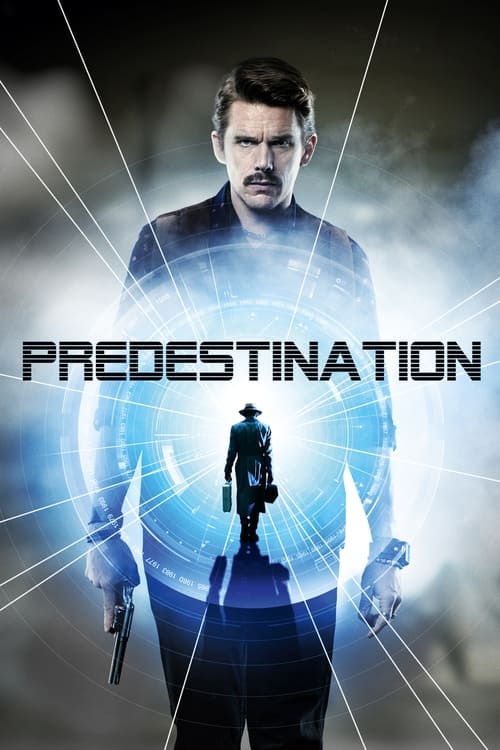
Predestination
Predestination chronicles the life of a Temporal Agent sent on an intricate series of time-travel journeys designed to prevent future killers from committing their crimes. Now, on his final assignment, the Agent must stop the one criminal that has eluded him throughout time and prevent a devastating attack in which thousands of lives will be lost.
The film underperformed commercially against its small-scale budget of $5.5M, earning $4.9M globally (-10% loss).
12 wins & 20 nominations


Plot Structure
Story beats plotted across runtime


Narrative Arc
Emotional journey through the story's key moments
Story Circle
Blueprint 15-beat structure
Arcplot Score Breakdown
Weighted: Precision (70%) + Arc (15%) + Theme (15%)
Predestination (2014) exemplifies deliberately positioned story structure, characteristic of Michael Spierig's storytelling approach. This structural analysis examines how the film's 15-point plot structure maps to proven narrative frameworks across 1 hour and 38 minutes. With an Arcplot score of 7.1, the film balances conventional beats with creative variation.
Characters
Cast & narrative archetypes

The Barkeep / Temporal Agent
The Unmarried Mother / Jane / John
Mr. Robertson
The Fizzle Bomber
Jane (Young)
Main Cast & Characters
The Barkeep / Temporal Agent
Played by Ethan Hawke
A mysterious temporal agent working to stop the Fizzle Bomber, who operates undercover as a bartender while recruiting and manipulating events across time.
The Unmarried Mother / Jane / John
Played by Sarah Snook
A complex individual born intersex, raised as Jane, who transitions to John after a traumatic C-section. Works as a confessional columnist called "The Unmarried Mother."
Mr. Robertson
Played by Noah Taylor
A senior figure in the Temporal Bureau who oversees the agents and makes cryptic decisions about the timeline and the pursuit of the Fizzle Bomber.
The Fizzle Bomber
Played by Ethan Hawke
A domestic terrorist responsible for a devastating attack in 1975 New York that killed thousands. The agent's primary target throughout the film.
Jane (Young)
Played by Sarah Snook
The younger version of Jane before the events that transform her life, an orphan with dreams of joining the Space Corps.
Structural Analysis
The Status Quo at 1 minutes (1% through the runtime) establishes The Temporal Agent prepares a bomb in a briefcase, establishing his identity as a skilled operative working alone in a dingy apartment, scarred and methodical.. Structural examination shows that this early placement immediately immerses viewers in the story world.
The inciting incident occurs at 12 minutes when John reveals the traumatic story of Jane's life: abandoned as a baby, raised in an orphanage, then betrayed and impregnated by a mysterious man who disappeared, disrupting any sense of normal identity or belonging.. At 12% through the film, this Disruption aligns precisely with traditional story structure. This beat shifts the emotional landscape, launching the protagonist into the central conflict.
The First Threshold at 25 minutes marks the transition into Act II, occurring at 25% of the runtime. This shows the protagonist's commitment to John accepts the bartender's offer to find the man who ruined his life. The bartender reveals the time machine, and John actively chooses to travel back to 1963 to confront his past., moving from reaction to action.
At 49 minutes, the Midpoint arrives at 50% of the runtime—precisely centered, creating perfect narrative symmetry. Significantly, this crucial beat The agent leaves the baby Jane at the orphanage in 1945, completing the loop. The revelation crystallizes: John is Jane is the baby. False defeat—the mission seems complete, but the agent's identity crisis deepens as he realizes the full scope of the paradox., fundamentally raising what's at risk. The emotional intensity shifts, dividing the narrative into clear before-and-after phases.
The Collapse moment at 74 minutes (75% through) represents the emotional nadir. Here, The agent confronts the Fizzle Bomber and discovers he is looking at his older self. The metaphorical death: the destruction of his understanding of identity, purpose, and free will. Everything he believed about stopping the bomber collapses., indicates the protagonist at their lowest point. This beat's placement in the final quarter sets up the climactic reversal.
The Second Threshold at 79 minutes initiates the final act resolution at 80% of the runtime. The agent makes his choice: he shoots his future self, rejecting the predetermined path and attempting to break the cycle through an act of will, even as the act itself may be part of the loop., demonstrating the transformation achieved throughout the journey.
Emotional Journey
Predestination's emotional architecture traces a deliberate progression across 15 carefully calibrated beats.
Narrative Framework
This structural analysis employs a 15-point narrative structure framework that maps key story moments. By mapping Predestination against these established plot points, we can identify how Michael Spierig utilizes or subverts traditional narrative conventions. The plot point approach reveals not only adherence to structural principles but also creative choices that distinguish Predestination within the science fiction genre.
Michael Spierig's Structural Approach
Among the 3 Michael Spierig films analyzed on Arcplot, the average structural score is 7.3, reflecting strong command of classical structure. Predestination takes a more unconventional approach compared to the director's typical style. For comparative analysis, explore the complete Michael Spierig filmography.
Comparative Analysis
Additional science fiction films include The Postman, Mad Max 2 and AVP: Alien vs. Predator. For more Michael Spierig analyses, see Jigsaw, Daybreakers.
Plot Points by Act
Act I
SetupStatus Quo
The Temporal Agent prepares a bomb in a briefcase, establishing his identity as a skilled operative working alone in a dingy apartment, scarred and methodical.
Theme
The bartender asks the stranger "What if I could put him in front of you?" exploring the theme of confronting one's demons and the cyclical nature of identity and revenge.
Worldbuilding
The agent attempts to stop the Fizzle Bomber but is severely burned. He recovers and takes a final assignment as a bartender in 1970, where he meets John/Jane who begins telling their story. The world of time travel enforcement and the Fizzle Bomber threat is established.
Disruption
John reveals the traumatic story of Jane's life: abandoned as a baby, raised in an orphanage, then betrayed and impregnated by a mysterious man who disappeared, disrupting any sense of normal identity or belonging.
Resistance
Through John's narration, we see Jane's journey: her attempt to join SpaceCorp, her love affair, the birth and kidnapping of her baby, and her physical transformation into John. The bartender listens and offers the possibility of revenge.
Act II
ConfrontationFirst Threshold
John accepts the bartender's offer to find the man who ruined his life. The bartender reveals the time machine, and John actively chooses to travel back to 1963 to confront his past.
Mirror World
John watches Jane from afar in 1963, seeing his former self before the transformation. This introduces the paradoxical relationship that will teach him the truth about identity and self-determination.
Premise
The "promise of the premise" unfolds as we experience the love story between Jane and John (as the mysterious man), knowing the tragic outcome. The paradox deepens as the agent orchestrates events, recovers the baby, and we explore the implications of the temporal loop.
Midpoint
The agent leaves the baby Jane at the orphanage in 1945, completing the loop. The revelation crystallizes: John is Jane is the baby. False defeat—the mission seems complete, but the agent's identity crisis deepens as he realizes the full scope of the paradox.
Opposition
The agent is recruited by Robertson into the Temporal Bureau and works through various missions. Pressure intensifies as he becomes obsessed with catching the Fizzle Bomber. His identity becomes increasingly unstable across multiple temporal jumps, and Robertson warns him about going too far.
Collapse
The agent confronts the Fizzle Bomber and discovers he is looking at his older self. The metaphorical death: the destruction of his understanding of identity, purpose, and free will. Everything he believed about stopping the bomber collapses.
Crisis
The older agent explains the predestination paradox and tries to convince his younger self to accept their role. The protagonist wrestles with the horror of determinism, the deaths he will cause, and whether free will exists within the loop.
Act III
ResolutionSecond Threshold
The agent makes his choice: he shoots his future self, rejecting the predetermined path and attempting to break the cycle through an act of will, even as the act itself may be part of the loop.
Synthesis
The agent returns to 1975, decommissions himself from the bureau, and appears to settle into normal life. But the loop's gravity is inescapable: he finds evidence of future bombings and gradually transforms into the Fizzle Bomber, completing the predestination cycle.
Transformation
The agent, now the Fizzle Bomber, prepares explosives in the same apartment from the opening. The loop is complete. Where he began as a scarred operative hunting a bomber, he has become that bomber—identity consumed by the ouroboros of predestination.