Death Race
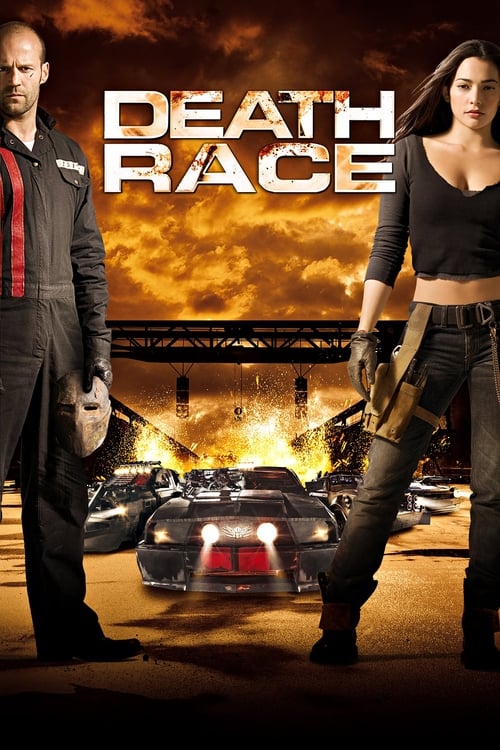
Terminal Island, New York: 2020. Overcrowding in the US penal system has reached a breaking point. Prisons have been turned over to a monolithic Weyland Corporation, which sees jails full of thugs as an opportunity for televised sport. Adrenalized inmates, a global audience hungry for violence and a spectacular, enclosed arena come together to form the 'Death Race', the biggest, most brutal event.
Working with a mid-range budget of $45.0M, the film achieved a respectable showing with $76.0M in global revenue (+69% profit margin).
1 win & 5 nominations


Plot Structure
Story beats plotted across runtime


Narrative Arc
Emotional journey through the story's key moments
Story Circle
Blueprint 15-beat structure
Arcplot Score Breakdown
Weighted: Precision (70%) + Arc (15%) + Theme (15%)
Death Race (2008) demonstrates meticulously timed story structure, characteristic of Paul W. S. Anderson's storytelling approach. This structural analysis examines how the film's 15-point plot structure maps to proven narrative frameworks across 1 hour and 45 minutes. With an Arcplot score of 7.4, the film balances conventional beats with creative variation.
Characters
Cast & narrative archetypes

Jensen Ames
Coach
Hennessey
Case
Machine Gun Joe
Pachenko
Gunner
Main Cast & Characters
Jensen Ames
Played by Jason Statham
Former race car driver framed for his wife's murder, forced to compete in the deadly Death Race to win his freedom.
Coach
Played by Ian McShane
Ames' veteran navigator and mentor who guides him through the brutal prison race system.
Hennessey
Played by Joan Allen
Ruthless prison warden who orchestrates the Death Race for profit and entertainment.
Case
Played by Natalie Martinez
Tough female mechanic assigned to Ames' pit crew who becomes his ally and navigator.
Machine Gun Joe
Played by Tyrese Gibson
Aggressive defending Death Race champion and Ames' primary rival on the track.
Pachenko
Played by Max Ryan
Brutal inmate racer known for his ruthless tactics and violent driving style.
Gunner
Played by Jacob Vargas
Machine Gun Joe's loyal navigator and weapons specialist.
Structural Analysis
The Status Quo at 1 minutes (1% through the runtime) establishes Jensen Ames working in the steel mill, struggling but honest working man trying to provide for his wife and baby daughter.. Significantly, this early placement immediately immerses viewers in the story world.
The inciting incident occurs at 12 minutes when Masked intruder murders Jensen's wife and frames him for the crime. Jensen is convicted and sentenced to Terminal Island prison.. At 11% through the film, this Disruption aligns precisely with traditional story structure. This beat shifts the emotional landscape, launching the protagonist into the central conflict.
The First Threshold at 26 minutes marks the transition into Act II, occurring at 24% of the runtime. This demonstrates the protagonist's commitment to Jensen agrees to race as "Frankenstein" after Hennessey threatens his daughter. He chooses to enter the Death Race world to protect his child., moving from reaction to action.
At 52 minutes, the Midpoint arrives at 49% of the runtime—precisely centered, creating perfect narrative symmetry. Significantly, this crucial beat Jensen wins the first stage and discovers Hennessey murdered Frankenstein and his wife. False victory - he's winning races but realizes the system is rigged and he's being used., fundamentally raising what's at risk. The emotional intensity shifts, dividing the narrative into clear before-and-after phases.
The Collapse moment at 77 minutes (73% through) represents the emotional nadir. Here, Lists (crew member) is killed by guards. Coach is also killed. Jensen loses his support system and mentors - the "whiff of death" arrives for his allies., illustrates the protagonist at their lowest point. This beat's placement in the final quarter sets up the climactic reversal.
The Second Threshold at 84 minutes initiates the final act resolution at 80% of the runtime. Jensen and his crew devise an escape plan using the Frankenstein mask switch. He synthesizes racing skills with deception to beat Hennessey at her own game., demonstrating the transformation achieved throughout the journey.
Emotional Journey
Death Race's emotional architecture traces a deliberate progression across 15 carefully calibrated beats.
Narrative Framework
This structural analysis employs a 15-point narrative structure framework that maps key story moments. By mapping Death Race against these established plot points, we can identify how Paul W. S. Anderson utilizes or subverts traditional narrative conventions. The plot point approach reveals not only adherence to structural principles but also creative choices that distinguish Death Race within the action genre.
Paul W. S. Anderson's Structural Approach
Among the 10 Paul W. S. Anderson films analyzed on Arcplot, the average structural score is 7.2, reflecting strong command of classical structure. Death Race represents one of the director's most structurally precise works. For comparative analysis, explore the complete Paul W. S. Anderson filmography.
Comparative Analysis
Additional action films include The Bad Guys, Puss in Boots and Venom: The Last Dance. For more Paul W. S. Anderson analyses, see AVP: Alien vs. Predator, Mortal Kombat and Monster Hunter.
Plot Points by Act
Act I
SetupStatus Quo
Jensen Ames working in the steel mill, struggling but honest working man trying to provide for his wife and baby daughter.
Theme
Jensen's wife tells him "You're a good man" - establishing the theme of maintaining integrity in a corrupt system.
Worldbuilding
Establishing the dystopian 2012 America, economic collapse, Jensen losing his job, and the existence of Terminal Island prison's Death Race pay-per-view event.
Disruption
Masked intruder murders Jensen's wife and frames him for the crime. Jensen is convicted and sentenced to Terminal Island prison.
Resistance
Jensen arrives at Terminal Island, learns about the Death Race from Coach and other prisoners, resists Hennessey's initial offer to race. Meets his pit crew.
Act II
ConfrontationFirst Threshold
Jensen agrees to race as "Frankenstein" after Hennessey threatens his daughter. He chooses to enter the Death Race world to protect his child.
Mirror World
Case, the navigator, is introduced as Jensen's partner. She represents the theme of trust - an unwilling participant who must learn to work with Jensen.
Premise
The first Death Race stage. Jensen learns the rules, masters the weaponized car, navigates alliances and betrayals, survives the brutal three-stage race format.
Midpoint
Jensen wins the first stage and discovers Hennessey murdered Frankenstein and his wife. False victory - he's winning races but realizes the system is rigged and he's being used.
Opposition
Stage Two and Three of the Death Race. Hennessey manipulates the race, sends Machine Gun Joe to kill Jensen, pressure intensifies as rivals are eliminated and Jensen must survive assassination attempts.
Collapse
Lists (crew member) is killed by guards. Coach is also killed. Jensen loses his support system and mentors - the "whiff of death" arrives for his allies.
Crisis
Jensen mourns his crew, processes the reality that Hennessey will never let him go free. Dark night as he realizes winning the race legitimately won't save him.
Act III
ResolutionSecond Threshold
Jensen and his crew devise an escape plan using the Frankenstein mask switch. He synthesizes racing skills with deception to beat Hennessey at her own game.
Synthesis
Final race stage executed. Jensen and allies implement the escape plan, fight through Hennessey's forces, Machine Gun Joe sacrifices himself, Jensen crashes through the prison wall to freedom.
Transformation
Jensen reunites with his baby daughter in Mexico, now a free man who fought the corrupt system and won. Transformation from victim to liberator.