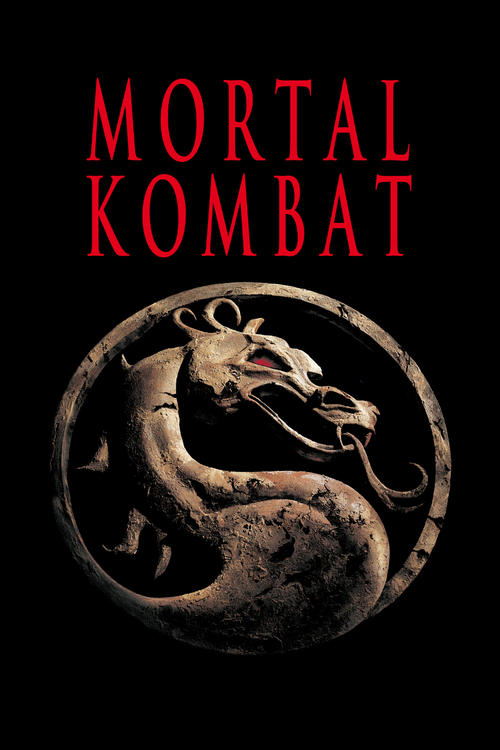
Mortal Kombat
For nine generations an evil sorcerer has been victorious in hand-to-hand battle against his mortal enemies. If he wins a tenth Mortal Kombat tournament, desolation and evil will reign over the multiverse forever. To save Earth, three warriors must overcome seemingly insurmountable odds, their own inner demons, and superhuman foes.
Despite a mid-range budget of $18.0M, Mortal Kombat became a massive hit, earning $122.2M worldwide—a remarkable 579% return.
1 win & 3 nominations


Plot Structure
Story beats plotted across runtime


Narrative Arc
Emotional journey through the story's key moments
Story Circle
Blueprint 15-beat structure
Arcplot Score Breakdown
Weighted: Precision (70%) + Arc (15%) + Theme (15%)
Mortal Kombat (1995) showcases carefully calibrated plot construction, characteristic of Paul W. S. Anderson's storytelling approach. This structural analysis examines how the film's 15-point plot structure maps to proven narrative frameworks across 1 hour and 41 minutes. With an Arcplot score of 6.8, the film balances conventional beats with creative variation.
Characters
Cast & narrative archetypes

Liu Kang
Johnny Cage
Sonya Blade
Lord Raiden
Shang Tsung
Kano
Goro
Princess Kitana
Main Cast & Characters
Liu Kang
Played by Robin Shou
A Shaolin monk chosen to represent Earth in the Mortal Kombat tournament, seeking to avenge his brother's death.
Johnny Cage
Played by Linden Ashby
An arrogant Hollywood action star who joins the tournament to prove his martial arts skills are real.
Sonya Blade
Played by Bridgette Wilson-Sampras
A tough Special Forces officer pursuing the criminal Kano to the tournament.
Lord Raiden
Played by Christopher Lambert
The thunder god and protector of Earthrealm who guides the chosen warriors.
Shang Tsung
Played by Cary-Hiroyuki Tagawa
The evil sorcerer hosting the tournament who seeks to conquer Earthrealm.
Kano
Played by Trevor Goddard
A ruthless criminal and member of the Black Dragon syndicate fighting for Outworld.
Goro
Played by Kevin Michael Richardson
A four-armed half-dragon champion who has won nine consecutive Mortal Kombat tournaments.
Princess Kitana
Played by Talisa Soto
Daughter of Emperor Shao Kahn, torn between loyalty and justice.
Structural Analysis
The Status Quo at 1 minutes (1% through the runtime) establishes Liu Kang trains at the Shaolin temple, haunted by the murder of his brother by Shang Tsung. He is a warrior living in grief, disconnected from his spiritual purpose.. Significantly, this early placement immediately immerses viewers in the story world.
The inciting incident occurs at 13 minutes when The boat departs for the tournament. Our heroes are thrust together and sailing toward a mysterious island, leaving their normal lives behind. Shang Tsung appears, revealing this is a battle for Earth's survival.. At 13% through the film, this Disruption is delayed, allowing extended setup of the story world. This beat shifts the emotional landscape, launching the protagonist into the central conflict.
The First Threshold at 24 minutes marks the transition into Act II, occurring at 24% of the runtime. This shows the protagonist's commitment to The tournament officially begins. Our heroes make the active choice to step into the arena and fight, committing themselves to Mortal Kombat. They cross from the ordinary world into the world of supernatural combat., moving from reaction to action.
At 51 minutes, the Midpoint arrives at 51% of the runtime—precisely centered, creating perfect narrative symmetry. Structural examination shows that this crucial beat Liu Kang defeats Sub-Zero in a spectacular fight, appearing to be on the path to victory. This is a false victory—our heroes are winning battles, but Shang Tsung is about to raise the stakes and change the game., fundamentally raising what's at risk. The emotional intensity shifts, dividing the narrative into clear before-and-after phases.
The Collapse moment at 75 minutes (74% through) represents the emotional nadir. Here, Johnny Cage is apparently killed by Goro, thrown off a cliff. This is the "whiff of death"—the loss of one of their champions and Liu Kang's darkest moment as he faces the possibility of total failure., reveals the protagonist at their lowest point. This beat's placement in the final quarter sets up the climactic reversal.
The Second Threshold at 80 minutes initiates the final act resolution at 79% of the runtime. Liu Kang achieves spiritual clarity and accepts his destiny. Johnny Cage is revealed to be alive. Armed with renewed purpose and unity, the heroes prepare for the final confrontation with Shang Tsung., demonstrating the transformation achieved throughout the journey.
Emotional Journey
Mortal Kombat's emotional architecture traces a deliberate progression across 15 carefully calibrated beats.
Narrative Framework
This structural analysis employs systematic plot point analysis that identifies crucial turning points. By mapping Mortal Kombat against these established plot points, we can identify how Paul W. S. Anderson utilizes or subverts traditional narrative conventions. The plot point approach reveals not only adherence to structural principles but also creative choices that distinguish Mortal Kombat within the action genre.
Paul W. S. Anderson's Structural Approach
Among the 10 Paul W. S. Anderson films analyzed on Arcplot, the average structural score is 7.2, reflecting strong command of classical structure. Mortal Kombat takes a more unconventional approach compared to the director's typical style. For comparative analysis, explore the complete Paul W. S. Anderson filmography.
Comparative Analysis
Additional action films include The Bad Guys, Puss in Boots and Venom: The Last Dance. For more Paul W. S. Anderson analyses, see AVP: Alien vs. Predator, Monster Hunter and Event Horizon.
Plot Points by Act
Act I
SetupStatus Quo
Liu Kang trains at the Shaolin temple, haunted by the murder of his brother by Shang Tsung. He is a warrior living in grief, disconnected from his spiritual purpose.
Theme
Rayden appears to Liu Kang in a vision, stating "Your soul is mine to save" and introducing the concept that the tournament is about more than physical combat—it's about spiritual destiny and choosing one's path.
Worldbuilding
We meet our three heroes in their ordinary worlds: Liu Kang mourning his brother, Johnny Cage defending his reputation as a genuine fighter, and Sonya Blade hunting Kano. All receive invitations to the mysterious tournament.
Disruption
The boat departs for the tournament. Our heroes are thrust together and sailing toward a mysterious island, leaving their normal lives behind. Shang Tsung appears, revealing this is a battle for Earth's survival.
Resistance
Rayden reveals himself as protector of Earth and explains the rules: Outworld has won nine consecutive tournaments and one more victory will allow them to invade Earth. He guides the heroes but cannot fight for them.
Act II
ConfrontationFirst Threshold
The tournament officially begins. Our heroes make the active choice to step into the arena and fight, committing themselves to Mortal Kombat. They cross from the ordinary world into the world of supernatural combat.
Mirror World
Princess Kitana appears, watching Liu Kang with interest. She represents the thematic counterpoint—a warrior who has found balance between duty and soul, the very thing Liu Kang must learn.
Premise
The promise of the premise: spectacular martial arts battles. Johnny Cage defeats Scorpion, Sonya fights and defeats Kano, Liu Kang battles Sub-Zero. The heroes prove they can compete and start winning their fights.
Midpoint
Liu Kang defeats Sub-Zero in a spectacular fight, appearing to be on the path to victory. This is a false victory—our heroes are winning battles, but Shang Tsung is about to raise the stakes and change the game.
Opposition
Shang Tsung cheats and intensifies opposition: he captures Sonya to force her into his service, sends the massive Goro after Art Lean (who is killed), and psychologically torments Liu Kang with his brother's spirit. Everything gets harder.
Collapse
Johnny Cage is apparently killed by Goro, thrown off a cliff. This is the "whiff of death"—the loss of one of their champions and Liu Kang's darkest moment as he faces the possibility of total failure.
Crisis
Liu Kang processes his grief and doubt. He is confronted by Kitana, who helps him see that he must fight not for revenge but for his soul and his world. The emotional darkness before the realization.
Act III
ResolutionSecond Threshold
Liu Kang achieves spiritual clarity and accepts his destiny. Johnny Cage is revealed to be alive. Armed with renewed purpose and unity, the heroes prepare for the final confrontation with Shang Tsung.
Synthesis
The finale: Liu Kang battles Shang Tsung, combining his physical martial arts skills with his newfound spiritual strength. He defeats the sorcerer, winning the tournament and saving Earth from invasion.
Transformation
Liu Kang stands victorious with his friends, having transformed from a grief-stricken warrior seeking revenge into a spiritual champion who fights for his world. He has found his purpose and honored his brother.