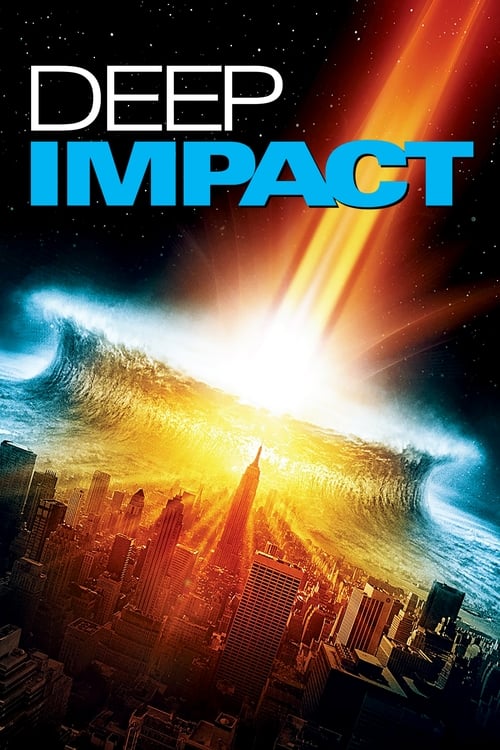
Deep Impact
A comet is discovered to be on a collision course with Earth. As doomsday nears, the human race prepares for the worst.
Despite a significant budget of $75.0M, Deep Impact became a commercial success, earning $349.5M worldwide—a 366% return.
5 wins & 14 nominations


Plot Structure
Story beats plotted across runtime


Narrative Arc
Emotional journey through the story's key moments
Story Circle
Blueprint 15-beat structure
Characters
Cast & narrative archetypes

Jenny Lerner
President Tom Beck
Captain Spurgeon "Fish" Tanner
Leo Beiderman
Sarah Hotchner
Alan Rittenhouse
Robin Lerner
Jason Lerner
Main Cast & Characters
Jenny Lerner
Played by Téa Leoni
Ambitious MSNBC reporter who uncovers the comet threat while investigating a political scandal.
President Tom Beck
Played by Morgan Freeman
Pragmatic U.S. President who must guide the nation through the impending comet disaster.
Captain Spurgeon "Fish" Tanner
Played by Robert Duvall
Veteran astronaut leading the Messiah mission to destroy the comet before it hits Earth.
Leo Beiderman
Played by Elijah Wood
Teenage amateur astronomer who first discovers the comet, struggling with family and first love.
Sarah Hotchner
Played by Leelee Sobieski
Leo's teenage girlfriend who faces the apocalypse alongside him.
Alan Rittenhouse
Played by James Cromwell
Secretary of the Treasury having an affair, whose scandal inadvertently leads to the comet discovery.
Robin Lerner
Played by Vanessa Redgrave
Jenny's estranged mother who remarried after divorcing Jenny's father.
Jason Lerner
Played by Maximilian Schell
Jenny's father, a successful author struggling with his daughter's resentment over his divorce.
Structural Analysis
The Status Quo at 1 minutes (1% through the runtime) establishes Young Leo Biederman at astronomy club, taking photos of the night sky with friends, establishing his ordinary life as a high school student passionate about stargazing.. Structural examination shows that this early placement immediately immerses viewers in the story world.
The inciting incident occurs at 14 minutes when President Beck announces on live television that a comet will strike Earth in one year, potentially causing an extinction-level event, disrupting normal life for all of humanity.. At 12% through the film, this Disruption aligns precisely with traditional story structure. This beat shifts the emotional landscape, launching the protagonist into the central conflict.
The First Threshold at 29 minutes marks the transition into Act II, occurring at 24% of the runtime. This reveals the protagonist's commitment to The Messiah crew launches into space on their mission to plant nuclear weapons inside the comet, representing humanity's active choice to fight for survival rather than accept doom., moving from reaction to action.
At 60 minutes, the Midpoint arrives at 50% of the runtime—precisely centered, creating perfect narrative symmetry. Of particular interest, this crucial beat The Messiah mission fails catastrophically; the nuclear detonation only splits the comet into two pieces, both still headed for Earth, transforming hope into despair at the story's center., fundamentally raising what's at risk. The emotional intensity shifts, dividing the narrative into clear before-and-after phases.
The Collapse moment at 90 minutes (75% through) represents the emotional nadir. Here, Sarah's family refuses to let Leo take her to the caves; the young couple is separated, seemingly forever, embodying the "whiff of death" as love and hope are torn apart., reveals the protagonist at their lowest point. This beat's placement in the final quarter sets up the climactic reversal.
The Second Threshold at 96 minutes initiates the final act resolution at 79% of the runtime. The Messiah crew realizes they can pilot their ship directly into the larger comet fragment, sacrificing themselves to save humanity, synthesizing duty and love into ultimate sacrifice., demonstrating the transformation achieved throughout the journey.
Emotional Journey
Deep Impact's emotional architecture traces a deliberate progression across 15 carefully calibrated beats.
Narrative Framework
This structural analysis employs a 15-point narrative structure framework that maps key story moments. By mapping Deep Impact against these established plot points, we can identify how Mimi Leder utilizes or subverts traditional narrative conventions. The plot point approach reveals not only adherence to structural principles but also creative choices that distinguish Deep Impact within the action genre.
Mimi Leder's Structural Approach
Among the 4 Mimi Leder films analyzed on Arcplot, the average structural score is 7.1, reflecting strong command of classical structure. Deep Impact exemplifies the director's characteristic narrative technique. For comparative analysis, explore the complete Mimi Leder filmography.
Comparative Analysis
Additional action films include The Bad Guys, Puss in Boots and Venom: The Last Dance. For more Mimi Leder analyses, see The Peacemaker, On the Basis of Sex and Pay It Forward.
Plot Points by Act
Act I
SetupStatus Quo
Young Leo Biederman at astronomy club, taking photos of the night sky with friends, establishing his ordinary life as a high school student passionate about stargazing.
Theme
Leo's teacher tells him about discovering something that will "outlive us all," introducing the theme of legacy, sacrifice, and what we leave behind for future generations.
Worldbuilding
Introduction to parallel protagonists: Leo discovers the comet; Jenny Lerner investigates a political scandal; the world goes about its normal business unaware of the coming threat.
Disruption
President Beck announces on live television that a comet will strike Earth in one year, potentially causing an extinction-level event, disrupting normal life for all of humanity.
Resistance
The President reveals the Messiah mission to destroy the comet; Jenny debates her career vs. personal life; families grapple with the news; lottery system for shelters is explained.
Act II
ConfrontationFirst Threshold
The Messiah crew launches into space on their mission to plant nuclear weapons inside the comet, representing humanity's active choice to fight for survival rather than accept doom.
Mirror World
Jenny reconnects with her estranged father, beginning the emotional B-story about family reconciliation that mirrors the larger theme of what truly matters when facing mortality.
Premise
The Messiah crew approaches the comet; people on Earth prepare for possible extinction; Jenny pursues her father; Leo marries Sarah to save her; exploration of how humanity responds to impending doom.
Midpoint
The Messiah mission fails catastrophically; the nuclear detonation only splits the comet into two pieces, both still headed for Earth, transforming hope into despair at the story's center.
Opposition
Panic spreads as people realize extinction is inevitable; martial law declared; Jenny's mother refuses shelter; Leo and Sarah try to reach safety; society begins to collapse under the weight of doom.
Collapse
Sarah's family refuses to let Leo take her to the caves; the young couple is separated, seemingly forever, embodying the "whiff of death" as love and hope are torn apart.
Crisis
Jenny chooses her father over the shelter; Leo races to find Sarah; the Messiah crew faces their mortality; everyone confronts their darkest hour before impact.
Act III
ResolutionSecond Threshold
The Messiah crew realizes they can pilot their ship directly into the larger comet fragment, sacrificing themselves to save humanity, synthesizing duty and love into ultimate sacrifice.
Synthesis
The crew executes their suicide mission, destroying the larger fragment; the smaller piece hits the ocean causing massive tsunamis; Jenny and her father reconcile on the beach; Leo saves Sarah and her family.
Transformation
One year later: Jenny reports on rebuilding efforts as humanity comes together; she honors the Messiah crew's sacrifice, transformed from ambitious careerist to someone who understands what truly matters.