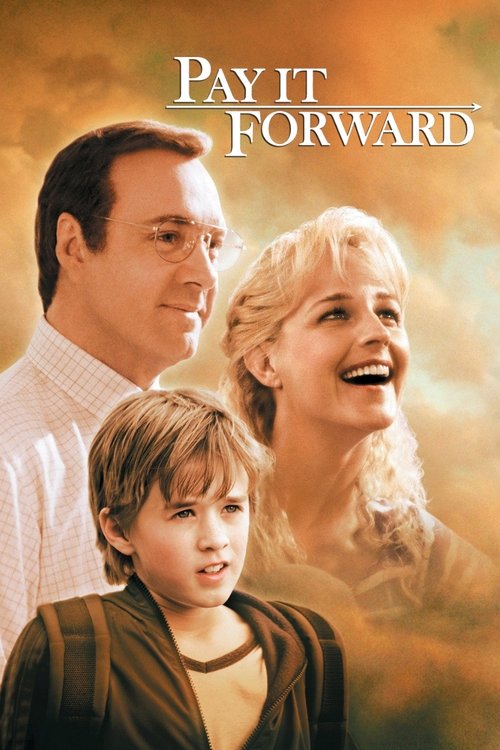
Pay It Forward
Like some other kids, 12-year-old Trevor McKinney believed in the goodness of human nature. Like many other kids, he was determined to change the world for the better. Unlike most other kids, he succeeded.
Working with a moderate budget of $40.0M, the film achieved a steady performer with $55.7M in global revenue (+39% profit margin).
1 win & 4 nominations


Plot Structure
Story beats plotted across runtime


Narrative Arc
Emotional journey through the story's key moments
Story Circle
Blueprint 15-beat structure
Arcplot Score Breakdown
Weighted: Precision (70%) + Arc (15%) + Theme (15%)
Pay It Forward (2000) exhibits meticulously timed narrative architecture, characteristic of Mimi Leder's storytelling approach. This structural analysis examines how the film's 15-point plot structure maps to proven narrative frameworks across 2 hours and 2 minutes. With an Arcplot score of 7.3, the film balances conventional beats with creative variation.
Characters
Cast & narrative archetypes

Trevor McKinney
Eugene Simonet
Arlene McKinney
Chris Chandler
Ricky McKinney
Grace
Jerry
Main Cast & Characters
Trevor McKinney
Played by Haley Joel Osment
A compassionate 11-year-old boy who creates the "pay it forward" concept for a school assignment, believing he can change the world through kindness.
Eugene Simonet
Played by Kevin Spacey
A socially withdrawn social studies teacher with severe burn scars who inspires Trevor's project and slowly opens up to connection with Arlene.
Arlene McKinney
Played by Helen Hunt
Trevor's struggling single mother, a recovering alcoholic working multiple jobs while trying to protect her son from her troubled past.
Chris Chandler
Played by Jay Mohr
A journalist investigating the mysterious chain of good deeds who ultimately traces them back to their origin.
Ricky McKinney
Played by Jon Bon Jovi
Trevor's abusive, alcoholic father who abandoned the family and periodically returns, representing a cycle of dysfunction Trevor tries to break.
Grace
Played by Angie Dickinson
Arlene's mother and Trevor's grandmother, an elderly woman Arlene reconnects with as part of her own paying it forward.
Jerry
Played by James Caviezel
A homeless drug addict who becomes one of Trevor's first recipients of kindness, struggling to pay the deed forward himself.
Structural Analysis
The Status Quo at 2 minutes (2% through the runtime) establishes Trevor lives in a struggling household with his alcoholic single mother Arlene in Las Vegas. He witnesses her difficulties and the harsh realities of their lower-income life, setting up a world lacking hope and connection.. Structural examination shows that this early placement immediately immerses viewers in the story world.
The inciting incident occurs at 14 minutes when Trevor conceives his "Pay It Forward" idea: instead of paying back favors, you pay forward to three new people, who each pay forward to three more, creating exponential kindness. This idea disrupts his passive acceptance of the world's problems.. At 12% through the film, this Disruption aligns precisely with traditional story structure. This beat shifts the emotional landscape, launching the protagonist into the central conflict.
The First Threshold at 31 minutes marks the transition into Act II, occurring at 25% of the runtime. This illustrates the protagonist's commitment to Trevor actively brings homeless Jerry into their home and garage, defying his mother's rules and his own fear. This is his irreversible choice to truly commit to his idea rather than just theorize about it. He enters the world of active altruism., moving from reaction to action.
At 61 minutes, the Midpoint arrives at 50% of the runtime—precisely centered, creating perfect narrative symmetry. Of particular interest, this crucial beat False defeat: Jerry relapses into addiction and abandons the chance Trevor gave him. Trevor's first attempt appears to fail completely. Stakes raise as Trevor realizes his idea might not work - people might be too broken to accept help. The easy optimism of Act 2 ends., fundamentally raising what's at risk. The emotional intensity shifts, dividing the narrative into clear before-and-after phases.
The Collapse moment at 92 minutes (75% through) represents the emotional nadir. Here, Eugene abandons the relationship with Arlene out of fear, breaking Trevor's heart. Trevor confronts him, devastated that even the good people in his life won't accept help. Trevor gives up on his idea, declaring it doesn't work. His hope dies - the whiff of death is the death of his idealism., indicates the protagonist at their lowest point. This beat's placement in the final quarter sets up the climactic reversal.
The Second Threshold at 101 minutes initiates the final act resolution at 83% of the runtime. Eugene returns, having overcome his fear. He and Arlene reconcile. Trevor witnesses that damaged people CAN heal and accept love. He gains the insight that his idea's success isn't about immediate visible results - it's about planting seeds. New resolve forms., demonstrating the transformation achieved throughout the journey.
Emotional Journey
Pay It Forward's emotional architecture traces a deliberate progression across 15 carefully calibrated beats.
Narrative Framework
This structural analysis employs structural analysis methodology used to understand storytelling architecture. By mapping Pay It Forward against these established plot points, we can identify how Mimi Leder utilizes or subverts traditional narrative conventions. The plot point approach reveals not only adherence to structural principles but also creative choices that distinguish Pay It Forward within the drama genre.
Mimi Leder's Structural Approach
Among the 4 Mimi Leder films analyzed on Arcplot, the average structural score is 7.1, reflecting strong command of classical structure. Pay It Forward represents one of the director's most structurally precise works. For comparative analysis, explore the complete Mimi Leder filmography.
Comparative Analysis
Additional drama films include After Thomas, South Pacific and Dirty Dancing: Havana Nights. For more Mimi Leder analyses, see The Peacemaker, On the Basis of Sex and Deep Impact.
Plot Points by Act
Act I
SetupStatus Quo
Trevor lives in a struggling household with his alcoholic single mother Arlene in Las Vegas. He witnesses her difficulties and the harsh realities of their lower-income life, setting up a world lacking hope and connection.
Theme
Mr. Eugene Simonet, Trevor's disfigured social studies teacher, gives the class an assignment: "Think of an idea to change the world and put it into action." This directly states the film's thematic question about individual agency and social transformation.
Worldbuilding
We meet Trevor's world: his struggling mother Arlene working multiple jobs, his absent alcoholic father, the tough Las Vegas environment. We see Eugene's isolated existence and severe facial scars. The world is established as one where people are disconnected and hurting.
Disruption
Trevor conceives his "Pay It Forward" idea: instead of paying back favors, you pay forward to three new people, who each pay forward to three more, creating exponential kindness. This idea disrupts his passive acceptance of the world's problems.
Resistance
Trevor debates how to implement his idea. He identifies his three people: Jerry (homeless addict), Mr. Simonet (lonely teacher), and Adam (bullied classmate). He struggles with doubt about whether one kid can really make a difference. Eugene serves as skeptical mentor figure.
Act II
ConfrontationFirst Threshold
Trevor actively brings homeless Jerry into their home and garage, defying his mother's rules and his own fear. This is his irreversible choice to truly commit to his idea rather than just theorize about it. He enters the world of active altruism.
Mirror World
Trevor works to set up his mother Arlene and teacher Eugene romantically. This relationship becomes the thematic mirror - two damaged adults who represent what happens when people are too hurt to accept help or connection. Their healing parallels Trevor's mission.
Premise
The fun of watching the idea in action: Trevor helps Jerry, Jerry helps others, Eugene and Arlene tentatively connect, acts of kindness begin spreading. We see the promise of the premise - what if kindness really could multiply? Trevor becomes invested in making everyone's lives better.
Midpoint
False defeat: Jerry relapses into addiction and abandons the chance Trevor gave him. Trevor's first attempt appears to fail completely. Stakes raise as Trevor realizes his idea might not work - people might be too broken to accept help. The easy optimism of Act 2 ends.
Opposition
Pressure mounts: Trevor's abusive father Ricky returns, threatening Arlene and Eugene's relationship. Eugene's fear of intimacy intensifies. Trevor feels his idea is failing as Jerry disappeared and Adam moved away. The forces of cynicism, addiction, and abuse close in. Trevor becomes discouraged.
Collapse
Eugene abandons the relationship with Arlene out of fear, breaking Trevor's heart. Trevor confronts him, devastated that even the good people in his life won't accept help. Trevor gives up on his idea, declaring it doesn't work. His hope dies - the whiff of death is the death of his idealism.
Crisis
Trevor sits in darkness, convinced he failed. Meanwhile, unbeknownst to him, his idea has been spreading across the country - we see the parallel story of the reporter tracking the chain of kindness back to its source. The contrast between Trevor's despair and reality deepens.
Act III
ResolutionSecond Threshold
Eugene returns, having overcome his fear. He and Arlene reconcile. Trevor witnesses that damaged people CAN heal and accept love. He gains the insight that his idea's success isn't about immediate visible results - it's about planting seeds. New resolve forms.
Synthesis
Trevor defends his bullied friend from attackers, embodying his principle of helping others even when it's difficult. People gather at his house as the movement spreads. The finale converges: Trevor acts on his values, the reporter discovers him, and the exponential kindness becomes visible. Trevor is fatally stabbed protecting his friend.
Transformation
Hundreds gather at Trevor's home with candles, a vigil showing the massive impact of his idea. Where the opening showed isolated, hurting individuals, the closing shows community and connection. Trevor's death proves the ultimate point: one person's sacrifice can transform the world. Tragic transformation.