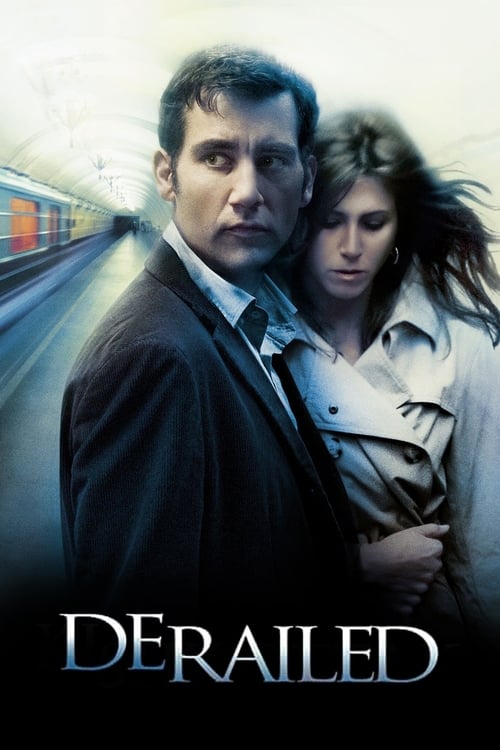
Derailed
When two married business executives having an affair are blackmailed by a violent criminal, they are forced to turn the tables on him to save their families.
Despite a respectable budget of $22.0M, Derailed became a solid performer, earning $57.5M worldwide—a 161% return.


Plot Structure
Story beats plotted across runtime


Narrative Arc
Emotional journey through the story's key moments
Story Circle
Blueprint 15-beat structure
Arcplot Score Breakdown
Weighted: Precision (70%) + Arc (15%) + Theme (15%)
Derailed (2005) exhibits strategically placed story structure, characteristic of Mikael Håfström's storytelling approach. This structural analysis examines how the film's 15-point plot structure maps to proven narrative frameworks across 1 hour and 48 minutes. With an Arcplot score of 7.7, the film showcases strong structural fundamentals.
Characters
Cast & narrative archetypes

Charles Schine
Lucinda Harris
Philippe LaRoche
Dexter
Eliot Firth
Deanna Schine
Detective Franklin Church
Main Cast & Characters
Charles Schine
Played by Clive Owen
Married advertising executive who becomes entangled in blackmail after an affair goes wrong.
Lucinda Harris
Played by Jennifer Aniston
Mysterious financial consultant who draws Charles into a dangerous affair and deception.
Philippe LaRoche
Played by Vincent Cassel
Violent criminal who blackmails Charles after catching him and Lucinda together.
Dexter
Played by RZA
Ex-convict who becomes Charles's unlikely ally in fighting back against the blackmailers.
Eliot Firth
Played by Xzibit
Charles's business partner and friend who provides support during his crisis.
Deanna Schine
Played by Melissa George
Charles's wife, a nurse devoted to their diabetic daughter and their struggling marriage.
Detective Franklin Church
Played by Giancarlo Esposito
Chicago detective investigating the crimes connected to Charles's blackmail situation.
Structural Analysis
The Status Quo at 2 minutes (2% through the runtime) establishes Charles Schine commutes on the Chicago train, showing his ordinary suburban life as an advertising executive with a sick daughter requiring expensive medical treatment. Establishes his financial stress and monotonous routine.. Of particular interest, this early placement immediately immerses viewers in the story world.
The inciting incident occurs at 12 minutes when Charles meets Lucinda Harris on the train when he doesn't have money for fare and she pays for him. Instant chemistry. This chance encounter disrupts his routine and opens the door to temptation.. At 11% through the film, this Disruption aligns precisely with traditional story structure. This beat shifts the emotional landscape, launching the protagonist into the central conflict.
The First Threshold at 28 minutes marks the transition into Act II, occurring at 26% of the runtime. This indicates the protagonist's commitment to Charles makes the active choice to meet Lucinda at a hotel for an affair. They check into a room together, crossing the point of no return. This irreversible decision launches him into a dangerous new world., moving from reaction to action.
At 53 minutes, the Midpoint arrives at 50% of the runtime—precisely centered, creating perfect narrative symmetry. Structural examination shows that this crucial beat False defeat: LaRoche demands $100,000 - an impossible sum. Charles believes he's trapped with no way out. Stakes raise dramatically as his embezzlement is discovered at work and he faces criminal investigation., fundamentally raising what's at risk. The emotional intensity shifts, dividing the narrative into clear before-and-after phases.
The Collapse moment at 79 minutes (73% through) represents the emotional nadir. Here, Winston is murdered by LaRoche after confronting him. The whiff of death: an innocent man dies because of Charles's choices. Charles hits absolute bottom, having lost everything and caused a friend's death., demonstrates the protagonist at their lowest point. This beat's placement in the final quarter sets up the climactic reversal.
The Second Threshold at 85 minutes initiates the final act resolution at 79% of the runtime. Major revelation: Charles discovers Lucinda and LaRoche are working together - the entire affair and attack were a con. This new information reframes everything and gives Charles clarity to fight back with intelligence rather than continue as victim., demonstrating the transformation achieved throughout the journey.
Emotional Journey
Derailed's emotional architecture traces a deliberate progression across 15 carefully calibrated beats.
Narrative Framework
This structural analysis employs proven narrative structure principles that track dramatic progression. By mapping Derailed against these established plot points, we can identify how Mikael Håfström utilizes or subverts traditional narrative conventions. The plot point approach reveals not only adherence to structural principles but also creative choices that distinguish Derailed within the drama genre.
Mikael Håfström's Structural Approach
Among the 8 Mikael Håfström films analyzed on Arcplot, the average structural score is 7.3, reflecting strong command of classical structure. Derailed represents one of the director's most structurally precise works. For comparative analysis, explore the complete Mikael Håfström filmography.
Comparative Analysis
Additional drama films include After Thomas, South Pacific and Dirty Dancing: Havana Nights. For more Mikael Håfström analyses, see The Rite, Stockholm Bloodbath and Evil.
Plot Points by Act
Act I
SetupStatus Quo
Charles Schine commutes on the Chicago train, showing his ordinary suburban life as an advertising executive with a sick daughter requiring expensive medical treatment. Establishes his financial stress and monotonous routine.
Theme
A colleague warns Charles about the dangers of temptation and stepping outside one's normal boundaries: "One wrong turn and you can't find your way back." Theme of how deception leads to inescapable consequences.
Worldbuilding
Charles's world is established: struggling marriage with Deanna, daughter Amy's diabetes requiring experimental treatment, financial pressures, and the tedium of his advertising job. Shows his vulnerability and desire for escape.
Disruption
Charles meets Lucinda Harris on the train when he doesn't have money for fare and she pays for him. Instant chemistry. This chance encounter disrupts his routine and opens the door to temptation.
Resistance
Charles and Lucinda develop a flirtatious friendship during train rides. Both claim to be married. Charles debates crossing the line, pulled between his obligations and this new excitement. They meet for lunch, growing closer.
Act II
ConfrontationFirst Threshold
Charles makes the active choice to meet Lucinda at a hotel for an affair. They check into a room together, crossing the point of no return. This irreversible decision launches him into a dangerous new world.
Mirror World
LaRoche violently breaks into the hotel room, beats Charles, and rapes Lucinda. This brutal attack introduces the real consequences of Charles's deception and the world of criminal exploitation he's now trapped in.
Premise
Charles is blackmailed by LaRoche for increasing amounts of money. Unable to go to police (would expose affair), Charles pays repeatedly, stealing from work and depleting his daughter's medical fund. Explores the escalating cost of lies.
Midpoint
False defeat: LaRoche demands $100,000 - an impossible sum. Charles believes he's trapped with no way out. Stakes raise dramatically as his embezzlement is discovered at work and he faces criminal investigation.
Opposition
Pressure intensifies from all sides: workplace investigation, LaRoche's escalating threats, strain on marriage. Charles's ex-con mailroom friend Winston offers to help. Charles makes increasingly desperate choices to protect his secrets.
Collapse
Winston is murdered by LaRoche after confronting him. The whiff of death: an innocent man dies because of Charles's choices. Charles hits absolute bottom, having lost everything and caused a friend's death.
Crisis
Charles processes the devastating loss and guilt. He spirals into despair, realizing the full extent of his moral failure. Dark night of the soul where he must decide whether to continue running or face the truth.
Act III
ResolutionSecond Threshold
Major revelation: Charles discovers Lucinda and LaRoche are working together - the entire affair and attack were a con. This new information reframes everything and gives Charles clarity to fight back with intelligence rather than continue as victim.
Synthesis
Charles turns the tables on his blackmailers. He outsmarts Lucinda and LaRoche, using evidence against them. Confrontation where he reclaims power, exposes their scheme, and ensures they face justice. Charles applies lessons learned.
Transformation
Final image mirrors opening: Charles on the train commute, but transformed. He looks at his wedding ring with renewed appreciation. Chooses honesty with his wife. A wiser man who understands the value of what he almost lost.