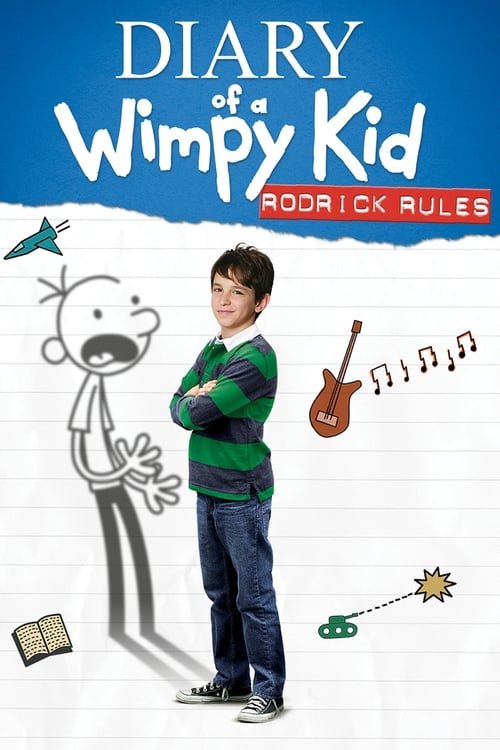
Diary of a Wimpy Kid: Rodrick Rules
Wimpy Greg Heffley, now in seventh grade, thinks he has it all together. He has mastered middle school and gotten rid of the Cheese Touch. However, Greg's older brother, Rodrick, is itching to cut him down to size. He gets the perfect opportunity when their mother tries to force the boys to bond. Rodrick may be Greg's chief tormentor, but he feels his constant pranks are just what his little brother needs to prepare him for life's hard knocks.
Despite a respectable budget of $21.0M, Diary of a Wimpy Kid: Rodrick Rules became a financial success, earning $72.5M worldwide—a 245% return.
2 wins & 5 nominations


Plot Structure
Story beats plotted across runtime


Narrative Arc
Emotional journey through the story's key moments
Story Circle
Blueprint 15-beat structure
Arcplot Score Breakdown
Weighted: Precision (70%) + Arc (15%) + Theme (15%)
Diary of a Wimpy Kid: Rodrick Rules (2011) demonstrates deliberately positioned plot construction, characteristic of David Bowers's storytelling approach. This structural analysis examines how the film's 15-point plot structure maps to proven narrative frameworks across 1 hour and 39 minutes. With an Arcplot score of 7.1, the film balances conventional beats with creative variation.
Characters
Cast & narrative archetypes

Greg Heffley
Rodrick Heffley
Rowley Jefferson
Susan Heffley
Frank Heffley
Holly Hills
Chirag Gupta
Angie Steadman
Main Cast & Characters
Greg Heffley
Played by Zachary Gordon
A middle school student trying to survive adolescence while dealing with his embarrassing older brother Rodrick and documenting his struggles in a journal.
Rodrick Heffley
Played by Devon Bostick
Greg's rebellious older brother and drummer in a rock band, who constantly torments Greg but shares a secret that bonds them.
Rowley Jefferson
Played by Robert Capron
Greg's naive and loyal best friend who remains enthusiastically childlike and often embarrasses Greg with his innocence.
Susan Heffley
Played by Rachael Harris
Greg and Rodrick's well-meaning mother who tries to bring the family together and improve her sons' relationship.
Frank Heffley
Played by Steve Zahn
Greg and Rodrick's stern but fair father who has traditional views on discipline and masculinity.
Holly Hills
Played by Peyton List
The popular girl at school who Greg has a crush on and tries to impress throughout the film.
Chirag Gupta
Played by Karan Brar
One of Greg's friends at school who becomes the victim of an 'invisible' prank.
Angie Steadman
Played by Laine MacNeil
A girl in Greg's class who tries to partner with him for a school project and represents what Greg considers uncool.
Structural Analysis
The Status Quo at 1 minutes (1% through the runtime) establishes Greg Heffley returns to school after summer, establishing his ongoing struggle for popularity and his contentious relationship with his older brother Rodrick, who constantly torments him.. Notably, this early placement immediately immerses viewers in the story world.
The inciting incident occurs at 12 minutes when Mom institutes "Mom Bucks" and forces Greg and Rodrick into mandatory bonding time, disrupting Greg's plans to avoid his brother and climb the social ladder independently.. At 12% through the film, this Disruption aligns precisely with traditional story structure. This beat shifts the emotional landscape, launching the protagonist into the central conflict.
The First Threshold at 25 minutes marks the transition into Act II, occurring at 25% of the runtime. This illustrates the protagonist's commitment to Greg makes a deal with Rodrick: he'll help get Mom off Rodrick's back about his behavior if Rodrick promises not to reveal the embarrassing secret, entering into a reluctant partnership with his brother., moving from reaction to action.
At 50 minutes, the Midpoint arrives at 50% of the runtime—precisely centered, creating perfect narrative symmetry. The analysis reveals that this crucial beat Rodrick's party is a success and the brothers successfully clean up before their parents return home. Greg feels triumphant, believing he's mastered deception and that his alliance with Rodrick is working perfectly., fundamentally raising what's at risk. The emotional intensity shifts, dividing the narrative into clear before-and-after phases.
The Collapse moment at 74 minutes (75% through) represents the emotional nadir. Here, The party secret is exposed to their parents through photographic evidence. Greg and Rodrick are both punished, their relationship collapses back into blame and resentment, and Greg is humiliated at school when Rodrick reveals the embarrassing summer secret in revenge., illustrates the protagonist at their lowest point. This beat's placement in the final quarter sets up the climactic reversal.
The Second Threshold at 79 minutes initiates the final act resolution at 80% of the runtime. Greg learns that Rodrick's band is disqualified from the talent show due to their punishment. Greg realizes that despite everything, he actually cares about his brother's dreams and decides to help him genuinely, not for personal gain., demonstrating the transformation achieved throughout the journey.
Emotional Journey
Diary of a Wimpy Kid: Rodrick Rules's emotional architecture traces a deliberate progression across 15 carefully calibrated beats.
Narrative Framework
This structural analysis employs proven narrative structure principles that track dramatic progression. By mapping Diary of a Wimpy Kid: Rodrick Rules against these established plot points, we can identify how David Bowers utilizes or subverts traditional narrative conventions. The plot point approach reveals not only adherence to structural principles but also creative choices that distinguish Diary of a Wimpy Kid: Rodrick Rules within the family genre.
David Bowers's Structural Approach
Among the 5 David Bowers films analyzed on Arcplot, the average structural score is 6.9, demonstrating varied approaches to story architecture. Diary of a Wimpy Kid: Rodrick Rules represents one of the director's most structurally precise works. For comparative analysis, explore the complete David Bowers filmography.
Comparative Analysis
Additional family films include The Black Stallion, The Bad Guys and Ella Enchanted. For more David Bowers analyses, see Astro Boy, Diary of a Wimpy Kid: The Long Haul and Diary of a Wimpy Kid: Dog Days.
Plot Points by Act
Act I
SetupStatus Quo
Greg Heffley returns to school after summer, establishing his ongoing struggle for popularity and his contentious relationship with his older brother Rodrick, who constantly torments him.
Theme
Greg's mom says "If you two could just get along, you'd see you have more in common than you think," establishing the theme about brotherhood and finding common ground with those different from us.
Worldbuilding
Introduction to Greg's world: his aspirations for popularity, his friendship with Rowley, his embarrassing family dynamics, Rodrick's punk band Löded Diper, and the secret from summer that Rodrick holds over Greg.
Disruption
Mom institutes "Mom Bucks" and forces Greg and Rodrick into mandatory bonding time, disrupting Greg's plans to avoid his brother and climb the social ladder independently.
Resistance
Greg resists the forced brotherly bonding while trying to impress Holly Hills and navigate school social dynamics. Rodrick continues to blackmail Greg with the embarrassing summer secret.
Act II
ConfrontationFirst Threshold
Greg makes a deal with Rodrick: he'll help get Mom off Rodrick's back about his behavior if Rodrick promises not to reveal the embarrassing secret, entering into a reluctant partnership with his brother.
Mirror World
Greg begins working with Rodrick to help cover for him, discovering that Rodrick has his own pressures and dreams (his band), creating a parallel to Greg's own struggles for acceptance.
Premise
The brothers' unlikely partnership develops as Greg helps Rodrick while pursuing Holly Hills. Greg covers for Rodrick's party when their parents go away, leading to increasingly complicated lies and near-misses.
Midpoint
Rodrick's party is a success and the brothers successfully clean up before their parents return home. Greg feels triumphant, believing he's mastered deception and that his alliance with Rodrick is working perfectly.
Opposition
The lies begin to unravel as evidence of the party surfaces. Greg's attempt to impress Holly backfires, tensions rise between the brothers as they try to maintain their cover story, and their parents grow increasingly suspicious.
Collapse
The party secret is exposed to their parents through photographic evidence. Greg and Rodrick are both punished, their relationship collapses back into blame and resentment, and Greg is humiliated at school when Rodrick reveals the embarrassing summer secret in revenge.
Crisis
Greg hits rock bottom, grounded and socially humiliated. He reflects on how his dishonesty and self-centered approach hurt both his relationship with Rodrick and his own reputation.
Act III
ResolutionSecond Threshold
Greg learns that Rodrick's band is disqualified from the talent show due to their punishment. Greg realizes that despite everything, he actually cares about his brother's dreams and decides to help him genuinely, not for personal gain.
Synthesis
Greg engineers a plan to get Rodrick's band back into the talent show. He works with their parents to convince them to reduce the punishment, showing maturity and genuine brotherly support, and helps ensure Löded Diper can perform.
Transformation
Greg proudly watches Rodrick perform with his band, and the brothers share a genuine moment of mutual respect. Greg has learned that family and authenticity matter more than popularity, mirroring the opening but with transformed relationships.