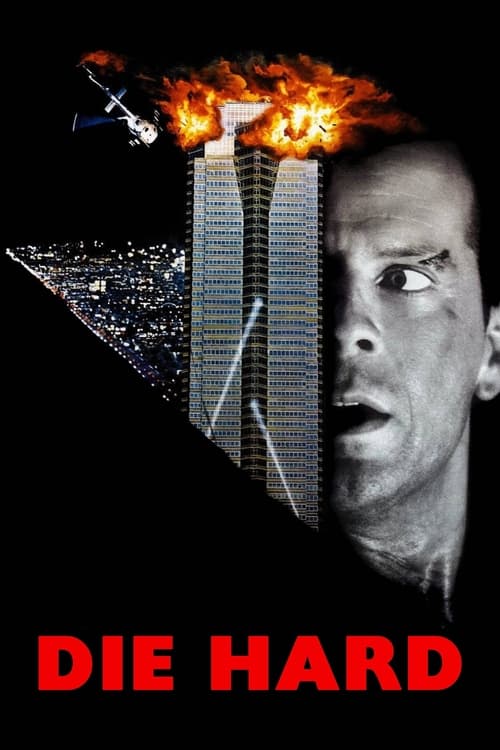
Die Hard
NYPD cop John McClane's plan to reconcile with his estranged wife is thrown for a serious loop when, minutes after he arrives at her offices Christmas Party, the entire building is overtaken by a group of terrorists. With little help from the LAPD, wisecracking McClane sets out to single-handedly rescue the hostages and bring the bad guys down.
Despite a moderate budget of $28.0M, Die Hard became a box office success, earning $140.8M worldwide—a 403% return.
Nominated for 4 Oscars. 8 wins & 8 nominations


Plot Structure
Story beats plotted across runtime


Narrative Arc
Emotional journey through the story's key moments
Story Circle
Blueprint 15-beat structure
Arcplot Score Breakdown
Weighted: Precision (70%) + Arc (15%) + Theme (15%)
Die Hard (1988) exhibits carefully calibrated narrative design, characteristic of John McTiernan's storytelling approach. This structural analysis examines how the film's 15-point plot structure maps to proven narrative frameworks across 2 hours and 12 minutes. With an Arcplot score of 7.0, the film balances conventional beats with creative variation.
Structural Analysis
The Status Quo at 1 minutes (1% through the runtime) establishes John McClane grips his airplane seat armrest, revealing his fear of flying. A fellow passenger advises him to make fists with his toes to relax—establishing John as a vulnerable everyman far from home.. Structural examination shows that this early placement immediately immerses viewers in the story world.
The inciting incident occurs at 16 minutes when Hans Gruber and his team of terrorists storm Nakatomi Plaza, taking the entire Christmas party hostage. John, barefoot and unarmed in Holly's office, barely escapes detection and flees into the building's construction zone.. At 12% through the film, this Disruption aligns precisely with traditional story structure. This beat shifts the emotional landscape, launching the protagonist into the central conflict.
The First Threshold at 33 minutes marks the transition into Act II, occurring at 25% of the runtime. This illustrates the protagonist's commitment to John kills his first terrorist, Tony, taking his radio and machine gun. By sending Tony's body down the elevator with "Now I have a machine gun, Ho Ho Ho" written on his shirt, John declares war on Hans—there's no going back., moving from reaction to action.
At 66 minutes, the Midpoint arrives at 50% of the runtime—precisely centered, creating perfect narrative symmetry. Structural examination shows that this crucial beat John and Hans meet face-to-face when Hans poses as an escaped hostage. John nearly falls for the deception, giving Hans a gun—which Hans then turns on him. The stakes raise as Hans now knows exactly who he's dealing with, and John barely escapes with his life., fundamentally raising what's at risk. The emotional intensity shifts, dividing the narrative into clear before-and-after phases.
The Collapse moment at 99 minutes (75% through) represents the emotional nadir. Here, Hans takes Holly hostage, using her as his personal shield. John, bleeding and exhausted with only two bullets left, radios Al a confession about his pride destroying his marriage—a "whiff of death" as he prepares for what seems like a suicide mission., reveals the protagonist at their lowest point. This beat's placement in the final quarter sets up the climactic reversal.
The Second Threshold at 106 minutes initiates the final act resolution at 80% of the runtime. John tapes his last gun to his back—synthesizing his cop training with everything he's learned about fighting dirty in the tower. He's no longer fighting just to survive; he's fighting to save Holly and prove his love through action, not words., demonstrating the transformation achieved throughout the journey.
Emotional Journey
Die Hard's emotional architecture traces a deliberate progression across 15 carefully calibrated beats.
Narrative Framework
This structural analysis employs a 15-point narrative structure framework that maps key story moments. By mapping Die Hard against these established plot points, we can identify how John McTiernan utilizes or subverts traditional narrative conventions. The plot point approach reveals not only adherence to structural principles but also creative choices that distinguish Die Hard within the action genre.
John McTiernan's Structural Approach
Among the 11 John McTiernan films analyzed on Arcplot, the average structural score is 7.0, reflecting strong command of classical structure. Die Hard takes a more unconventional approach compared to the director's typical style. For comparative analysis, explore the complete John McTiernan filmography.
Comparative Analysis
Additional action films include The Bad Guys, Puss in Boots and Venom: The Last Dance. For more John McTiernan analyses, see Die Hard, Die Hard: With a Vengeance and Medicine Man.
Plot Points by Act
Act I
SetupStatus Quo
John McClane grips his airplane seat armrest, revealing his fear of flying. A fellow passenger advises him to make fists with his toes to relax—establishing John as a vulnerable everyman far from home.
Theme
Argyle the limo driver asks John about his marriage: "So your lady sees the lights, the big money, and decides to check out the fast lane." The theme is stated—can John let go of his pride to save his marriage and embrace what truly matters?
Worldbuilding
John arrives at Nakatomi Plaza for the Christmas party, reunites tensely with estranged wife Holly (now using her maiden name Gennero), meets the corporate world she's chosen over their marriage, and we glimpse the terrorists preparing their assault.
Disruption
Hans Gruber and his team of terrorists storm Nakatomi Plaza, taking the entire Christmas party hostage. John, barefoot and unarmed in Holly's office, barely escapes detection and flees into the building's construction zone.
Resistance
John debates whether to engage or hide. He explores the building, witnesses the terrorists' brutality when they execute Takagi, pulls the fire alarm to summon help, and realizes he must act alone when the alarm is dismissed.
Act II
ConfrontationFirst Threshold
John kills his first terrorist, Tony, taking his radio and machine gun. By sending Tony's body down the elevator with "Now I have a machine gun, Ho Ho Ho" written on his shirt, John declares war on Hans—there's no going back.
Mirror World
Sergeant Al Powell responds to John's radio call. Their bond forms instantly—Al becomes John's only connection to the outside world, his emotional anchor, and the relationship that carries the film's themes of trust and partnership.
Premise
The promise of the premise: one cop versus twelve terrorists. John uses guerrilla tactics, crawls through air ducts, picks off terrorists one by one, trades quips with Hans over the radio, and proves himself a formidable adversary through wit and determination.
Midpoint
John and Hans meet face-to-face when Hans poses as an escaped hostage. John nearly falls for the deception, giving Hans a gun—which Hans then turns on him. The stakes raise as Hans now knows exactly who he's dealing with, and John barely escapes with his life.
Opposition
The walls close in. The FBI cuts building power (exactly as Hans planned), enabling the vault to open. John's feet are shredded by broken glass. The SWAT assault fails catastrophically. Hans discovers Holly is John's wife, gaining ultimate leverage.
Collapse
Hans takes Holly hostage, using her as his personal shield. John, bleeding and exhausted with only two bullets left, radios Al a confession about his pride destroying his marriage—a "whiff of death" as he prepares for what seems like a suicide mission.
Crisis
John's dark night of the soul. He pours out his regrets to Al, admitting he should have been more supportive of Holly. He asks Al to find Holly and apologize for him, accepting he may not survive. His emotional transformation is complete.
Act III
ResolutionSecond Threshold
John tapes his last gun to his back—synthesizing his cop training with everything he's learned about fighting dirty in the tower. He's no longer fighting just to survive; he's fighting to save Holly and prove his love through action, not words.
Synthesis
The finale: John confronts Hans on the roof, distracts him with laughter and raised hands, then draws his hidden weapon. He kills Hans's last henchman, shoots Hans, and watches as Hans falls from the building—but not before saving Holly by unclasping her watch.
Transformation
John and Holly embrace outside Nakatomi Plaza. She introduces herself to Al as "Holly McClane"—reclaiming John's name. John, humbled and transformed, has proven his love through sacrifice. Al overcomes his own trauma by shooting Karl. The family is reunited.