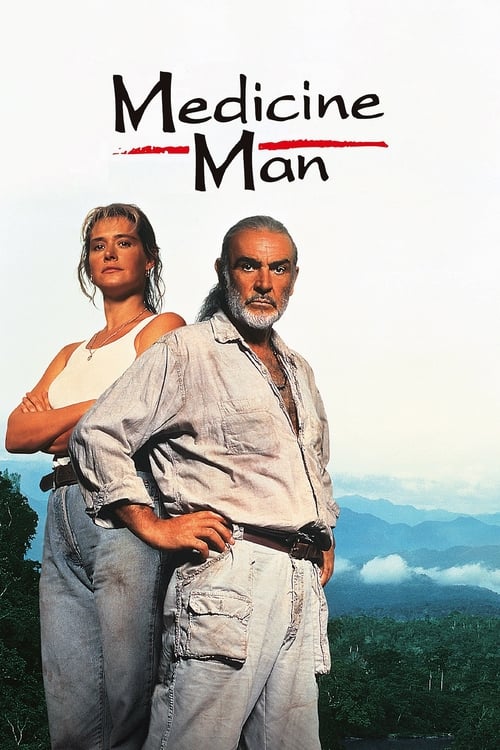
Medicine Man
An eccentric scientist in the Amazon jungle rejects his research assistant for being a woman, but as bulldozers threaten their work on a potential cancer cure, they learn to collaborate and begin to fall in love.
Working with a respectable budget of $40.0M, the film achieved a steady performer with $45.5M in global revenue (+14% profit margin).


Plot Structure
Story beats plotted across runtime


Narrative Arc
Emotional journey through the story's key moments
Story Circle
Blueprint 15-beat structure
Arcplot Score Breakdown
Weighted: Precision (70%) + Arc (15%) + Theme (15%)
Medicine Man (1992) exhibits deliberately positioned story structure, characteristic of John McTiernan's storytelling approach. This structural analysis examines how the film's 15-point plot structure maps to proven narrative frameworks across 1 hour and 46 minutes. With an Arcplot score of 7.7, the film showcases strong structural fundamentals.
Characters
Cast & narrative archetypes

Dr. Robert Campbell
Dr. Rae Crane
Tanaki
Kalana
Main Cast & Characters
Dr. Robert Campbell
Played by Sean Connery
A brilliant but eccentric biochemist who has spent years in the Amazon rainforest searching for a cure for cancer, becoming increasingly isolated and protective of his research.
Dr. Rae Crane
Played by Lorraine Bracco
A no-nonsense research scientist sent by the pharmaceutical company to investigate Campbell's work, initially clashing with his methods before becoming invested in his mission.
Tanaki
Played by Jose Wilker
A young medicine man and Campbell's assistant who bridges the gap between traditional indigenous knowledge and modern science.
Kalana
Played by Francisco Tsiren Tsere Rereme
A young indigenous boy from the local tribe who assists Campbell and provides crucial help in the search for the cure.
Structural Analysis
The Status Quo at 2 minutes (2% through the runtime) establishes Dr. Robert Campbell living isolated in the Amazon rainforest, conducting research on indigenous plants and medicines. He's immersed in his work, eccentric, and has "gone native" to some degree, living among the indigenous people.. Significantly, this early placement immediately immerses viewers in the story world.
The inciting incident occurs at 12 minutes when Dr. Rae Crane arrives from the pharmaceutical company, sent to check on Campbell's progress and investigate why he demanded more funding. She represents the intrusion of the outside world and corporate interests into his isolated paradise.. At 12% through the film, this Disruption aligns precisely with traditional story structure. This beat shifts the emotional landscape, launching the protagonist into the central conflict.
The First Threshold at 25 minutes marks the transition into Act II, occurring at 24% of the runtime. This reveals the protagonist's commitment to Rae decides to stay and help Campbell find the cure again rather than report his failure. She commits to the quest, entering his world fully. They become partners in the search for the mysterious compound., moving from reaction to action.
At 52 minutes, the Midpoint arrives at 49% of the runtime—precisely centered, creating perfect narrative symmetry. The analysis reveals that this crucial beat False defeat: They discover the road builders are coming, threatening to destroy the forest where the cure exists. Time is running out. The stakes raise dramatically - it's not just about finding the cure, but saving the forest itself., fundamentally raising what's at risk. The emotional intensity shifts, dividing the narrative into clear before-and-after phases.
The Collapse moment at 77 minutes (73% through) represents the emotional nadir. Here, All is lost: The bulldozers reach the research area, destroying the specific trees Campbell believed held the cure. His life's work appears destroyed. The "whiff of death" - the death of the forest, the death of hope, potential death of millions who could have been saved., reveals the protagonist at their lowest point. This beat's placement in the final quarter sets up the climactic reversal.
The Second Threshold at 85 minutes initiates the final act resolution at 80% of the runtime. Breakthrough realization: Campbell discovers the cure wasn't in the plants themselves but in the sugar ants that lived on a specific flower. New information changes everything - they can still save the discovery. Synthesis of indigenous knowledge and modern science., demonstrating the transformation achieved throughout the journey.
Emotional Journey
Medicine Man's emotional architecture traces a deliberate progression across 15 carefully calibrated beats.
Narrative Framework
This structural analysis employs proven narrative structure principles that track dramatic progression. By mapping Medicine Man against these established plot points, we can identify how John McTiernan utilizes or subverts traditional narrative conventions. The plot point approach reveals not only adherence to structural principles but also creative choices that distinguish Medicine Man within the adventure genre.
John McTiernan's Structural Approach
Among the 11 John McTiernan films analyzed on Arcplot, the average structural score is 7.0, reflecting strong command of classical structure. Medicine Man represents one of the director's most structurally precise works. For comparative analysis, explore the complete John McTiernan filmography.
Comparative Analysis
Additional adventure films include The Black Stallion, The Bad Guys and Puss in Boots. For more John McTiernan analyses, see Die Hard, Die Hard: With a Vengeance and Basic.
Plot Points by Act
Act I
SetupStatus Quo
Dr. Robert Campbell living isolated in the Amazon rainforest, conducting research on indigenous plants and medicines. He's immersed in his work, eccentric, and has "gone native" to some degree, living among the indigenous people.
Theme
Theme stated through discussion about the rainforest's value: "This forest represents the lungs of the world" and the tension between preservation and progress. The forest holds cures that modern science is destroying before discovering.
Worldbuilding
Establishing Campbell's world: his research camp, relationship with the Macu tribe, his obsessive work with plant samples, and the dying research station. Shows his isolation from civilization and immersion in indigenous culture.
Disruption
Dr. Rae Crane arrives from the pharmaceutical company, sent to check on Campbell's progress and investigate why he demanded more funding. She represents the intrusion of the outside world and corporate interests into his isolated paradise.
Resistance
Campbell resists sharing his discovery with Rae. Conflict between his secretive nature and her scientific demands. He reveals he found a cure for cancer but cannot replicate it. Rae debates whether to trust him or report his failure to the company.
Act II
ConfrontationFirst Threshold
Rae decides to stay and help Campbell find the cure again rather than report his failure. She commits to the quest, entering his world fully. They become partners in the search for the mysterious compound.
Mirror World
Romantic/collaborative chemistry develops between Campbell and Rae. Their relationship subplot begins, representing the theme of connection vs. isolation, collaboration vs. solitary genius. She challenges his misanthropic worldview.
Premise
The promise of the premise: searching for the miracle cure in the rainforest. They test hundreds of samples, work with the Macu people, explore the canopy, and experience the wonder and danger of the jungle. Adventure and scientific discovery.
Midpoint
False defeat: They discover the road builders are coming, threatening to destroy the forest where the cure exists. Time is running out. The stakes raise dramatically - it's not just about finding the cure, but saving the forest itself.
Opposition
Pressure intensifies: the road construction advances closer, the Macu tribe is threatened with displacement, Campbell and Rae's relationship complications, and they still cannot isolate the compound. Every test fails. The forest is being destroyed around them.
Collapse
All is lost: The bulldozers reach the research area, destroying the specific trees Campbell believed held the cure. His life's work appears destroyed. The "whiff of death" - the death of the forest, the death of hope, potential death of millions who could have been saved.
Crisis
Dark night of the soul: Campbell must confront his failure and decide what matters. Rae comforts him. They process the loss and face the question of whether to give up or find another way. Emotional reckoning with their mission and relationship.
Act III
ResolutionSecond Threshold
Breakthrough realization: Campbell discovers the cure wasn't in the plants themselves but in the sugar ants that lived on a specific flower. New information changes everything - they can still save the discovery. Synthesis of indigenous knowledge and modern science.
Synthesis
Finale: Race to collect the ants and preserve the compound before the forest is completely destroyed. Campbell and Rae work together, combining their skills. They successfully isolate the cure and preserve samples, achieving their goal.
Transformation
Final image mirrors opening but transformed: Campbell is no longer isolated and misanthropic. He's connected to Rae, committed to sharing the discovery with the world, and has found balance between preservation and progress. He leaves the forest changed, with purpose and partnership.