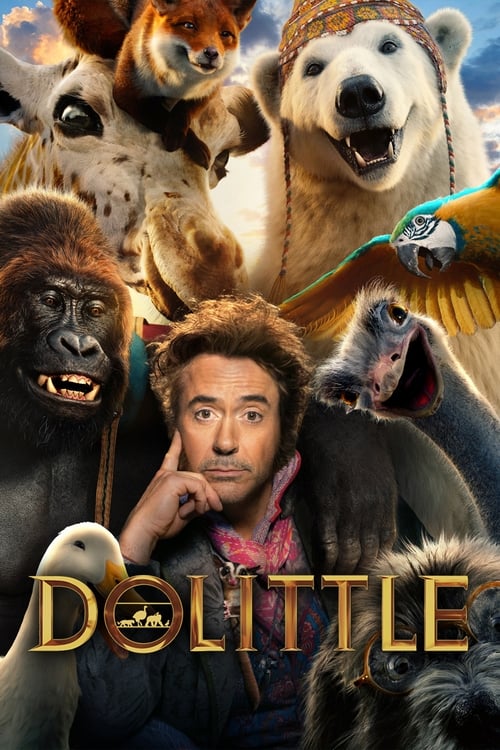
Dolittle
After losing his wife seven years earlier, the eccentric Dr. John Dolittle, famed doctor and veterinarian of Queen Victoria’s England, hermits himself away behind the high walls of Dolittle Manor with only his menagerie of exotic animals for company. But when the young queen falls gravely ill, a reluctant Dolittle is forced to set sail on an epic adventure to a mythical island in search of a cure, regaining his wit and courage as he crosses old adversaries and discovers wondrous creatures.
Working with a blockbuster budget of $175.0M, the film achieved a respectable showing with $251.4M in global revenue (+44% profit margin).
4 wins & 9 nominations


Plot Structure
Story beats plotted across runtime


Narrative Arc
Emotional journey through the story's key moments
Story Circle
Blueprint 15-beat structure
Arcplot Score Breakdown
Weighted: Precision (70%) + Arc (15%) + Theme (15%)
Dolittle (2020) exhibits meticulously timed plot construction, characteristic of Stephen Gaghan's storytelling approach. This structural analysis examines how the film's 15-point plot structure maps to proven narrative frameworks across 1 hour and 41 minutes. With an Arcplot score of 7.7, the film showcases strong structural fundamentals.
Characters
Cast & narrative archetypes

Dr. John Dolittle
Tommy Stubbins
Lady Rose
Dr. Blair Müdfly
Lord Thomas Badgley
Poly (Parrot)
Chee-Chee (Gorilla)
Yoshi (Polar Bear)
Dab-Dab (Duck)
Main Cast & Characters
Dr. John Dolittle
Played by Robert Downey Jr.
A reclusive veterinarian who can speak to animals, withdrawn after his wife's death but forced back into adventure.
Tommy Stubbins
Played by Harry Collett
A young boy who accidentally shoots a squirrel and becomes Dolittle's apprentice on the journey.
Lady Rose
Played by Carmel Laniado
A resourceful lady-in-waiting to the Queen who seeks Dolittle's help to save the monarch.
Dr. Blair Müdfly
Played by Michael Sheen
Dolittle's former colleague and rival who sabotages the mission out of jealousy and greed.
Lord Thomas Badgley
Played by Jim Broadbent
An aristocratic hunter who seeks to claim Dolittle's estate and works against him.
Poly (Parrot)
Played by Emma Thompson
A neurotic and anxious macaw with leadership aspirations who helps guide the animal team.
Chee-Chee (Gorilla)
Played by Rami Malek
A timid and anxiety-ridden gorilla struggling with self-confidence despite his strength.
Yoshi (Polar Bear)
Played by John Cena
A cheerful and loyal polar bear with a scarf, serving as Dolittle's gentle companion.
Dab-Dab (Duck)
Played by Octavia Spencer
A no-nonsense, practical duck who keeps the household organized and on task.
Structural Analysis
The Status Quo at 1 minutes (1% through the runtime) establishes Animated prologue shows Dr. Dolittle's idyllic life with his wife Lily, establishing his gift for talking to animals and their shared adventures before her tragic death at sea, after which he becomes a reclusive hermit.. Structural examination shows that this early placement immediately immerses viewers in the story world.
The inciting incident occurs at 12 minutes when Lady Rose arrives with urgent news: Queen Victoria is gravely ill and dying. Dolittle is summoned to Buckingham Palace as the only one who might save her, forcing him out of his self-imposed isolation.. At 11% through the film, this Disruption aligns precisely with traditional story structure. This beat shifts the emotional landscape, launching the protagonist into the central conflict.
The First Threshold at 24 minutes marks the transition into Act II, occurring at 24% of the runtime. This indicates the protagonist's commitment to Dolittle actively chooses to embark on the sea voyage to find the Eden Tree, despite his fear of the ocean (where his wife died). He sets sail with Tommy and his animal crew, leaving his safe haven behind., moving from reaction to action.
At 49 minutes, the Midpoint arrives at 49% of the runtime—precisely centered, creating perfect narrative symmetry. The analysis reveals that this crucial beat False defeat: King Rassouli refuses to give Dolittle Lily's journal (which contains the location of the island) and imprisons him. Dolittle must fight Rassouli's champion - a fierce tiger named Barry - raising the stakes significantly., fundamentally raising what's at risk. The emotional intensity shifts, dividing the narrative into clear before-and-after phases.
The Collapse moment at 74 minutes (73% through) represents the emotional nadir. Here, The dragon nearly kills Dolittle and his friends. Dolittle is severely wounded and appears to be dying - a literal "whiff of death." His reluctance to face his pain and open his heart has led to failure at the crucial moment., illustrates the protagonist at their lowest point. This beat's placement in the final quarter sets up the climactic reversal.
The Second Threshold at 79 minutes initiates the final act resolution at 78% of the runtime. Dolittle has a breakthrough: he discovers the dragon is suffering from internal pain (an impacted sword). By opening his heart and truly helping another suffering creature, he can save everyone. He performs emergency surgery on the dragon., demonstrating the transformation achieved throughout the journey.
Emotional Journey
Dolittle's emotional architecture traces a deliberate progression across 15 carefully calibrated beats.
Narrative Framework
This structural analysis employs systematic plot point analysis that identifies crucial turning points. By mapping Dolittle against these established plot points, we can identify how Stephen Gaghan utilizes or subverts traditional narrative conventions. The plot point approach reveals not only adherence to structural principles but also creative choices that distinguish Dolittle within the family genre.
Stephen Gaghan's Structural Approach
Among the 4 Stephen Gaghan films analyzed on Arcplot, the average structural score is 7.4, reflecting strong command of classical structure. Dolittle represents one of the director's most structurally precise works. For comparative analysis, explore the complete Stephen Gaghan filmography.
Comparative Analysis
Additional family films include The Black Stallion, The Bad Guys and Ella Enchanted. For more Stephen Gaghan analyses, see Gold, Abandon and Syriana.
Plot Points by Act
Act I
SetupStatus Quo
Animated prologue shows Dr. Dolittle's idyllic life with his wife Lily, establishing his gift for talking to animals and their shared adventures before her tragic death at sea, after which he becomes a reclusive hermit.
Theme
Poly the parrot tells Dolittle he must "open his heart again" and stop hiding from the world - the film's central theme about healing from grief and reconnecting with others.
Worldbuilding
Dolittle's estate has fallen into disrepair as he hides behind walls with his animal companions. Young Tommy Stubbins accidentally shoots a squirrel and seeks Dolittle's help. We learn Queen Victoria granted Dolittle his sanctuary, which he risks losing.
Disruption
Lady Rose arrives with urgent news: Queen Victoria is gravely ill and dying. Dolittle is summoned to Buckingham Palace as the only one who might save her, forcing him out of his self-imposed isolation.
Resistance
Dolittle reluctantly goes to the palace where he discovers the Queen has been poisoned. He learns the cure requires the fruit of the Eden Tree from a mythical island. Dolittle debates whether to undertake this dangerous journey but realizes he has no choice if he wants to save his sanctuary.
Act II
ConfrontationFirst Threshold
Dolittle actively chooses to embark on the sea voyage to find the Eden Tree, despite his fear of the ocean (where his wife died). He sets sail with Tommy and his animal crew, leaving his safe haven behind.
Mirror World
Tommy Stubbins becomes Dolittle's apprentice and mirror - a young person full of hope and openness who hasn't yet been wounded by loss. Their developing relationship represents the family and connection Dolittle has been avoiding.
Premise
The fun adventure promised by the premise: Dolittle and crew encounter various animals and obstacles. They visit Lily's disapproving father King Rassouli, navigate treacherous waters, face the villainous Dr. Mudfly who is pursuing them, and have comedic interactions with various creatures.
Midpoint
False defeat: King Rassouli refuses to give Dolittle Lily's journal (which contains the location of the island) and imprisons him. Dolittle must fight Rassouli's champion - a fierce tiger named Barry - raising the stakes significantly.
Opposition
Pressure intensifies: Dolittle earns the journal by helping Barry with his emotional issues. They reach the island but face deadly challenges. Dr. Mudfly continues his pursuit. A dragon guards the tree, and Dolittle's fears and grief threaten to overwhelm him.
Collapse
The dragon nearly kills Dolittle and his friends. Dolittle is severely wounded and appears to be dying - a literal "whiff of death." His reluctance to face his pain and open his heart has led to failure at the crucial moment.
Crisis
In his darkest moment, Dolittle must confront his grief over Lily. Tommy and the animals rally around him. Dolittle realizes that Lily would want him to keep living and loving, not hide from the world.
Act III
ResolutionSecond Threshold
Dolittle has a breakthrough: he discovers the dragon is suffering from internal pain (an impacted sword). By opening his heart and truly helping another suffering creature, he can save everyone. He performs emergency surgery on the dragon.
Synthesis
Dolittle successfully heals the dragon (in a comedic sequence), obtains the Eden Tree fruit, races back to save Queen Victoria, defeats Dr. Mudfly's plot, and cures the Queen. He has synthesized his old skills with his newfound emotional openness.
Transformation
Final image mirrors the opening: Dolittle's sanctuary is restored and thriving, but now his gates are open. He has accepted Tommy as his apprentice, reconnected with the world, and honored Lily's memory by living fully rather than hiding. The hermit has become a teacher and part of community again.