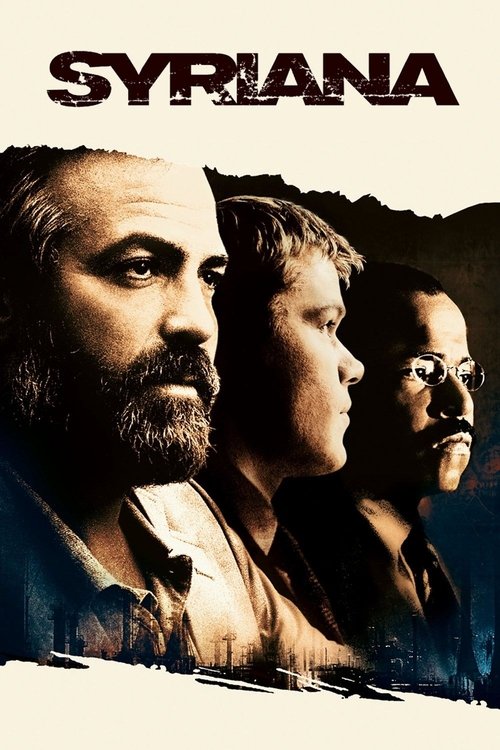
Syriana
The Middle Eastern oil industry is the backdrop of this tense drama, which weaves together numerous story lines. Bennett Holiday is an American lawyer in charge of facilitating a dubious merger of oil companies, while Bryan Woodman, a Switzerland-based energy analyst, experiences both personal tragedy and opportunity during a visit with Arabian royalty. Meanwhile, veteran CIA agent Bob Barnes uncovers an assassination plot with unsettling origins.
Working with a moderate budget of $50.0M, the film achieved a modest success with $94.0M in global revenue (+88% profit margin).
1 Oscar. 13 wins & 30 nominations


Plot Structure
Story beats plotted across runtime


Narrative Arc
Emotional journey through the story's key moments
Story Circle
Blueprint 15-beat structure
Arcplot Score Breakdown
Weighted: Precision (70%) + Arc (15%) + Theme (15%)
Syriana (2005) showcases carefully calibrated narrative architecture, characteristic of Stephen Gaghan's storytelling approach. This structural analysis examines how the film's 15-point plot structure maps to proven narrative frameworks across 2 hours and 8 minutes. With an Arcplot score of 7.1, the film balances conventional beats with creative variation.
Characters
Cast & narrative archetypes

Bob Barnes
Bryan Woodman
Bennett Holiday
Prince Nasir Al-Subaai
Danny Dalton
Dean Whiting
Prince Meshal Al-Subaai
Julie Woodman
Main Cast & Characters
Bob Barnes
Played by George Clooney
A veteran CIA operative who becomes disillusioned after a botched assassination attempt in Tehran and discovers corruption within his own agency.
Bryan Woodman
Played by Matt Damon
An energy analyst whose personal tragedy leads him to become an economic advisor to a progressive Middle Eastern prince.
Bennett Holiday
Played by Jeffrey Wright
A Washington attorney investigating corruption in a merger between two oil companies while navigating ethical dilemmas.
Prince Nasir Al-Subaai
Played by Alexander Siddig
A reform-minded heir to an emirate who wants to modernize his country but faces opposition from Western interests and his own family.
Danny Dalton
Played by Tim Blake Nelson
A corrupt oil company CEO orchestrating illegal deals to secure drilling rights in the Middle East.
Dean Whiting
Played by Christopher Plummer
A Connex Oil attorney working to facilitate the merger and manage legal complications.
Prince Meshal Al-Subaai
Played by Akbar Kurtha
The younger brother of Prince Nasir, backed by American interests to succeed his father instead.
Julie Woodman
Played by Amanda Peet
Bryan's wife who struggles with their family's moral compromises in the Middle East.
Structural Analysis
The Status Quo at 2 minutes (1% through the runtime) establishes Bob Barnes operates in Tehran, conducting covert CIA operations. Bryan Woodman advises energy companies in Geneva. Multiple players navigate the complex global oil industry, each in their established roles within a corrupt system.. Structural examination shows that this early placement immediately immerses viewers in the story world.
The inciting incident occurs at 15 minutes when Bob's mission in Tehran goes wrong when missiles he's delivering are discovered missing. Simultaneously, Prince Nasir awards Chinese oil rights instead of Connex, disrupting the expected order and triggering corporate and CIA crisis responses.. At 12% through the film, this Disruption aligns precisely with traditional story structure. This beat shifts the emotional landscape, launching the protagonist into the central conflict.
The First Threshold at 33 minutes marks the transition into Act II, occurring at 26% of the runtime. This demonstrates the protagonist's commitment to Bob accepts the assignment to assassinate Prince Nasir, crossing into morally compromised territory. Bryan chooses to become Nasir's advisor, entering the world of Middle Eastern power politics. The characters commit to paths that will lead them deeper into systemic corruption., moving from reaction to action.
At 65 minutes, the Midpoint arrives at 50% of the runtime—precisely centered, creating perfect narrative symmetry. The analysis reveals that this crucial beat False defeat: Bob is betrayed and tortured, discovering he's been set up by his own agency. The merger is approved despite evidence of corruption. The stakes raise dramatically—this isn't just business, it's a system that eliminates threats, including its own operatives., fundamentally raising what's at risk. The emotional intensity shifts, dividing the narrative into clear before-and-after phases.
The Collapse moment at 96 minutes (75% through) represents the emotional nadir. Here, Bob realizes he's been used to justify Prince Nasir's assassination—the reformer will die because he threatened oil interests. The "whiff of death": innocence and idealism die. Bob understands the full scope of betrayal but is powerless to stop it., illustrates the protagonist at their lowest point. This beat's placement in the final quarter sets up the climactic reversal.
The Second Threshold at 102 minutes initiates the final act resolution at 80% of the runtime. Realization and acceptance: Bob understands he cannot stop the system but must try anyway. Bennett recognizes the futility but maintains a sliver of integrity. The characters don't gain new power—they gain clarity about the true nature of the game they're in., demonstrating the transformation achieved throughout the journey.
Emotional Journey
Syriana's emotional architecture traces a deliberate progression across 15 carefully calibrated beats.
Narrative Framework
This structural analysis employs proven narrative structure principles that track dramatic progression. By mapping Syriana against these established plot points, we can identify how Stephen Gaghan utilizes or subverts traditional narrative conventions. The plot point approach reveals not only adherence to structural principles but also creative choices that distinguish Syriana within the drama genre.
Stephen Gaghan's Structural Approach
Among the 4 Stephen Gaghan films analyzed on Arcplot, the average structural score is 7.4, reflecting strong command of classical structure. Syriana takes a more unconventional approach compared to the director's typical style. For comparative analysis, explore the complete Stephen Gaghan filmography.
Comparative Analysis
Additional drama films include After Thomas, South Pacific and Dirty Dancing: Havana Nights. For more Stephen Gaghan analyses, see Dolittle, Gold and Abandon.
Plot Points by Act
Act I
SetupStatus Quo
Bob Barnes operates in Tehran, conducting covert CIA operations. Bryan Woodman advises energy companies in Geneva. Multiple players navigate the complex global oil industry, each in their established roles within a corrupt system.
Theme
Bennett Holiday states the theme about corruption: "Corruption is why we win." The film's central question is posed: in a system built on corruption, can anyone maintain integrity, and at what cost?
Worldbuilding
The interconnected world of Big Oil, CIA operations, legal firms, and Middle Eastern politics is established. We meet Bob Barnes running operations, Bryan Woodman as energy consultant, Bennett Holiday investigating a merger, and Prince Nasir positioning for power in an unnamed Gulf emirate.
Disruption
Bob's mission in Tehran goes wrong when missiles he's delivering are discovered missing. Simultaneously, Prince Nasir awards Chinese oil rights instead of Connex, disrupting the expected order and triggering corporate and CIA crisis responses.
Resistance
Bob resists understanding the larger conspiracy. Bryan debates whether to get closer to Prince Nasir after a family tragedy. Bennett hesitates about the depth of corruption he's uncovering. Pakistani workers lose jobs as corporations merge, leading Wasim toward radicalization.
Act II
ConfrontationFirst Threshold
Bob accepts the assignment to assassinate Prince Nasir, crossing into morally compromised territory. Bryan chooses to become Nasir's advisor, entering the world of Middle Eastern power politics. The characters commit to paths that will lead them deeper into systemic corruption.
Mirror World
Prince Nasir represents the thematic mirror—an idealistic reformer trying to change a corrupt system from within. His relationship with Bryan shows the possibility of principled action, contrasting with the cynical realpolitik surrounding them.
Premise
The "promise of the premise"—a sprawling geopolitical thriller unfolds. Bob navigates assassination plots, Bryan enjoys wealth and influence with Nasir, Bennett uncovers deeper corruption, and Wasim is recruited by terrorists. The complex machinery of oil politics operates in full.
Midpoint
False defeat: Bob is betrayed and tortured, discovering he's been set up by his own agency. The merger is approved despite evidence of corruption. The stakes raise dramatically—this isn't just business, it's a system that eliminates threats, including its own operatives.
Opposition
Bob, injured and abandoned, struggles to understand who set him up and why. Bryan realizes Nasir's reforms threaten powerful interests. Bennett faces pressure to bury his findings. Wasim prepares for a suicide bombing. The forces of institutional corruption close in on all who challenge the system.
Collapse
Bob realizes he's been used to justify Prince Nasir's assassination—the reformer will die because he threatened oil interests. The "whiff of death": innocence and idealism die. Bob understands the full scope of betrayal but is powerless to stop it.
Crisis
Dark night of the soul: Bob races to warn Nasir but knows he's likely too late. Bryan is with Nasir, unaware of the danger. Wasim approaches his target. Bennett sits with his damning evidence, knowing it will be buried. Each character faces the powerlessness of individuals against systems.
Act III
ResolutionSecond Threshold
Realization and acceptance: Bob understands he cannot stop the system but must try anyway. Bennett recognizes the futility but maintains a sliver of integrity. The characters don't gain new power—they gain clarity about the true nature of the game they're in.
Synthesis
The finale executes with tragic inevitability: Prince Nasir and his family are killed by a CIA missile strike. Wasim detonates his bomb at a Connex facility. Bob survives but is left broken. Bryan loses his friend and benefactor. The system perpetuates itself through violence.
Transformation
Bob sits alone, physically and spiritually destroyed, having witnessed the machine crush all opposition. The closing image mirrors the opening—the same corrupt system operates, but now we understand its full cost. Transformation is complete: from naive operatives to witnesses of systemic tragedy.