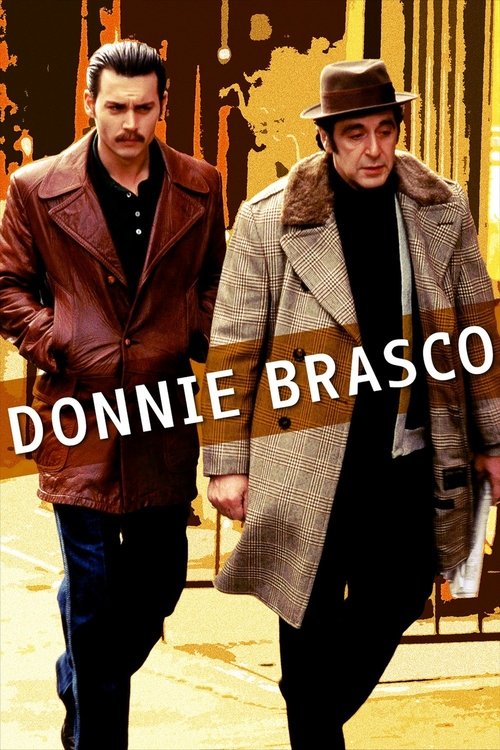
Donnie Brasco
An FBI undercover agent infiltrates the mob and identifies more with the mafia life at the expense of his regular one.
Despite a mid-range budget of $35.0M, Donnie Brasco became a commercial success, earning $124.9M worldwide—a 257% return.
Nominated for 1 Oscar. 2 wins & 16 nominations


Plot Structure
Story beats plotted across runtime


Narrative Arc
Emotional journey through the story's key moments
Story Circle
Blueprint 15-beat structure
Arcplot Score Breakdown
Weighted: Precision (70%) + Arc (15%) + Theme (15%)
Donnie Brasco (1997) showcases carefully calibrated dramatic framework, characteristic of Mike Newell's storytelling approach. This structural analysis examines how the film's 15-point plot structure maps to proven narrative frameworks across 2 hours and 7 minutes. With an Arcplot score of 6.7, the film balances conventional beats with creative variation.
Characters
Cast & narrative archetypes

Joseph D. Pistone / Donnie Brasco
Benjamin 'Lefty' Ruggiero
Dominic 'Sonny Black' Napolitano
Maggie Pistone
Tim Curley
Nicky Santora
Main Cast & Characters
Joseph D. Pistone / Donnie Brasco
Played by Johnny Depp
FBI undercover agent who infiltrates the mob under the alias Donnie Brasco, torn between his duty and his growing bond with Lefty.
Benjamin 'Lefty' Ruggiero
Played by Al Pacino
Aging, overlooked mobster who takes Donnie under his wing, desperately seeking recognition and respect from the mob hierarchy.
Dominic 'Sonny Black' Napolitano
Played by Michael Madsen
Ambitious capo who brings Donnie into bigger operations, ultimately responsible for vouching for him to the family.
Maggie Pistone
Played by Anne Heche
Joe's neglected wife who struggles with his prolonged absence and the toll his undercover work takes on their family.
Tim Curley
Played by James Russo
FBI handler who supervises Joe's undercover operation and pressures him to get results while dealing with inter-agency politics.
Nicky Santora
Played by Bruno Kirby
Suspicious mobster who questions Donnie's legitimacy and creates tension within the crew.
Structural Analysis
The Status Quo at 1 minutes (1% through the runtime) establishes Joe Pistone works as an FBI agent in a surveillance van, living a double life separate from his family. His ordinary world is one of careful deception and low-level undercover work.. Structural examination shows that this early placement immediately immerses viewers in the story world.
The inciting incident occurs at 16 minutes when Donnie witnesses his first mob hit when Tony is killed in front of him. The violence becomes real, and he's now implicated in the criminal world he's infiltrating. There's no turning back from what he's seen.. At 12% through the film, this Disruption aligns precisely with traditional story structure. This beat shifts the emotional landscape, launching the protagonist into the central conflict.
The First Threshold at 31 minutes marks the transition into Act II, occurring at 25% of the runtime. This demonstrates the protagonist's commitment to Donnie is formally introduced to Sonny Black and becomes more deeply embedded in the family's operations. He makes the active choice to pursue becoming a "made man," crossing the threshold into the heart of the organization., moving from reaction to action.
At 64 minutes, the Midpoint arrives at 50% of the runtime—precisely centered, creating perfect narrative symmetry. The analysis reveals that this crucial beat Donnie is told he's going to be "made" - becoming an official member of the mafia. This is a false victory: it's exactly what the FBI wanted, but it means Donnie will have to kill someone to complete the initiation, raising the stakes enormously., fundamentally raising what's at risk. The emotional intensity shifts, dividing the narrative into clear before-and-after phases.
The Collapse moment at 95 minutes (75% through) represents the emotional nadir. Here, The FBI pulls Donnie out of deep cover. The operation ends, and Donnie must return to being Joe Pistone. His greatest fear is realized - Lefty and Sonny will be killed for vouching for a rat. The dream of having it both ways dies., shows the protagonist at their lowest point. This beat's placement in the final quarter sets up the climactic reversal.
The Second Threshold at 102 minutes initiates the final act resolution at 81% of the runtime. Donnie testifies, providing the information that will dismantle the Bonanno family. He accepts that he must live with the consequences of his choices - both the good (justice) and the bad (Lefty's fate). He synthesizes both identities into acceptance., demonstrating the transformation achieved throughout the journey.
Emotional Journey
Donnie Brasco's emotional architecture traces a deliberate progression across 15 carefully calibrated beats.
Narrative Framework
This structural analysis employs structural analysis methodology used to understand storytelling architecture. By mapping Donnie Brasco against these established plot points, we can identify how Mike Newell utilizes or subverts traditional narrative conventions. The plot point approach reveals not only adherence to structural principles but also creative choices that distinguish Donnie Brasco within the crime genre.
Mike Newell's Structural Approach
Among the 11 Mike Newell films analyzed on Arcplot, the average structural score is 6.9, demonstrating varied approaches to story architecture. Donnie Brasco takes a more unconventional approach compared to the director's typical style. For comparative analysis, explore the complete Mike Newell filmography.
Comparative Analysis
Additional crime films include The Bad Guys, Rustom and The Whole Ten Yards. For more Mike Newell analyses, see Prince of Persia: The Sands of Time, Mona Lisa Smile and Four Weddings and a Funeral.
Plot Points by Act
Act I
SetupStatus Quo
Joe Pistone works as an FBI agent in a surveillance van, living a double life separate from his family. His ordinary world is one of careful deception and low-level undercover work.
Theme
Lefty tells Donnie, "A wise guy's always right, even when he's wrong, he's right." This establishes the theme of identity, loyalty, and the moral cost of living a lie within a criminal world.
Worldbuilding
Introduction to the mob world through Lefty Ruggiero, who takes Donnie under his wing. We learn the rules, hierarchies, and daily operations of the Bonanno crime family. Donnie begins to infiltrate by proving himself trustworthy.
Disruption
Donnie witnesses his first mob hit when Tony is killed in front of him. The violence becomes real, and he's now implicated in the criminal world he's infiltrating. There's no turning back from what he's seen.
Resistance
Donnie deepens his relationship with Lefty, learning the intricacies of mob life. He struggles with maintaining his cover while his home life deteriorates. The FBI pushes for more intelligence while Donnie debates how far to go.
Act II
ConfrontationFirst Threshold
Donnie is formally introduced to Sonny Black and becomes more deeply embedded in the family's operations. He makes the active choice to pursue becoming a "made man," crossing the threshold into the heart of the organization.
Mirror World
Donnie's relationship with Lefty deepens into genuine friendship. Lefty becomes a father figure who trusts Donnie completely, creating the emotional core that will torment Donnie - he's betraying someone who truly cares for him.
Premise
Donnie lives the mobster life fully - participating in hijackings, shakedowns, and criminal enterprises. He rises in status, gets closer to Sonny Black, and navigates mob politics. His identity as Donnie Brasco becomes more real than Joe Pistone.
Midpoint
Donnie is told he's going to be "made" - becoming an official member of the mafia. This is a false victory: it's exactly what the FBI wanted, but it means Donnie will have to kill someone to complete the initiation, raising the stakes enormously.
Opposition
The pressure intensifies from all sides. The FBI demands results and wants to pull Donnie out. His marriage crumbles. Sonny Black suspects there may be an informant. The mob war heats up. Donnie is caught between his two identities, and both are collapsing.
Collapse
The FBI pulls Donnie out of deep cover. The operation ends, and Donnie must return to being Joe Pistone. His greatest fear is realized - Lefty and Sonny will be killed for vouching for a rat. The dream of having it both ways dies.
Crisis
Donnie struggles with the emotional weight of his betrayal. He knows Lefty will be killed because of him. His wife has left. He has no identity anymore - not FBI agent, not mobster, just a man who destroyed lives including his own.
Act III
ResolutionSecond Threshold
Donnie testifies, providing the information that will dismantle the Bonanno family. He accepts that he must live with the consequences of his choices - both the good (justice) and the bad (Lefty's fate). He synthesizes both identities into acceptance.
Synthesis
The aftermath unfolds. Massive indictments come down. Sonny Black is killed. Lefty is called in by the mob bosses, knowing he's going to his death. Donnie watches from a distance, unable to save the man who became his friend.
Transformation
Donnie sits alone in a Japanese restaurant, isolated and transformed. He succeeded in his mission but lost everything personal. The final image shows a man who accomplished his duty but carries the weight of the relationships he destroyed.