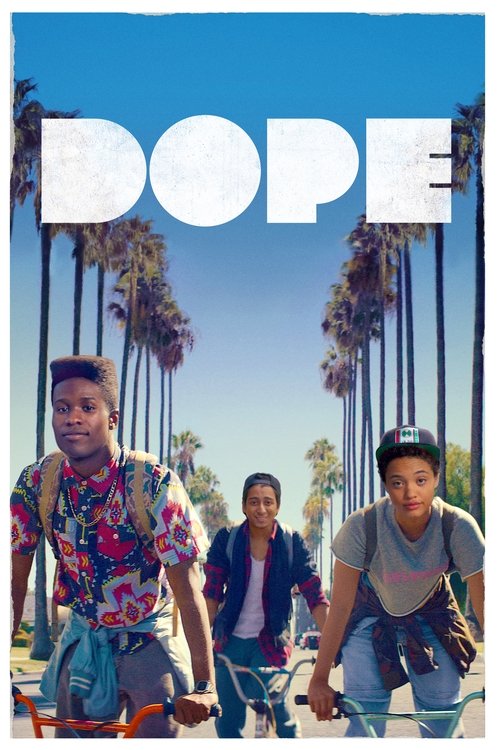
Dope
Malcolm is carefully surviving life in a tough neighborhood in Los Angeles while juggling college applications, academic interviews, and the SAT. A chance invitation to an underground party leads him into an adventure that could allow him to go from being a geek, to being dope, to ultimately being himself.
Despite its small-scale budget of $7.0M, Dope became a financial success, earning $18.0M worldwide—a 157% return.
5 wins & 25 nominations


Plot Structure
Story beats plotted across runtime


Narrative Arc
Emotional journey through the story's key moments
Story Circle
Blueprint 15-beat structure
Arcplot Score Breakdown
Weighted: Precision (70%) + Arc (15%) + Theme (15%)
Dope (2015) demonstrates precise dramatic framework, characteristic of Rick Famuyiwa's storytelling approach. This structural analysis examines how the film's 15-point plot structure maps to proven narrative frameworks across 1 hour and 43 minutes. With an Arcplot score of 7.1, the film balances conventional beats with creative variation.
Characters
Cast & narrative archetypes

Malcolm Adekanbi
Diggy
Jib
Nakia
Dom
Jacoby
AJ
Main Cast & Characters
Malcolm Adekanbi
Played by Shameik Moore
A high school geek obsessed with 90s hip-hop culture who gets caught up in the drug trade while trying to get into Harvard.
Diggy
Played by Kiersey Clemons
Malcolm's tomboyish best friend who is openly lesbian and fiercely loyal to her crew.
Jib
Played by Tony Revolori
The third member of Malcolm's geek trio, providing comic relief and unwavering friendship.
Nakia
Played by Zoe Kravitz
Malcolm's crush and a smart, ambitious girl who becomes entangled in his chaotic adventure.
Dom
Played by A$AP Rocky
A local drug dealer who inadvertently pulls Malcolm into the criminal underworld.
Jacoby
Played by Roger Guenveur Smith
A wealthy drug kingpin and businessman who represents the corrupt establishment.
AJ
Played by Quincy Brown
A college student and hustler who helps Malcolm navigate the world of selling drugs online.
Structural Analysis
The Status Quo at 1 minutes (1% through the runtime) establishes Malcolm narrates his life as a geek in "The Bottoms" - obsessed with 90s hip-hop, good grades, and Harvard dreams, while navigating a dangerous neighborhood where he doesn't fit in.. Significantly, this early placement immediately immerses viewers in the story world.
The inciting incident occurs at 12 minutes when Dom forces Malcolm to invite Nakia to his birthday party in exchange for safety. Malcolm reluctantly agrees, unknowingly being pulled into Dom's world.. At 12% through the film, this Disruption aligns precisely with traditional story structure. This beat shifts the emotional landscape, launching the protagonist into the central conflict.
The First Threshold at 26 minutes marks the transition into Act II, occurring at 25% of the runtime. This reveals the protagonist's commitment to Malcolm enters Dom's party with his friends. The party gets raided, and in the chaos, someone plants a backpack full of drugs and a gun in Malcolm's bag without his knowledge., moving from reaction to action.
At 52 minutes, the Midpoint arrives at 50% of the runtime—precisely centered, creating perfect narrative symmetry. The analysis reveals that this crucial beat Malcolm is forced to sell the drugs himself using Bitcoin and the dark web. What seemed like a temporary problem becomes his full responsibility - he's now a drug dealer, the very thing he's tried to avoid being labeled as., fundamentally raising what's at risk. The emotional intensity shifts, dividing the narrative into clear before-and-after phases.
The Collapse moment at 77 minutes (75% through) represents the emotional nadir. Here, Everything falls apart: Malcolm is betrayed, loses Nakia, endangers his friends, and faces the real possibility of losing his Harvard dream and freedom. His carefully constructed identity as "the good kid" is shattered., reveals the protagonist at their lowest point. This beat's placement in the final quarter sets up the climactic reversal.
The Second Threshold at 82 minutes initiates the final act resolution at 80% of the runtime. Malcolm has an epiphany: he'll own his complete story - both the geek and the kid who had to sell drugs to survive. He decides to write his true Harvard essay, not what they expect to hear., demonstrating the transformation achieved throughout the journey.
Emotional Journey
Dope's emotional architecture traces a deliberate progression across 15 carefully calibrated beats.
Narrative Framework
This structural analysis employs systematic plot point analysis that identifies crucial turning points. By mapping Dope against these established plot points, we can identify how Rick Famuyiwa utilizes or subverts traditional narrative conventions. The plot point approach reveals not only adherence to structural principles but also creative choices that distinguish Dope within the crime genre.
Rick Famuyiwa's Structural Approach
Among the 4 Rick Famuyiwa films analyzed on Arcplot, the average structural score is 7.3, reflecting strong command of classical structure. Dope takes a more unconventional approach compared to the director's typical style. For comparative analysis, explore the complete Rick Famuyiwa filmography.
Comparative Analysis
Additional crime films include The Bad Guys, Rustom and The Whole Ten Yards. For more Rick Famuyiwa analyses, see Our Family Wedding, Brown Sugar and The Wood.
Plot Points by Act
Act I
SetupStatus Quo
Malcolm narrates his life as a geek in "The Bottoms" - obsessed with 90s hip-hop, good grades, and Harvard dreams, while navigating a dangerous neighborhood where he doesn't fit in.
Theme
Malcolm's college counselor questions what makes him different from other kids applying to Harvard, suggesting his essay needs to show who he really is beyond his circumstances.
Worldbuilding
Introduction to Malcolm's world: his friends Diggy and Jib, their punk band Awreeoh, his crush on Nakia, the daily threats from local gangster Dom, and the cultural clash of being a "geek" in the hood.
Disruption
Dom forces Malcolm to invite Nakia to his birthday party in exchange for safety. Malcolm reluctantly agrees, unknowingly being pulled into Dom's world.
Resistance
Malcolm debates whether to go to Dom's party, knowing it's dangerous. He preps with his friends, tries to look cool, and wrestles with compromising his values for a chance with Nakia.
Act II
ConfrontationFirst Threshold
Malcolm enters Dom's party with his friends. The party gets raided, and in the chaos, someone plants a backpack full of drugs and a gun in Malcolm's bag without his knowledge.
Mirror World
Malcolm discovers the drugs and gun. He meets with various characters who represent different paths: the drug world, the academic world, and those trying to use him for their own ends.
Premise
Malcolm tries to return the drugs while maintaining his Harvard dreams. He navigates between worlds: attending his Harvard interview, dealing with drug dealers, and using his geek skills to solve problems in increasingly creative and dangerous ways.
Midpoint
Malcolm is forced to sell the drugs himself using Bitcoin and the dark web. What seemed like a temporary problem becomes his full responsibility - he's now a drug dealer, the very thing he's tried to avoid being labeled as.
Opposition
The stakes escalate as Malcolm runs a drug operation while trying to maintain his normal life. Rivals close in, his friendship with Diggy and Jib strains, his relationship with Nakia complicates, and the Harvard interview looms.
Collapse
Everything falls apart: Malcolm is betrayed, loses Nakia, endangers his friends, and faces the real possibility of losing his Harvard dream and freedom. His carefully constructed identity as "the good kid" is shattered.
Crisis
Malcolm grapples with who he really is. He questions the labels society puts on him and realizes he's been trying to prove he's "not a stereotype" his whole life, but maybe he needs to define himself on his own terms.
Act III
ResolutionSecond Threshold
Malcolm has an epiphany: he'll own his complete story - both the geek and the kid who had to sell drugs to survive. He decides to write his true Harvard essay, not what they expect to hear.
Synthesis
Malcolm resolves the drug situation using his intelligence, delivers the money, and completes his Harvard essay with brutal honesty about his experience, challenging the admissions committee to see beyond stereotypes.
Transformation
Malcolm confidently submits his essay, having transformed from someone who tried to escape labels into someone who defines himself. He's still a geek from The Bottoms, but now owns his full identity without apology.