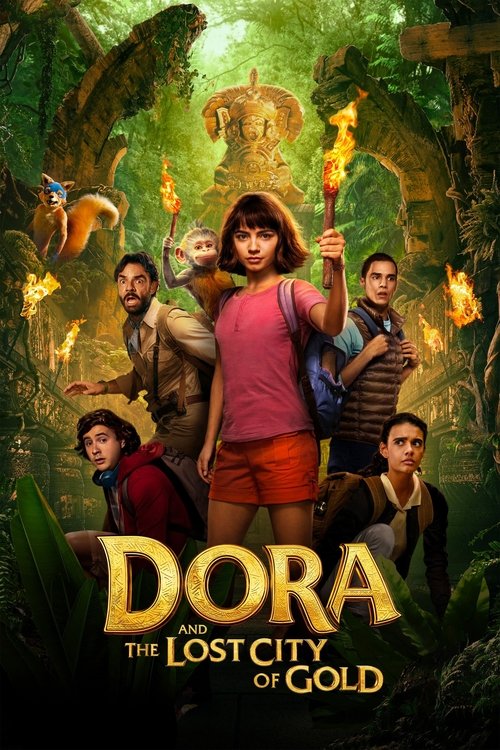
Dora and the Lost City of Gold
Dora, a girl who has spent most of her life exploring the jungle with her parents, now must navigate her most dangerous adventure yet: high school. Always the explorer, Dora quickly finds herself leading Boots (her best friend, a monkey), Diego, and a rag tag group of teens on an adventure to save her parents and solve the impossible mystery behind a lost Inca civilization.
Despite a moderate budget of $49.0M, Dora and the Lost City of Gold became a box office success, earning $120.6M worldwide—a 146% return.
4 wins & 2 nominations


Plot Structure
Story beats plotted across runtime


Narrative Arc
Emotional journey through the story's key moments
Story Circle
Blueprint 15-beat structure
Arcplot Score Breakdown
Weighted: Precision (70%) + Arc (15%) + Theme (15%)
Dora and the Lost City of Gold (2019) reveals precise story structure, characteristic of James Bobin's storytelling approach. This structural analysis examines how the film's 15-point plot structure maps to proven narrative frameworks across 1 hour and 42 minutes. With an Arcplot score of 7.5, the film showcases strong structural fundamentals.
Characters
Cast & narrative archetypes

Dora
Diego
Randy
Sammy
Alejandro Gutierrez
Cole Marquez
Elena Marquez
Swiper
Main Cast & Characters
Dora
Played by Isabela Merced
Optimistic teenage explorer raised in the jungle who must navigate high school and rescue her parents from mercenaries.
Diego
Played by Jeff Wahlberg
Dora's childhood friend and cousin who has become image-conscious and embarrassed by his explorer past.
Randy
Played by Nicholas Coombe
Socially awkward but intelligent classmate who becomes part of Dora's adventure team.
Sammy
Played by Madeleine Madden
Popular, confident student who initially dismisses Dora but joins the jungle expedition.
Alejandro Gutierrez
Played by Eugenio Derbez
Mysterious guide who leads the teens through the jungle, with hidden motives regarding Parapata.
Cole Marquez
Played by Michael Peña
Dora's father, an explorer and archaeologist searching for the lost city of Parapata.
Elena Marquez
Played by Eva Longoria
Dora's mother, an explorer and archaeologist who encourages Dora's curiosity and love of adventure.
Swiper
Played by Benicio del Toro
A mischievous fox who attempts to steal from the group during their jungle adventure.
Structural Analysis
The Status Quo at 1 minutes (1% through the runtime) establishes Young Dora explores the jungle with her parents and best friend Boots, fully in her element as a fearless adventurer in the rainforest, establishing her love of exploration and problem-solving.. Of particular interest, this early placement immediately immerses viewers in the story world.
The inciting incident occurs at 12 minutes when Dora's parents announce they're sending her away to Los Angeles for high school while they pursue the final leg of their expedition to find Parapata, separating Dora from the only world she's ever known.. At 12% through the film, this Disruption aligns precisely with traditional story structure. This beat shifts the emotional landscape, launching the protagonist into the central conflict.
The First Threshold at 25 minutes marks the transition into Act II, occurring at 24% of the runtime. This reveals the protagonist's commitment to Dora, Diego, and two classmates (Sammy and Randy) are kidnapped by mercenaries during a field trip to a museum, drugged, and wake up in the Peruvian jungle, forcing Dora back into the adventure world but now responsible for keeping her classmates alive., moving from reaction to action.
At 51 minutes, the Midpoint arrives at 50% of the runtime—precisely centered, creating perfect narrative symmetry. Of particular interest, this crucial beat The group solves an ancient puzzle and discovers the entrance to Parapata, appearing to successfully reach their goal. They find Dora's parents, and it seems like a victory, but the stakes raise as the mercenaries close in., fundamentally raising what's at risk. The emotional intensity shifts, dividing the narrative into clear before-and-after phases.
The Collapse moment at 75 minutes (73% through) represents the emotional nadir. Here, Alejandro takes Dora's parents hostage and forces the group to solve the final puzzle to access the treasure. The guardians of Parapata capture everyone, and Dora faces judgment, appearing to have failed completely as both the treasure and her parents' freedom are lost., illustrates the protagonist at their lowest point. This beat's placement in the final quarter sets up the climactic reversal.
The Second Threshold at 81 minutes initiates the final act resolution at 80% of the runtime. Dora realizes the true treasure of Parapata isn't gold but the preservation of culture and community. She speaks to the guardians with genuine respect and understanding, demonstrating she's learned that working with others and respecting their wisdom is more important than individual glory. The guardians release them and allow them to stop the mercenaries together., demonstrating the transformation achieved throughout the journey.
Emotional Journey
Dora and the Lost City of Gold's emotional architecture traces a deliberate progression across 15 carefully calibrated beats.
Narrative Framework
This structural analysis employs proven narrative structure principles that track dramatic progression. By mapping Dora and the Lost City of Gold against these established plot points, we can identify how James Bobin utilizes or subverts traditional narrative conventions. The plot point approach reveals not only adherence to structural principles but also creative choices that distinguish Dora and the Lost City of Gold within the family genre.
James Bobin's Structural Approach
Among the 4 James Bobin films analyzed on Arcplot, the average structural score is 7.3, reflecting strong command of classical structure. Dora and the Lost City of Gold represents one of the director's most structurally precise works. For comparative analysis, explore the complete James Bobin filmography.
Comparative Analysis
Additional family films include The Black Stallion, The Bad Guys and Ella Enchanted. For more James Bobin analyses, see The Muppets, Muppets Most Wanted and Alice Through the Looking Glass.
Plot Points by Act
Act I
SetupStatus Quo
Young Dora explores the jungle with her parents and best friend Boots, fully in her element as a fearless adventurer in the rainforest, establishing her love of exploration and problem-solving.
Theme
Dora's mother tells her "The most important part of any quest is the people you do it with," establishing the film's central theme that connection with others is more valuable than individual achievement.
Worldbuilding
Ten years pass and teenage Dora has been homeschooled in the jungle by her professor parents while they search for Parapata, the Lost City of Gold. Dora has no friends her age except Boots the monkey, and her parents decide she needs socialization and send her to Los Angeles to attend high school with her cousin Diego.
Disruption
Dora's parents announce they're sending her away to Los Angeles for high school while they pursue the final leg of their expedition to find Parapata, separating Dora from the only world she's ever known.
Resistance
Dora struggles to fit in at her Los Angeles high school, where her jungle survival skills and enthusiastic personality make her a social outcast. She reunites with her cousin Diego, who has become cool and distant, embarrassed by their childhood friendship. Dora tries to navigate the foreign terrain of teenage social dynamics.
Act II
ConfrontationFirst Threshold
Dora, Diego, and two classmates (Sammy and Randy) are kidnapped by mercenaries during a field trip to a museum, drugged, and wake up in the Peruvian jungle, forcing Dora back into the adventure world but now responsible for keeping her classmates alive.
Mirror World
Alejandro Gutierrez, a friend of Dora's parents, rescues the group from quicksand and joins their quest, becoming a mentor figure who represents the collaborative approach to adventure that Dora must learn.
Premise
Dora leads her group through jungle obstacles using her skills and knowledge, attempting to reach her parents and find Parapata. The teens gradually learn to work together through trials including puzzles, river rapids, and encounters with jungle creatures. Dora begins to bond with her classmates, particularly as she teaches them survival skills.
Midpoint
The group solves an ancient puzzle and discovers the entrance to Parapata, appearing to successfully reach their goal. They find Dora's parents, and it seems like a victory, but the stakes raise as the mercenaries close in.
Opposition
The group enters Parapata but must face elaborate trials and traps designed by the ancient civilization. Tensions rise as Alejandro is revealed to be the villain working with the mercenaries, betraying the group. Dora's parents are captured, and the teens must navigate increasingly dangerous obstacles while pursued by armed mercenaries.
Collapse
Alejandro takes Dora's parents hostage and forces the group to solve the final puzzle to access the treasure. The guardians of Parapata capture everyone, and Dora faces judgment, appearing to have failed completely as both the treasure and her parents' freedom are lost.
Crisis
Dora and her friends are brought before the Inca guardians of Parapata and face potential death for desecrating the sacred city. Dora must confront her failure and the reality that her solo-hero approach endangered everyone she cares about.
Act III
ResolutionSecond Threshold
Dora realizes the true treasure of Parapata isn't gold but the preservation of culture and community. She speaks to the guardians with genuine respect and understanding, demonstrating she's learned that working with others and respecting their wisdom is more important than individual glory. The guardians release them and allow them to stop the mercenaries together.
Synthesis
Dora, her parents, Diego, Sammy, Randy, and the Inca guardians work together to defeat Alejandro and the mercenaries, using both Dora's skills and her friends' contributions. The group protects Parapata's secrets, and the guardians allow them to leave with the knowledge that some treasures are meant to be preserved, not possessed.
Transformation
Back at high school, Dora is now surrounded by friends including Diego, Sammy, and Randy, having learned to balance her adventurous spirit with genuine connection to others. She's no longer isolated but part of a community, mirroring the opening but showing her transformation from solo explorer to collaborative adventurer.