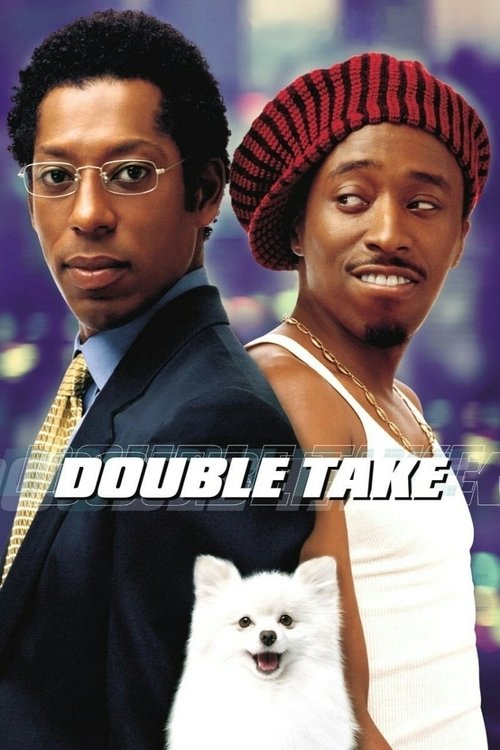
Double Take
A man on the run takes another man's passport, only to find himself stuck with the identity of a street hustler.
Working with a respectable budget of $24.0M, the film achieved a steady performer with $31.6M in global revenue (+32% profit margin).


Plot Structure
Story beats plotted across runtime


Narrative Arc
Emotional journey through the story's key moments
Story Circle
Blueprint 15-beat structure
Arcplot Score Breakdown
Weighted: Precision (70%) + Arc (15%) + Theme (15%)
Double Take (2001) demonstrates precise narrative design, characteristic of George Gallo's storytelling approach. This structural analysis examines how the film's 15-point plot structure maps to proven narrative frameworks across 1 hour and 28 minutes. With an Arcplot score of 7.5, the film showcases strong structural fundamentals.
Characters
Cast & narrative archetypes

Daryl Chase
Freddy Tiffany
Chloe
Agent Norville
Minty Gutierrez
Main Cast & Characters
Daryl Chase
Played by Orlando Jones
A successful investment banker whose life is turned upside down when he's framed for a crime and must assume another identity to survive.
Freddy Tiffany
Played by Eddie Griffin
A street-smart hustler who switches identities with Daryl, bringing chaos and unexpected wisdom to the banker's orderly life.
Chloe
Played by Garcelle Beauvais
Daryl's girlfriend who becomes entangled in the dangerous situation surrounding the identity switch.
Agent Norville
Played by Gary Grubbs
An FBI agent investigating the corporate fraud case that puts Daryl in danger.
Minty Gutierrez
Played by Benny Nieves
A Mexican businessman involved in the criminal conspiracy that threatens Daryl's life.
Structural Analysis
The Status Quo at 1 minutes (1% through the runtime) establishes Investment banker Daryl Chase lives a perfect, upscale Manhattan life - successful, wealthy, and engaged to a beautiful woman. Opening shows him confident and in control of his privileged world.. The analysis reveals that this early placement immediately immerses viewers in the story world.
The inciting incident occurs at 11 minutes when Daryl discovers he's being framed for laundering money for a Mexican drug cartel. His apartment is shot up, and CIA agents inform him his life is in danger. His perfect world collapses in minutes.. At 12% through the film, this Disruption aligns precisely with traditional story structure. This beat shifts the emotional landscape, launching the protagonist into the central conflict.
The First Threshold at 22 minutes marks the transition into Act II, occurring at 26% of the runtime. This illustrates the protagonist's commitment to Daryl boards the train to Mexico, actively choosing to leave behind his life and identity. He assumes Freddy Tiffany's identity and enters a world completely foreign to his privileged existence., moving from reaction to action.
At 44 minutes, the Midpoint arrives at 50% of the runtime—precisely centered, creating perfect narrative symmetry. Notably, this crucial beat False defeat: Daryl and Freddy discover the conspiracy goes deeper than expected - the CIA agents themselves are corrupt and working with the cartel. Those they trusted to protect them are actually hunting them., fundamentally raising what's at risk. The emotional intensity shifts, dividing the narrative into clear before-and-after phases.
The Collapse moment at 66 minutes (75% through) represents the emotional nadir. Here, Daryl and Freddy are captured and separated. Daryl is beaten and told he will be killed. His old identity is completely destroyed - his job, fiancée, reputation, and safety all gone. Everything Freddy predicted has come true., demonstrates the protagonist at their lowest point. This beat's placement in the final quarter sets up the climactic reversal.
The Second Threshold at 70 minutes initiates the final act resolution at 80% of the runtime. Daryl synthesizes what he's learned from Freddy with his own intelligence. He uses street smarts combined with financial knowledge to devise an escape plan and trap for the conspirators. Embraces his authentic self., demonstrating the transformation achieved throughout the journey.
Emotional Journey
Double Take's emotional architecture traces a deliberate progression across 15 carefully calibrated beats.
Narrative Framework
This structural analysis employs a 15-point narrative structure framework that maps key story moments. By mapping Double Take against these established plot points, we can identify how George Gallo utilizes or subverts traditional narrative conventions. The plot point approach reveals not only adherence to structural principles but also creative choices that distinguish Double Take within the adventure genre.
George Gallo's Structural Approach
Among the 3 George Gallo films analyzed on Arcplot, the average structural score is 7.0, reflecting strong command of classical structure. Double Take represents one of the director's most structurally precise works. For comparative analysis, explore the complete George Gallo filmography.
Comparative Analysis
Additional adventure films include The Black Stallion, The Bad Guys and Puss in Boots. For more George Gallo analyses, see Trapped in Paradise, My Mom's New Boyfriend.
Plot Points by Act
Act I
SetupStatus Quo
Investment banker Daryl Chase lives a perfect, upscale Manhattan life - successful, wealthy, and engaged to a beautiful woman. Opening shows him confident and in control of his privileged world.
Theme
Freddy Tiffany tells Daryl "You don't know who you really are until everything you have is taken away." Theme of identity and discovering one's true self when stripped of comfortable facades.
Worldbuilding
Establishment of Daryl's corporate world, his relationship with fiancée Chloe, his business dealings, and introduction of the street-smart con man Freddy Tiffany who accidentally switches briefcases with Daryl.
Disruption
Daryl discovers he's being framed for laundering money for a Mexican drug cartel. His apartment is shot up, and CIA agents inform him his life is in danger. His perfect world collapses in minutes.
Resistance
Daryl debates whether to flee or trust the authorities. He's given instructions by Agent Norville to go to Mexico. Daryl resists leaving his comfortable life but realizes he has no choice as danger escalates.
Act II
ConfrontationFirst Threshold
Daryl boards the train to Mexico, actively choosing to leave behind his life and identity. He assumes Freddy Tiffany's identity and enters a world completely foreign to his privileged existence.
Mirror World
Daryl encounters the real Freddy Tiffany on the train. This street-smart hustler becomes his unlikely partner and thematic mirror - everything Daryl is not: spontaneous, resourceful, authentic, and survival-oriented.
Premise
Fish-out-of-water comedy as uptight Daryl and street-smart Freddy navigate together. Culture clash humor, close calls with assassins, Daryl learning street survival, role reversals, and bonding through shared danger.
Midpoint
False defeat: Daryl and Freddy discover the conspiracy goes deeper than expected - the CIA agents themselves are corrupt and working with the cartel. Those they trusted to protect them are actually hunting them.
Opposition
Stakes intensify as corrupt agents and cartel close in from all sides. Daryl's privileged background becomes a liability. His relationship with Chloe is revealed as shallow. He must rely on Freddy's street skills to survive.
Collapse
Daryl and Freddy are captured and separated. Daryl is beaten and told he will be killed. His old identity is completely destroyed - his job, fiancée, reputation, and safety all gone. Everything Freddy predicted has come true.
Crisis
Daryl at his lowest point, imprisoned and stripped of all pretense. Dark night where he must confront who he really is without money, status, or his corporate armor. Processes the loss of his former self.
Act III
ResolutionSecond Threshold
Daryl synthesizes what he's learned from Freddy with his own intelligence. He uses street smarts combined with financial knowledge to devise an escape plan and trap for the conspirators. Embraces his authentic self.
Synthesis
Daryl and Freddy execute their plan, expose the corrupt agents, bring down the cartel operation, and clear their names. Daryl uses both corporate and street knowledge, fully transformed from uptight banker to authentic, resourceful person.
Transformation
Final image mirrors opening but shows transformation. Daryl, now relaxed and authentic, has ditched his shallow fiancée and corporate pretense. He and Freddy have become true friends - a partnership of equals across cultural boundaries.