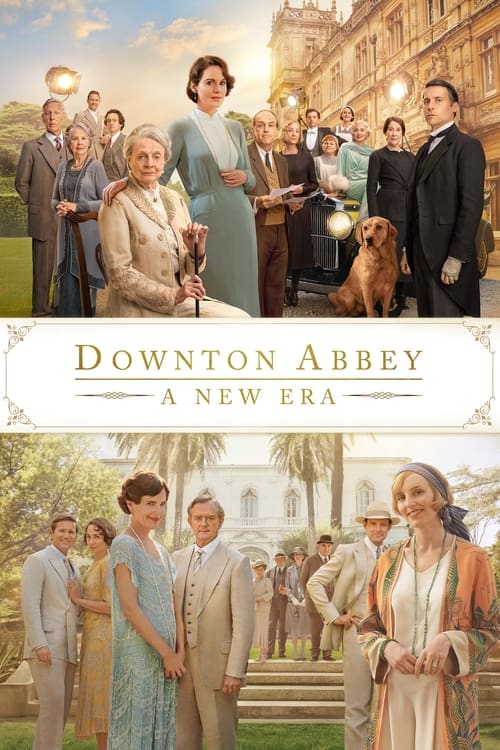
Downton Abbey: A New Era
The Crawley family goes on a grand journey to the south of France to uncover the mystery of the dowager countess's newly inherited villa. Meanwhile, a Hollywood director seeks to film his latest production at Downton.
Despite a respectable budget of $40.0M, Downton Abbey: A New Era became a financial success, earning $92.7M worldwide—a 132% return.


Plot Structure
Story beats plotted across runtime


Narrative Arc
Emotional journey through the story's key moments
Story Circle
Blueprint 15-beat structure
Arcplot Score Breakdown
Weighted: Precision (70%) + Arc (15%) + Theme (15%)
Downton Abbey: A New Era (2022) exhibits deliberately positioned dramatic framework, characteristic of Simon Curtis's storytelling approach. This structural analysis examines how the film's 15-point plot structure maps to proven narrative frameworks across 2 hours and 4 minutes. With an Arcplot score of 7.3, the film balances conventional beats with creative variation.
Characters
Cast & narrative archetypes

Violet Crawley, Dowager Countess
Robert Crawley, Earl of Grantham
Cora Crawley, Countess of Grantham
Lady Mary Talbot
Lady Edith Pelham
Tom Branson
Lucy Smith
Isobel Merton
Maud Bagshaw
Mr. Carson
Mrs. Hughes
Thomas Barrow
Main Cast & Characters
Violet Crawley, Dowager Countess
Played by Maggie Smith
The sharp-witted matriarch whose past connection to a French villa drives the A-story while facing mortality.
Robert Crawley, Earl of Grantham
Played by Hugh Bonneville
The traditional lord of Downton who must navigate modernization and his mother's final chapter.
Cora Crawley, Countess of Grantham
Played by Elizabeth McGovern
Robert's American wife who provides emotional support and wisdom to the family.
Lady Mary Talbot
Played by Michelle Dockery
The pragmatic eldest daughter managing Downton's transformation into a film location while supporting her family.
Lady Edith Pelham
Played by Laura Carmichael
The middle daughter, now Marchioness of Hexham, who travels to France with the family.
Tom Branson
Played by Allen Leech
The former chauffeur turned family member who finds unexpected romance with the film's director.
Lucy Smith
Played by Tuppence Middleton
Maud Bagshaw's maid who married Tom, now navigating her new role in the aristocracy.
Isobel Merton
Played by Penelope Wilton
Violet's friend and sparring partner who provides companionship and moral support.
Maud Bagshaw
Played by Imelda Staunton
Violet's cousin and Lucy's former employer who inherited the Crawley fortune.
Mr. Carson
Played by Jim Carter
The retired butler who returns to help during the film production at Downton.
Mrs. Hughes
Played by Phyllis Logan
The head housekeeper and Carson's wife who manages the household during upheaval.
Thomas Barrow
Played by Robert James-Collier
The butler of Downton who struggles with his place and finds unexpected friendship.
Structural Analysis
The Status Quo at 1 minutes (1% through the runtime) establishes The Crawley family enjoys a wedding celebration at Downton Abbey. Life has found a peaceful rhythm in the post-WWI era, with the family and servants coexisting harmoniously in their evolving roles.. Notably, this early placement immediately immerses viewers in the story world.
The inciting incident occurs at 14 minutes when The family splits: Robert, Cora, Edith and others will go to France to investigate the villa mystery, while Mary stays to manage the film production at Downton. Violet's health concerns become more serious, revealed through a private doctor's visit.. At 11% through the film, this Disruption aligns precisely with traditional story structure. This beat shifts the emotional landscape, launching the protagonist into the central conflict.
The First Threshold at 30 minutes marks the transition into Act II, occurring at 25% of the runtime. This illustrates the protagonist's commitment to Mary decisively commits to making the film work, taking active control of production negotiations. Simultaneously, the Crawleys arrive at the stunning French villa, choosing to engage with the mystery of Violet's past rather than reject it., moving from reaction to action.
At 62 minutes, the Midpoint arrives at 50% of the runtime—precisely centered, creating perfect narrative symmetry. Of particular interest, this crucial beat False defeat strikes both storylines: The film's leading lady Myrna Dalgleish can't speak properly for "talkies," threatening the entire production and Downton's financial rescue. In France, it's revealed Violet is seriously ill, reframing the inheritance as a dying woman's final mystery. Stakes intensify dramatically., fundamentally raising what's at risk. The emotional intensity shifts, dividing the narrative into clear before-and-after phases.
The Collapse moment at 91 minutes (74% through) represents the emotional nadir. Here, Violet collapses critically in France - the "whiff of death" is literal. The family faces losing their matriarch. Simultaneously, the film production appears doomed to failure. Both the past (Violet's story) and future (cinema representing modernity) seem to be slipping away., reveals the protagonist at their lowest point. This beat's placement in the final quarter sets up the climactic reversal.
The Second Threshold at 100 minutes initiates the final act resolution at 80% of the runtime. Synthesis emerges: Mary realizes they can have both tradition AND progress - she proposes Myrna's maid (who has proper diction) dub the voice while Myrna performs silently. Violet awakens with renewed purpose, deciding the villa should go to Sybbie (Tom's daughter), healing old wounds by choosing the future. Both plotlines find their "third way."., demonstrating the transformation achieved throughout the journey.
Emotional Journey
Downton Abbey: A New Era's emotional architecture traces a deliberate progression across 15 carefully calibrated beats.
Narrative Framework
This structural analysis employs structural analysis methodology used to understand storytelling architecture. By mapping Downton Abbey: A New Era against these established plot points, we can identify how Simon Curtis utilizes or subverts traditional narrative conventions. The plot point approach reveals not only adherence to structural principles but also creative choices that distinguish Downton Abbey: A New Era within the drama genre.
Simon Curtis's Structural Approach
Among the 4 Simon Curtis films analyzed on Arcplot, the average structural score is 7.3, reflecting strong command of classical structure. Downton Abbey: A New Era represents one of the director's most structurally precise works. For comparative analysis, explore the complete Simon Curtis filmography.
Comparative Analysis
Additional drama films include After Thomas, South Pacific and Dirty Dancing: Havana Nights. For more Simon Curtis analyses, see Goodbye Christopher Robin, Woman in Gold and The Art of Racing in the Rain.
Plot Points by Act
Act I
SetupStatus Quo
The Crawley family enjoys a wedding celebration at Downton Abbey. Life has found a peaceful rhythm in the post-WWI era, with the family and servants coexisting harmoniously in their evolving roles.
Theme
Violet Crawley receives a mysterious letter about a villa inheritance in the South of France. Carson remarks, "The old ways are disappearing, but perhaps that's not always a bad thing" - hinting at the theme of embracing change while honoring the past.
Worldbuilding
Two parallel setups emerge: A film crew arrives to shoot a motion picture at Downton (representing modernity), while Violet reveals she inherited a villa from a former suitor in the South of France (representing unresolved past). The Dowager Countess appears unwell, adding urgency.
Disruption
The family splits: Robert, Cora, Edith and others will go to France to investigate the villa mystery, while Mary stays to manage the film production at Downton. Violet's health concerns become more serious, revealed through a private doctor's visit.
Resistance
Mary debates whether she can handle the film production and fears change to Downton. Meanwhile, the France-bound group prepares for their journey. Tensions emerge between old traditions (servants' hierarchy, family protocols) and new opportunities (cinema, modern life). Tom Branson provides mentorship about embracing the future.
Act II
ConfrontationFirst Threshold
Mary decisively commits to making the film work, taking active control of production negotiations. Simultaneously, the Crawleys arrive at the stunning French villa, choosing to engage with the mystery of Violet's past rather than reject it.
Mirror World
Maud Bagshaw reveals the truth: Violet had a romantic relationship with her late husband decades ago, and the villa represents a life unlived. This subplot mirrors the film's theme - examining roads not taken while appreciating what you have. The warmth of this revelation contrasts with expected conflict.
Premise
The "promise of the premise" delivers: Downstairs staff become film extras and navigate Hollywood personalities; Mary manages creative conflicts and discovers cinema's appeal; in France, the family explores the beautiful villa, bonds with Maud, and uncovers layers of Violet's secret past. Romance blossoms (Tom and Lucy, others). Comic misadventures with film production.
Midpoint
False defeat strikes both storylines: The film's leading lady Myrna Dalgleish can't speak properly for "talkies," threatening the entire production and Downton's financial rescue. In France, it's revealed Violet is seriously ill, reframing the inheritance as a dying woman's final mystery. Stakes intensify dramatically.
Opposition
Pressure mounts on all fronts: Mary struggles to save the film production as the director wants to fire Myrna; class tensions emerge between servants and film crew; in France, family members debate the villa's rightful ownership while Violet's condition worsens; Lady Bagshaw's son challenges the inheritance, creating legal obstacles.
Collapse
Violet collapses critically in France - the "whiff of death" is literal. The family faces losing their matriarch. Simultaneously, the film production appears doomed to failure. Both the past (Violet's story) and future (cinema representing modernity) seem to be slipping away.
Crisis
Dark night of the soul: The family gathers around Violet's bedside, confronting mortality and legacy. Mary sits alone at Downton, questioning whether preserving the estate matters if they lose what makes it meaningful. Characters reflect on what they're fighting for - tradition versus progress, legacy versus change.
Act III
ResolutionSecond Threshold
Synthesis emerges: Mary realizes they can have both tradition AND progress - she proposes Myrna's maid (who has proper diction) dub the voice while Myrna performs silently. Violet awakens with renewed purpose, deciding the villa should go to Sybbie (Tom's daughter), healing old wounds by choosing the future. Both plotlines find their "third way."
Synthesis
The finale executes both solutions: The film completes successfully with the innovative dubbing solution, securing Downton's financial future and validating the new era. In France, legal matters resolve with the villa going to the next generation. The family returns home, reconciling past and future. Final goodbyes and affirmations of love.
Transformation
Closing image mirrors the opening: Another celebration at Downton, but transformed. Film equipment coexists with aristocratic tradition; servants have new opportunities; the family has evolved. Violet watches from her window, at peace. The old and new have merged - Downton endures not by resisting change, but by embracing it wisely.