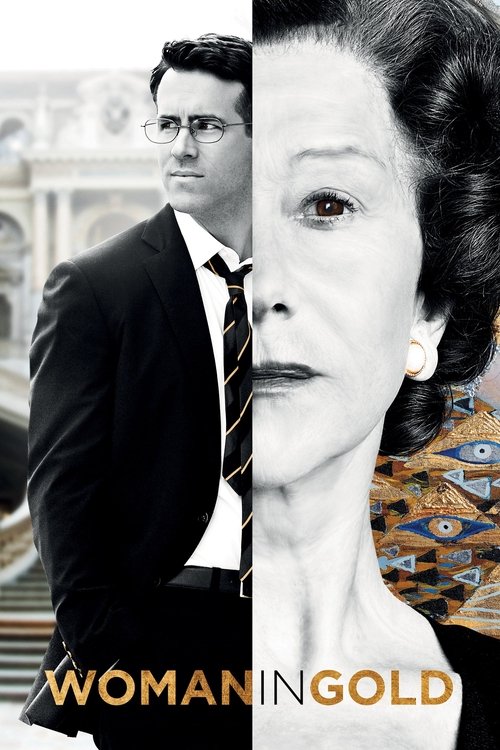
Woman in Gold
Maria Altmann, an octogenarian Jewish refugee, takes on the Austrian government to recover a world famous painting of her aunt plundered by the Nazis during World War II, she believes rightfully belongs to her family. She did so not just to regain what was rightfully hers, but also to obtain some measure of justice for the death, destruction, and massive art theft perpetrated by the Nazis.
Despite its limited budget of $11.0M, Woman in Gold became a solid performer, earning $61.6M worldwide—a 460% return. The film's unconventional structure engaged audiences, demonstrating that strong storytelling can transcend budget limitations.


Plot Structure
Story beats plotted across runtime


Narrative Arc
Emotional journey through the story's key moments
Story Circle
Blueprint 15-beat structure
Arcplot Score Breakdown
Weighted: Precision (70%) + Arc (15%) + Theme (15%)
Woman in Gold (2015) showcases precise narrative design, characteristic of Simon Curtis's storytelling approach. This structural analysis examines how the film's 15-point plot structure maps to proven narrative frameworks across 1 hour and 49 minutes. With an Arcplot score of 6.8, the film balances conventional beats with creative variation.
Structural Analysis
The Status Quo at 1 minutes (1% through the runtime) establishes Maria Altmann attends her sister Luise's funeral in Los Angeles, establishing her as an elderly Jewish refugee who has built a life in America far from her Austrian homeland and painful past.. Of particular interest, this early placement immediately immerses viewers in the story world.
The inciting incident occurs at 13 minutes when Maria meets with young lawyer Randy Schoenberg, the grandson of composer Arnold Schoenberg and family friend, to discuss pursuing the claim for her family's artwork, disrupting both their settled lives with this impossible-seeming quest.. At 12% through the film, this Disruption aligns precisely with traditional story structure. This beat shifts the emotional landscape, launching the protagonist into the central conflict.
The First Threshold at 27 minutes marks the transition into Act II, occurring at 25% of the runtime. This demonstrates the protagonist's commitment to Randy quits his stable law firm job to pursue Maria's case full-time, making an irreversible commitment to this David vs. Goliath legal battle against the Austrian government., moving from reaction to action.
At 55 minutes, the Midpoint arrives at 50% of the runtime—precisely centered, creating perfect narrative symmetry. Significantly, this crucial beat The Austrian restitution committee denies Maria's claim, declaring the painting legally belongs to Austria. This false defeat forces them to abandon the Austrian legal avenue and return to America seemingly defeated., fundamentally raising what's at risk. The emotional intensity shifts, dividing the narrative into clear before-and-after phases.
The Collapse moment at 82 minutes (75% through) represents the emotional nadir. Here, Maria, exhausted by years of legal battles and painful memories, tells Randy she wants to give up. The emotional toll of reliving her family's destruction and her escape from the Nazis has become unbearable—she feels her past dying all over again., indicates the protagonist at their lowest point. This beat's placement in the final quarter sets up the climactic reversal.
The Second Threshold at 87 minutes initiates the final act resolution at 80% of the runtime. The U.S. Supreme Court rules 6-3 in Maria's favor, allowing her case to proceed in American courts. This landmark decision, combined with Randy's impassioned reminder of what Adele and her family represented, reignites Maria's resolve to see justice done., demonstrating the transformation achieved throughout the journey.
Emotional Journey
Woman in Gold's emotional architecture traces a deliberate progression across 15 carefully calibrated beats.
Narrative Framework
This structural analysis employs a 15-point narrative structure framework that maps key story moments. By mapping Woman in Gold against these established plot points, we can identify how Simon Curtis utilizes or subverts traditional narrative conventions. The plot point approach reveals not only adherence to structural principles but also creative choices that distinguish Woman in Gold within the drama genre.
Simon Curtis's Structural Approach
Among the 4 Simon Curtis films analyzed on Arcplot, the average structural score is 7.3, reflecting strong command of classical structure. Woman in Gold takes a more unconventional approach compared to the director's typical style. For comparative analysis, explore the complete Simon Curtis filmography.
Comparative Analysis
Additional drama films include After Thomas, South Pacific and Dirty Dancing: Havana Nights. For more Simon Curtis analyses, see Downton Abbey: A New Era, Goodbye Christopher Robin and The Art of Racing in the Rain.
Plot Points by Act
Act I
SetupStatus Quo
Maria Altmann attends her sister Luise's funeral in Los Angeles, establishing her as an elderly Jewish refugee who has built a life in America far from her Austrian homeland and painful past.
Theme
Maria's friend tells her about letters discovered in Luise's belongings indicating the family's stolen art may be recoverable, suggesting that justice for the past is still possible: "It's never too late to set things right."
Worldbuilding
We establish Maria's world in Los Angeles as a boutique owner, her relationship with memories of pre-war Vienna, and learn about the Klimt portrait of her aunt Adele that hangs in Austria's Belvedere museum—a national treasure the Nazis stole from her family.
Disruption
Maria meets with young lawyer Randy Schoenberg, the grandson of composer Arnold Schoenberg and family friend, to discuss pursuing the claim for her family's artwork, disrupting both their settled lives with this impossible-seeming quest.
Resistance
Randy researches the case while struggling with whether to take it on, given he has a new baby and needs stable income. Maria debates whether she wants to reopen old wounds. Randy's wife Pam encourages him to follow his passion despite the financial risk.
Act II
ConfrontationFirst Threshold
Randy quits his stable law firm job to pursue Maria's case full-time, making an irreversible commitment to this David vs. Goliath legal battle against the Austrian government.
Mirror World
Maria reluctantly travels to Vienna with Randy, triggering powerful flashbacks to 1938. Her memories of her family—particularly her elegant aunt Adele and loving parents—become the emotional heart of the film, teaching Randy what was truly lost beyond mere property.
Premise
Randy and Maria navigate the Austrian legal system, meet with Austrian journalist Hubertus Czernin who supports their cause, and confront Austria's reluctance to return Nazi-looted art. Flashbacks reveal the Bloch-Bauer family's fate and Maria's harrowing escape from Vienna.
Midpoint
The Austrian restitution committee denies Maria's claim, declaring the painting legally belongs to Austria. This false defeat forces them to abandon the Austrian legal avenue and return to America seemingly defeated.
Opposition
Randy files suit in U.S. federal court under the Foreign Sovereign Immunities Act, but the case is dismissed. They appeal to the Ninth Circuit and eventually the U.S. Supreme Court. Maria grows weary of the prolonged battle while Randy faces mounting pressure from his family and finances.
Collapse
Maria, exhausted by years of legal battles and painful memories, tells Randy she wants to give up. The emotional toll of reliving her family's destruction and her escape from the Nazis has become unbearable—she feels her past dying all over again.
Crisis
Randy struggles with Maria's decision to quit. He reflects on what this case has come to mean—not just about art or money, but about historical justice and honoring the memory of Holocaust victims. He must find a way to convince Maria the fight is worth finishing.
Act III
ResolutionSecond Threshold
The U.S. Supreme Court rules 6-3 in Maria's favor, allowing her case to proceed in American courts. This landmark decision, combined with Randy's impassioned reminder of what Adele and her family represented, reignites Maria's resolve to see justice done.
Synthesis
Rather than face continued litigation, Austria agrees to binding arbitration in Vienna. Maria returns to Austria one final time. The arbitration panel rules unanimously in her favor, ordering the return of five Klimt paintings including the portrait of Adele.
Transformation
Maria stands before the recovered portrait of her Aunt Adele, finally home. She has transformed from someone fleeing her past to someone who confronted it and reclaimed her family's legacy. Text reveals she sold the painting but donated the proceeds to Holocaust education—transforming personal loss into collective memory.