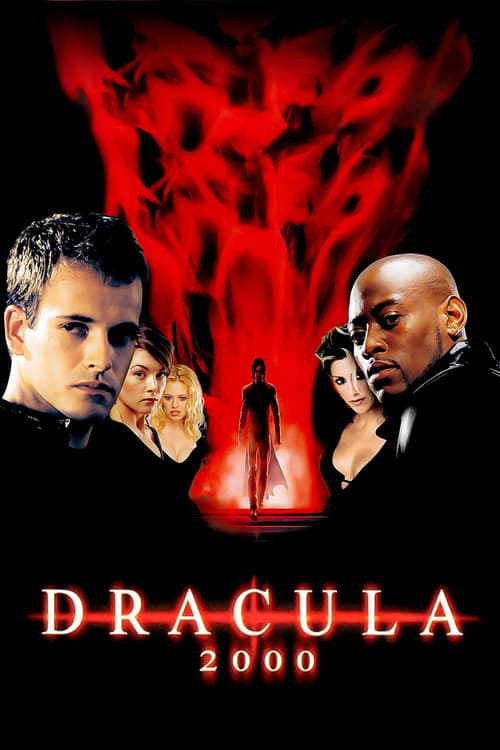
Dracula 2000
When a team of techno-savvy thieves break into a high-security vault, they don't discover priceless works of art... they find a crypt unopened for 100 years.
Working with a respectable budget of $28.0M, the film achieved a steady performer with $47.1M in global revenue (+68% profit margin).


Plot Structure
Story beats plotted across runtime


Narrative Arc
Emotional journey through the story's key moments
Story Circle
Blueprint 15-beat structure
Arcplot Score Breakdown
Weighted: Precision (70%) + Arc (15%) + Theme (15%)
Dracula 2000 (2000) reveals deliberately positioned dramatic framework, characteristic of Patrick Lussier's storytelling approach. This structural analysis examines how the film's 15-point plot structure maps to proven narrative frameworks across 1 hour and 38 minutes. With an Arcplot score of 7.0, the film balances conventional beats with creative variation.
Characters
Cast & narrative archetypes

Mary Heller
Dracula
Simon Van Helsing
Matthew Van Helsing
Lucy Westerman
Solina
Father David
Main Cast & Characters
Mary Heller
Played by Justine Waddell
A young woman who works in a Virgin Megastore in New Orleans and becomes the object of Dracula's obsession, believing she is the reincarnation of his lost love.
Dracula
Played by Gerard Butler
The legendary vampire lord who escapes captivity in London and travels to New Orleans seeking Mary, whom he believes is his reincarnated bride.
Simon Van Helsing
Played by Christopher Plummer
The elderly descendant of Abraham Van Helsing who has kept Dracula imprisoned for decades using silver injections to sustain himself, harboring dark secrets.
Matthew Van Helsing
Played by Jonny Lee Miller
Simon's dedicated protégé and assistant who helps guard Dracula's prison and pursues the vampire to New Orleans to stop him.
Lucy Westerman
Played by Colleen Fitzpatrick
Mary's adventurous and hedonistic roommate who is seduced and turned into a vampire by Dracula, becoming one of his brides.
Solina
Played by Jennifer Esposito
A tough, gothic nightclub denizen and friend of Mary and Lucy who becomes vampirized and embraces her dark transformation.
Father David
Played by Nathan Fillion
A Catholic priest and television personality who tries to help Mary and confront the vampire threat with his faith.
Structural Analysis
The Status Quo at 1 minutes (1% through the runtime) establishes London antique dealer Matthew Van Helsing guards a heavily secured vault in his shop, maintaining his secret vigil over an ancient evil. His assistant Simon works unaware of the true nature of their business.. Significantly, this early placement immediately immerses viewers in the story world.
The inciting incident occurs at 12 minutes when Thieves break into Van Helsing's vault and steal the mysterious coffin, not knowing they've unleashed Dracula. The theft triggers the crisis Van Helsing has guarded against for over a century.. At 12% through the film, this Disruption aligns precisely with traditional story structure. This beat shifts the emotional landscape, launching the protagonist into the central conflict.
The First Threshold at 25 minutes marks the transition into Act II, occurring at 26% of the runtime. This illustrates the protagonist's commitment to Van Helsing and Simon arrive in New Orleans and make contact with Mary, revealing her connection to the Van Helsing bloodline. Mary is drawn into the supernatural world and the hunt for Dracula begins in earnest., moving from reaction to action.
At 49 minutes, the Midpoint arrives at 50% of the runtime—precisely centered, creating perfect narrative symmetry. Notably, this crucial beat Dracula's true identity is revealed: he is Judas Iscariot, cursed for betraying Christ. His vulnerability to silver (the thirty pieces) and hatred of Christianity are explained. Dracula targets Mary specifically, knowing she's Van Helsing's daughter. The stakes intensify dramatically., fundamentally raising what's at risk. The emotional intensity shifts, dividing the narrative into clear before-and-after phases.
The Collapse moment at 74 minutes (76% through) represents the emotional nadir. Here, Simon is killed by the vampires, and Mary is captured by Dracula. Van Helsing loses his closest ally and his daughter falls into the enemy's hands. His century-long mission appears to have failed completely., shows the protagonist at their lowest point. This beat's placement in the final quarter sets up the climactic reversal.
The Second Threshold at 79 minutes initiates the final act resolution at 81% of the runtime. Van Helsing accepts his own mortality and prepares for a final sacrifice. Mary finds inner strength through her connection to both Van Helsing and her faith, rejecting Dracula's seduction. They unite for the climactic battle armed with new resolve., demonstrating the transformation achieved throughout the journey.
Emotional Journey
Dracula 2000's emotional architecture traces a deliberate progression across 15 carefully calibrated beats.
Narrative Framework
This structural analysis employs systematic plot point analysis that identifies crucial turning points. By mapping Dracula 2000 against these established plot points, we can identify how Patrick Lussier utilizes or subverts traditional narrative conventions. The plot point approach reveals not only adherence to structural principles but also creative choices that distinguish Dracula 2000 within the thriller genre.
Patrick Lussier's Structural Approach
Among the 4 Patrick Lussier films analyzed on Arcplot, the average structural score is 6.9, demonstrating varied approaches to story architecture. Dracula 2000 represents one of the director's most structurally precise works. For comparative analysis, explore the complete Patrick Lussier filmography.
Comparative Analysis
Additional thriller films include The Warriors, Thunderball and Rustom. For more Patrick Lussier analyses, see My Bloody Valentine, Drive Angry and Aftermath.
Plot Points by Act
Act I
SetupStatus Quo
London antique dealer Matthew Van Helsing guards a heavily secured vault in his shop, maintaining his secret vigil over an ancient evil. His assistant Simon works unaware of the true nature of their business.
Theme
Van Helsing discusses the nature of immortality and the price of living forever, suggesting that some legacies are curses rather than gifts. The theme explores whether eternal life is a blessing or damnation.
Worldbuilding
Establishment of Van Helsing's secret operation in London, the antique shop facade, his use of leeches to maintain youth, and the introduction of Mary Heller in New Orleans preparing for Christmas with her friends at a Virgin Megastore.
Disruption
Thieves break into Van Helsing's vault and steal the mysterious coffin, not knowing they've unleashed Dracula. The theft triggers the crisis Van Helsing has guarded against for over a century.
Resistance
Van Helsing discovers the theft and realizes Dracula is free. He tracks the thieves' plane to New Orleans. Meanwhile, Dracula awakens on the plane, kills the thieves, and crashes into the Louisiana swamps. Van Helsing must prepare for the confrontation he's dreaded.
Act II
ConfrontationFirst Threshold
Van Helsing and Simon arrive in New Orleans and make contact with Mary, revealing her connection to the Van Helsing bloodline. Mary is drawn into the supernatural world and the hunt for Dracula begins in earnest.
Mirror World
Mary's relationship with Van Helsing develops as she learns about her heritage. The father-daughter dynamic mirrors the film's theme of legacy and inherited burden, showing what it means to carry the sins and responsibilities of previous generations.
Premise
The vampire hunt through New Orleans. Dracula seduces and converts Mary's friends one by one, building his new brood. Van Helsing attempts to track and stop him while protecting Mary, delivering on the premise of a modern Dracula terrorizing the city.
Midpoint
Dracula's true identity is revealed: he is Judas Iscariot, cursed for betraying Christ. His vulnerability to silver (the thirty pieces) and hatred of Christianity are explained. Dracula targets Mary specifically, knowing she's Van Helsing's daughter. The stakes intensify dramatically.
Opposition
Dracula's power grows as he converts more victims. He psychically connects with Mary, drawing her toward him. Van Helsing's group fractures as they face increasingly powerful vampire attacks. Mary struggles against Dracula's seductive pull while her friends become enemies.
Collapse
Simon is killed by the vampires, and Mary is captured by Dracula. Van Helsing loses his closest ally and his daughter falls into the enemy's hands. His century-long mission appears to have failed completely.
Crisis
Van Helsing confronts his failure and the cost of his immortal vigil. Mary, in Dracula's clutches, faces the choice between eternal life as a vampire or mortality. The darkest hour before the final confrontation.
Act III
ResolutionSecond Threshold
Van Helsing accepts his own mortality and prepares for a final sacrifice. Mary finds inner strength through her connection to both Van Helsing and her faith, rejecting Dracula's seduction. They unite for the climactic battle armed with new resolve.
Synthesis
The final confrontation atop a New Orleans building. Van Helsing and Mary face Dracula and his vampire brides. Using silver, faith, and sacrifice, they battle Dracula. Van Helsing is mortally wounded but Mary delivers the killing blow, destroying Dracula by hanging him on an illuminated cross structure.
Transformation
Mary survives, freed from Dracula's curse and the burden of the Van Helsing legacy. Van Helsing dies peacefully, finally released from his immortal vigil. Mary emerges transformed, having chosen mortality and faith over the false promise of eternal life.