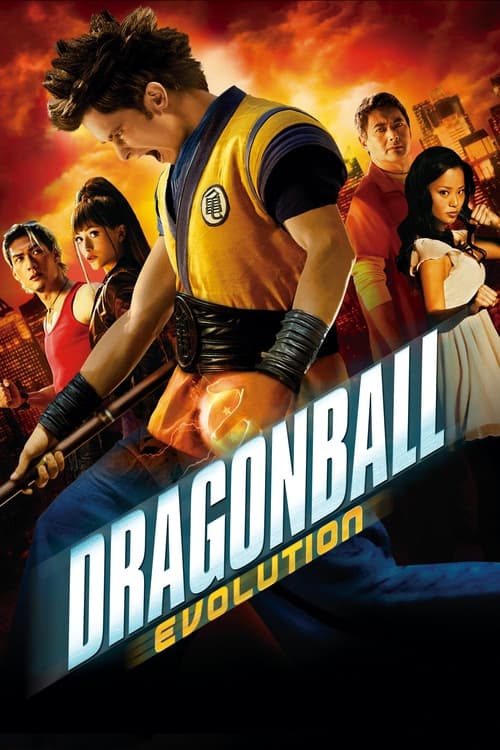
Dragonball Evolution
On his 18th birthday, Goku receives a mystical Dragonball as a gift from his grandfather. There are only six others like it in the whole world, and legend has it that whoever possesses all seven will be granted one perfect wish. When the arrival of a dark force triggers a tragedy, Goku and his companions are propelled into an epic quest to collect the seven Dragonballs and save the Earth from destruction.
Working with a respectable budget of $30.0M, the film achieved a respectable showing with $58.2M in global revenue (+94% profit margin).


Plot Structure
Story beats plotted across runtime


Narrative Arc
Emotional journey through the story's key moments
Story Circle
Blueprint 15-beat structure
Arcplot Score Breakdown
Weighted: Precision (70%) + Arc (15%) + Theme (15%)
Dragonball Evolution (2009) reveals precise story structure, characteristic of James Wong's storytelling approach. This structural analysis examines how the film's 15-point plot structure maps to proven narrative frameworks across 1 hour and 25 minutes. With an Arcplot score of 7.1, the film balances conventional beats with creative variation.
Characters
Cast & narrative archetypes

Goku
Bulma
Master Roshi
Lord Piccolo
Chi-Chi
Yamcha
Mai
Main Cast & Characters
Goku
Played by Justin Chatwin
A teenage martial artist who must find the seven Dragonballs to prevent the demon Piccolo from destroying Earth.
Bulma
Played by Emmy Rossum
A tech-savvy young woman who teams up with Goku to find the Dragonballs, serving as the brains of the operation.
Master Roshi
Played by Chow Yun-fat
An eccentric martial arts master who trains Goku in the ways of ki manipulation and combat.
Lord Piccolo
Played by James Marsters
An ancient demon king who seeks the Dragonballs to achieve immortality and conquer the world.
Chi-Chi
Played by Jamie Chung
Goku's love interest and a skilled fighter who initially challenges him but later supports his quest.
Yamcha
Played by Joon Park
A desert bandit who initially opposes Goku but becomes an ally in the fight against Piccolo.
Mai
Played by Eriko Tamura
Piccolo's loyal servant and enforcer who hunts for the Dragonballs on his behalf.
Structural Analysis
The Status Quo at 1 minutes (1% through the runtime) establishes Goku is an awkward high school student who hides his martial arts abilities and struggles to fit in, living a sheltered life with his grandfather Gohan.. The analysis reveals that this early placement immediately immerses viewers in the story world.
The inciting incident occurs at 10 minutes when Goku returns home to find his house destroyed and Gohan mortally wounded by Piccolo's forces who are seeking the Dragonball.. At 12% through the film, this Disruption aligns precisely with traditional story structure. This beat shifts the emotional landscape, launching the protagonist into the central conflict.
The First Threshold at 22 minutes marks the transition into Act II, occurring at 26% of the runtime. This indicates the protagonist's commitment to Goku makes the active choice to train with Master Roshi and commit to the quest to gather all seven Dragonballs before the eclipse, accepting his role as a warrior., moving from reaction to action.
At 43 minutes, the Midpoint arrives at 50% of the runtime—precisely centered, creating perfect narrative symmetry. Significantly, this crucial beat False victory: The team obtains several Dragonballs and Goku successfully performs the Kamehameha wave, but they don't realize Piccolo is tracking them and growing stronger., fundamentally raising what's at risk. The emotional intensity shifts, dividing the narrative into clear before-and-after phases.
The Collapse moment at 64 minutes (76% through) represents the emotional nadir. Here, All is lost: Master Roshi is killed by Piccolo, the Dragonballs are captured, and the eclipse begins. Goku faces his darkest moment having failed to protect his mentor., shows the protagonist at their lowest point. This beat's placement in the final quarter sets up the climactic reversal.
The Second Threshold at 67 minutes initiates the final act resolution at 79% of the runtime. Synthesis moment: Goku fully accepts his heritage and destiny, combining his training with his inner power. He achieves a new level of mastery over his Ki energy., demonstrating the transformation achieved throughout the journey.
Emotional Journey
Dragonball Evolution's emotional architecture traces a deliberate progression across 15 carefully calibrated beats.
Narrative Framework
This structural analysis employs structural analysis methodology used to understand storytelling architecture. By mapping Dragonball Evolution against these established plot points, we can identify how James Wong utilizes or subverts traditional narrative conventions. The plot point approach reveals not only adherence to structural principles but also creative choices that distinguish Dragonball Evolution within the action genre.
James Wong's Structural Approach
Among the 4 James Wong films analyzed on Arcplot, the average structural score is 7.1, reflecting strong command of classical structure. Dragonball Evolution takes a more unconventional approach compared to the director's typical style. For comparative analysis, explore the complete James Wong filmography.
Comparative Analysis
Additional action films include The Bad Guys, Puss in Boots and Venom: The Last Dance. For more James Wong analyses, see The One, Final Destination and Final Destination 3.
Plot Points by Act
Act I
SetupStatus Quo
Goku is an awkward high school student who hides his martial arts abilities and struggles to fit in, living a sheltered life with his grandfather Gohan.
Theme
Gohan tells Goku: "You must believe in who you are" - foreshadowing Goku's need to accept his destiny and heritage rather than hide from it.
Worldbuilding
Establishment of Goku's ordinary world: his high school life, his crush on Chi-Chi, training with Gohan, and the legend of the Dragonballs and Piccolo told through exposition.
Disruption
Goku returns home to find his house destroyed and Gohan mortally wounded by Piccolo's forces who are seeking the Dragonball.
Resistance
Gohan dies after giving Goku the four-star Dragonball and telling him to find Master Roshi. Goku debates his path, meets Bulma who is also seeking the Dragonballs, and they search for Roshi together.
Act II
ConfrontationFirst Threshold
Goku makes the active choice to train with Master Roshi and commit to the quest to gather all seven Dragonballs before the eclipse, accepting his role as a warrior.
Mirror World
Master Roshi becomes Goku's mentor and begins teaching him about the Kamehameha wave and controlling his Ki, representing the path of discipline and accepting one's true nature.
Premise
The team (Goku, Bulma, Roshi, and later Yamcha) adventures to find the Dragonballs, with Goku training and discovering his abilities. Action sequences, the promise of the premise: martial arts adventure.
Midpoint
False victory: The team obtains several Dragonballs and Goku successfully performs the Kamehameha wave, but they don't realize Piccolo is tracking them and growing stronger.
Opposition
Piccolo's forces close in and attack. The team faces increasing opposition, betrayals surface, and Goku's inexperience and self-doubt become liabilities as the stakes escalate toward the eclipse.
Collapse
All is lost: Master Roshi is killed by Piccolo, the Dragonballs are captured, and the eclipse begins. Goku faces his darkest moment having failed to protect his mentor.
Crisis
Goku processes his grief and failure. In his dark night, he reflects on both Gohan's and Roshi's teachings about believing in himself and accepting who he truly is.
Act III
ResolutionSecond Threshold
Synthesis moment: Goku fully accepts his heritage and destiny, combining his training with his inner power. He achieves a new level of mastery over his Ki energy.
Synthesis
Final battle: Goku confronts Piccolo with his full powers unleashed, uses the Dragonballs to resurrect Roshi, and defeats Piccolo by accepting both his human upbringing and alien heritage.
Transformation
Closing image: Goku, now confident and at peace with his identity, stands with his friends. He is no longer the insecure boy hiding his abilities but a hero who has embraced his destiny.