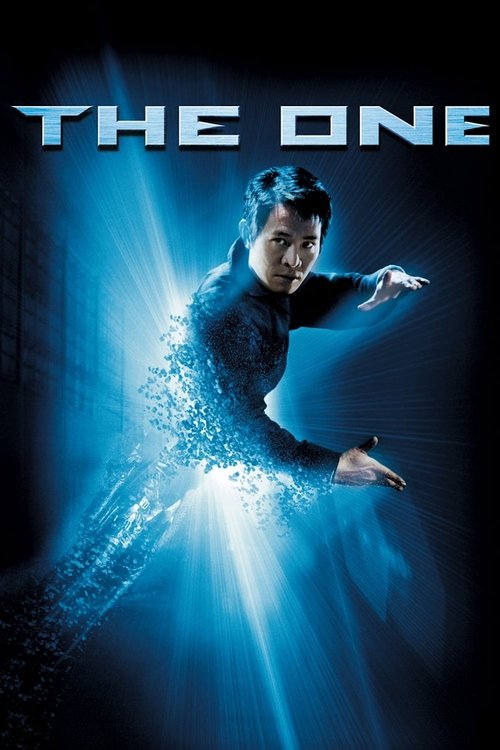
The One
A sheriff's deputy fights an alternate universe version of himself who grows stronger with each alternate self he kills.
Working with a mid-range budget of $49.0M, the film achieved a modest success with $72.7M in global revenue (+48% profit margin).


Plot Structure
Story beats plotted across runtime


Narrative Arc
Emotional journey through the story's key moments
Story Circle
Blueprint 15-beat structure
Arcplot Score Breakdown
Weighted: Precision (70%) + Arc (15%) + Theme (15%)
The One (2001) exhibits strategically placed narrative design, characteristic of James Wong's storytelling approach. This structural analysis examines how the film's 15-point plot structure maps to proven narrative frameworks across 1 hour and 27 minutes. With an Arcplot score of 6.8, the film balances conventional beats with creative variation.
Structural Analysis
The Status Quo at 1 minutes (1% through the runtime) establishes Gabe Law lives a normal life as an LASD deputy sheriff with his wife T.K., unaware of the multiverse or his alternate selves.. Structural examination shows that this early placement immediately immerses viewers in the story world.
The inciting incident occurs at 11 minutes when Yulaw arrives in Gabe's universe to kill him. Gabe experiences strange superhuman strength during a factory incident, not understanding why.. At 13% through the film, this Disruption is delayed, allowing extended setup of the story world. This beat shifts the emotional landscape, launching the protagonist into the central conflict.
The First Threshold at 22 minutes marks the transition into Act II, occurring at 25% of the runtime. This indicates the protagonist's commitment to Gabe actively chooses to confront Yulaw after witnessing impossible events and realizing his life is in danger. He commits to understanding and stopping his doppelganger., moving from reaction to action.
At 44 minutes, the Midpoint arrives at 51% of the runtime—precisely centered, creating perfect narrative symmetry. Significantly, this crucial beat False defeat: Yulaw captures T.K. And reveals that only one of them can survive - when the last alternate dies, the survivor becomes "The One" with godlike power. Stakes are raised drastically., fundamentally raising what's at risk. The emotional intensity shifts, dividing the narrative into clear before-and-after phases.
The Collapse moment at 65 minutes (75% through) represents the emotional nadir. Here, Agent Funsch is killed by Yulaw. Gabe is overwhelmed and nearly defeated. The "whiff of death" - his mentor/protector dies and Gabe faces becoming either a god or nothing., reveals the protagonist at their lowest point. This beat's placement in the final quarter sets up the climactic reversal.
The Second Threshold at 69 minutes initiates the final act resolution at 79% of the runtime. Gabe realizes he must defeat Yulaw not by becoming stronger, but by choosing differently - protecting life rather than taking it. He synthesizes his power with his humanity and commitment to T.K., demonstrating the transformation achieved throughout the journey.
Emotional Journey
The One's emotional architecture traces a deliberate progression across 15 carefully calibrated beats.
Narrative Framework
This structural analysis employs proven narrative structure principles that track dramatic progression. By mapping The One against these established plot points, we can identify how James Wong utilizes or subverts traditional narrative conventions. The plot point approach reveals not only adherence to structural principles but also creative choices that distinguish The One within the action genre.
James Wong's Structural Approach
Among the 4 James Wong films analyzed on Arcplot, the average structural score is 7.1, reflecting strong command of classical structure. The One takes a more unconventional approach compared to the director's typical style. For comparative analysis, explore the complete James Wong filmography.
Comparative Analysis
Additional action films include The Bad Guys, Puss in Boots and Venom: The Last Dance. For more James Wong analyses, see Dragonball Evolution, Final Destination and Final Destination 3.
Plot Points by Act
Act I
SetupStatus Quo
Gabe Law lives a normal life as an LASD deputy sheriff with his wife T.K., unaware of the multiverse or his alternate selves.
Theme
Multiverse agents discuss how killing your alternate selves makes you stronger but corrupts your soul: "There's always a price for power."
Worldbuilding
Introduction to the multiverse concept, the MVA (Multiverse Authority), rogue agent Yulaw who has killed 123 versions of himself, and Gabe's ordinary life with T.K.
Disruption
Yulaw arrives in Gabe's universe to kill him. Gabe experiences strange superhuman strength during a factory incident, not understanding why.
Resistance
MVA agents Funsch and Roedecker pursue Yulaw while trying to protect Gabe. Gabe resists believing the multiverse explanation, thinks he's going crazy, and debates whether to trust the agents.
Act II
ConfrontationFirst Threshold
Gabe actively chooses to confront Yulaw after witnessing impossible events and realizing his life is in danger. He commits to understanding and stopping his doppelganger.
Mirror World
T.K. represents the grounding force of humanity and love that Gabe must fight for - the thematic opposite of Yulaw's solitary quest for god-like power.
Premise
High-octane action sequences as Gabe discovers and tests his enhanced abilities while being hunted by Yulaw. The "promise of the premise" - spectacular martial arts fights between identical superhuman opponents.
Midpoint
False defeat: Yulaw captures T.K. and reveals that only one of them can survive - when the last alternate dies, the survivor becomes "The One" with godlike power. Stakes are raised drastically.
Opposition
Yulaw gains ground, killing more alternates off-screen. Gabe struggles with his growing power and the temptation it represents. MVA plans to send both to the prison universe. Everything intensifies toward final confrontation.
Collapse
Agent Funsch is killed by Yulaw. Gabe is overwhelmed and nearly defeated. The "whiff of death" - his mentor/protector dies and Gabe faces becoming either a god or nothing.
Crisis
Gabe processes the loss and the terrible choice before him: surrender to power like Yulaw, or fight for his humanity. T.K.'s love reminds him who he truly is.
Act III
ResolutionSecond Threshold
Gabe realizes he must defeat Yulaw not by becoming stronger, but by choosing differently - protecting life rather than taking it. He synthesizes his power with his humanity and commitment to T.K.
Synthesis
Final battle between Gabe and Yulaw. Gabe fights to incapacitate, not kill. Yulaw is sent to the prison universe. Gabe is exonerated and allowed to remain in his universe with T.K.
Transformation
Gabe returns to T.K., having retained his humanity despite god-like power. Unlike the opening where he was unaware of his potential, he now consciously chooses love and normalcy over domination.