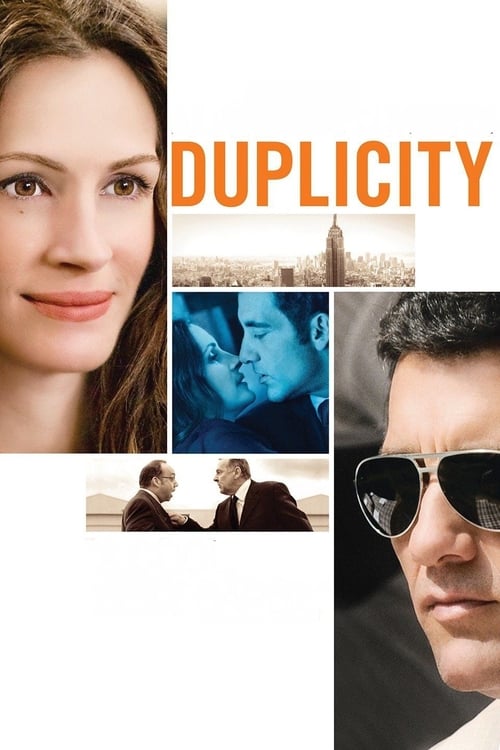
Duplicity
Two romantically involved corporate spies team up to manipulate a race to corner the market on a medical innovation that will reap huge profits and allow them to lead an extravagant lifestyle together.
Working with a moderate budget of $60.0M, the film achieved a modest success with $78.2M in global revenue (+30% profit margin).
1 win & 4 nominations


Plot Structure
Story beats plotted across runtime


Narrative Arc
Emotional journey through the story's key moments
Story Circle
Blueprint 15-beat structure
Arcplot Score Breakdown
Weighted: Precision (70%) + Arc (15%) + Theme (15%)
Duplicity (2009) exemplifies meticulously timed plot construction, characteristic of Tony Gilroy's storytelling approach. This structural analysis examines how the film's 15-point plot structure maps to proven narrative frameworks across 2 hours and 5 minutes. With an Arcplot score of 6.3, the film takes an unconventional approach to traditional narrative frameworks.
Characters
Cast & narrative archetypes

Claire Stenwick
Ray Koval
Howard Tully
Dick Garsik
Main Cast & Characters
Claire Stenwick
Played by Julia Roberts
A former CIA operative turned corporate spy who engages in an elaborate con while navigating a complicated romantic relationship with her partner.
Ray Koval
Played by Clive Owen
A former MI6 agent turned corporate spy who partners with Claire in an intricate double-cross scheme while struggling with trust issues.
Howard Tully
Played by Tom Wilkinson
The paranoid and aggressive CEO of Burkett & Randle who is obsessed with defeating his rival and protecting his company's secrets.
Dick Garsik
Played by Paul Giamatti
The ruthless CEO of Equikrom who engages in corporate warfare with Howard Tully and employs Ray as a spy.
Structural Analysis
The Status Quo at 1 minutes (1% through the runtime) establishes Slow-motion sequence of two CEOs fighting at an airport, establishing the world of cutthroat corporate espionage and the absurd lengths rivals will go to destroy each other.. Notably, this early placement immediately immerses viewers in the story world.
The inciting incident occurs at 14 minutes when Present day: Ray discovers Claire has played him in Rome, stealing classified MI6 information and disappearing, betraying him professionally and personally. Their relationship seems over.. At 11% through the film, this Disruption aligns precisely with traditional story structure. This beat shifts the emotional landscape, launching the protagonist into the central conflict.
The First Threshold at 31 minutes marks the transition into Act II, occurring at 25% of the runtime. This indicates the protagonist's commitment to Ray and Claire actively choose to partner together on the con, agreeing to steal the formula for a revolutionary product and sell it, committing fully to their plan despite their mutual distrust., moving from reaction to action.
At 63 minutes, the Midpoint arrives at 50% of the runtime—precisely centered, creating perfect narrative symmetry. Notably, this crucial beat False victory: Ray and Claire successfully obtain the product formula and believe their con is working perfectly. They think they're in control and about to score their big payday., fundamentally raising what's at risk. The emotional intensity shifts, dividing the narrative into clear before-and-after phases.
The Collapse moment at 93 minutes (75% through) represents the emotional nadir. Here, Ray and Claire complete the handoff and wait for their buyer, believing they've won. Their dream of wealth and escape together seems within reach, but uncertainty lingers about whether they've truly succeeded., demonstrates the protagonist at their lowest point. This beat's placement in the final quarter sets up the climactic reversal.
The Second Threshold at 99 minutes initiates the final act resolution at 80% of the runtime. The devastating revelation: the "revolutionary product" is just a cheap travel-size lotion. Ray and Claire realize they've been conned by the CEOs all along - they were pawns in a counter-intelligence operation to identify corporate moles., demonstrating the transformation achieved throughout the journey.
Emotional Journey
Duplicity's emotional architecture traces a deliberate progression across 15 carefully calibrated beats.
Narrative Framework
This structural analysis employs structural analysis methodology used to understand storytelling architecture. By mapping Duplicity against these established plot points, we can identify how Tony Gilroy utilizes or subverts traditional narrative conventions. The plot point approach reveals not only adherence to structural principles but also creative choices that distinguish Duplicity within the romance genre.
Tony Gilroy's Structural Approach
Among the 3 Tony Gilroy films analyzed on Arcplot, the average structural score is 6.7, demonstrating varied approaches to story architecture. Duplicity takes a more unconventional approach compared to the director's typical style. For comparative analysis, explore the complete Tony Gilroy filmography.
Comparative Analysis
Additional romance films include South Pacific, Dirty Dancing: Havana Nights and The Evening Star. For more Tony Gilroy analyses, see The Bourne Legacy, Michael Clayton.
Plot Points by Act
Act I
SetupStatus Quo
Slow-motion sequence of two CEOs fighting at an airport, establishing the world of cutthroat corporate espionage and the absurd lengths rivals will go to destroy each other.
Theme
Dubai flashback: Claire asks Ray "Do you trust me?" after their first encounter - the central question of the film about whether two spies and con artists can ever truly trust each other in love or business.
Worldbuilding
Non-linear introduction to Ray and Claire's past encounters (Dubai, Rome, Miami) revealing they are ex-intelligence agents now working in corporate espionage, establishing their romantic and professional history of deception.
Disruption
Present day: Ray discovers Claire has played him in Rome, stealing classified MI6 information and disappearing, betraying him professionally and personally. Their relationship seems over.
Resistance
Five years later setup: Ray and Claire are both hired by rival corporations (Burkett & Randle vs. Equikrom). They reunite and debate whether to trust each other while planning to run a con together on both companies.
Act II
ConfrontationFirst Threshold
Ray and Claire actively choose to partner together on the con, agreeing to steal the formula for a revolutionary product and sell it, committing fully to their plan despite their mutual distrust.
Mirror World
Intimate scenes showing Ray and Claire's genuine romantic connection developing alongside their con, representing the possibility of authentic love between two professional liars - the heart of the thematic conflict.
Premise
The fun of the con: Ray and Claire execute their elaborate scheme, manipulating both corporations, navigating corporate politics, dodging security, and playing their roles while trying to balance genuine feelings with professional deception.
Midpoint
False victory: Ray and Claire successfully obtain the product formula and believe their con is working perfectly. They think they're in control and about to score their big payday.
Opposition
Complications mount as corporate security tightens, the CEOs become more suspicious, and Ray and Claire's mutual paranoia intensifies. They question whether the other is running a separate con, and their trust issues threaten everything.
Collapse
Ray and Claire complete the handoff and wait for their buyer, believing they've won. Their dream of wealth and escape together seems within reach, but uncertainty lingers about whether they've truly succeeded.
Crisis
The tense wait for the buyer to arrive. Ray and Claire discuss their future together, confronting their trust issues one final time and trying to believe in the possibility of a genuine relationship.
Act III
ResolutionSecond Threshold
The devastating revelation: the "revolutionary product" is just a cheap travel-size lotion. Ray and Claire realize they've been conned by the CEOs all along - they were pawns in a counter-intelligence operation to identify corporate moles.
Synthesis
The aftermath: Ray and Claire process their complete failure, realizing they've lost everything - the money, their jobs, their reputations. They confront the ultimate irony that in trying to con everyone, they conned only themselves.
Transformation
Final image mirrors the opening question: Ray and Claire walk together in New York, broke and defeated, but still together. The question "Do you trust me?" remains unanswered - two liars who may never fully trust each other but choose partnership anyway.