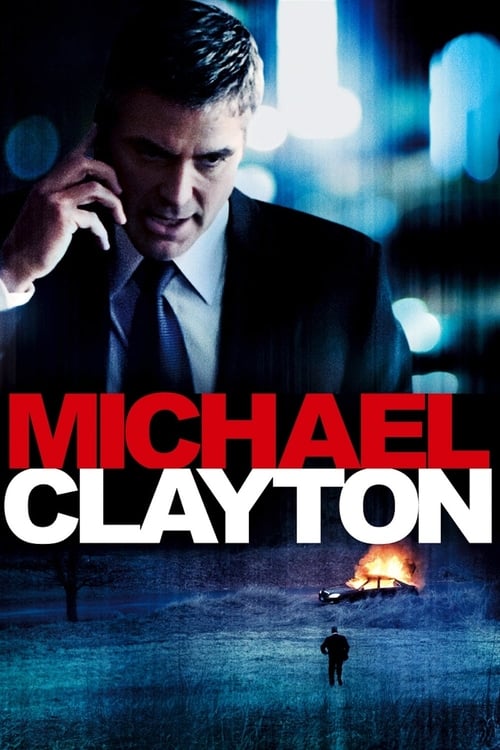
Michael Clayton
A law firm brings in its "fixer" to remedy the situation after a lawyer has a breakdown while representing a chemical company that he knows is guilty in a multi-billion dollar class action suit.
Despite a mid-range budget of $25.0M, Michael Clayton became a solid performer, earning $93.0M worldwide—a 272% return.
1 Oscar. 28 wins & 114 nominations


Plot Structure
Story beats plotted across runtime


Narrative Arc
Emotional journey through the story's key moments
Story Circle
Blueprint 15-beat structure
Arcplot Score Breakdown
Weighted: Precision (70%) + Arc (15%) + Theme (15%)
Michael Clayton (2007) exhibits meticulously timed narrative design, characteristic of Tony Gilroy's storytelling approach. This structural analysis examines how the film's 15-point plot structure maps to proven narrative frameworks across 2 hours. With an Arcplot score of 6.9, the film balances conventional beats with creative variation.
Characters
Cast & narrative archetypes

Michael Clayton
Karen Crowder
Arthur Edens
Marty Bach
Main Cast & Characters
Michael Clayton
Played by George Clooney
A law firm "fixer" dealing with a moral crisis when assigned to clean up a corporate cover-up case while his personal life crumbles around him.
Karen Crowder
Played by Tilda Swinton
The ruthless General Counsel of U/North who will stop at nothing, including murder, to protect her company's interests in a class-action lawsuit.
Arthur Edens
Played by Tom Wilkinson
A brilliant senior attorney suffering a manic breakdown who discovers damning evidence against U/North and becomes obsessed with exposing the truth.
Marty Bach
Played by Sydney Pollack
The managing partner of Kenner, Bach & Ledeen who tries to control damage from Arthur's breakdown while managing Michael as his fixer.
Structural Analysis
The Status Quo at 2 minutes (1% through the runtime) establishes Michael Clayton drives through dark countryside after fixing another problem, receiving the call about Arthur's breakdown. The car bomb explodes (in medias res opening), then title card: "Three days earlier." This establishes Michael as morally compromised, in debt, and trapped in a life of ethical cleanup.. Structural examination shows that this early placement immediately immerses viewers in the story world.
The inciting incident occurs at 15 minutes when Arthur Edens has a psychotic break during the deposition in Milwaukee, strips naked, and declares his love for plaintiff Anna. He's arrested. This disrupts the U-North defense and forces Michael to fly to Milwaukee as the firm's fixer. The case that was routine becomes a crisis threatening the firm's biggest client and Michael's livelihood.. At 13% through the film, this Disruption is delayed, allowing extended setup of the story world. This beat shifts the emotional landscape, launching the protagonist into the central conflict.
The First Threshold at 31 minutes marks the transition into Act II, occurring at 26% of the runtime. This shows the protagonist's commitment to Michael discovers Arthur has stolen the U-North "smoking gun" memo proving corporate knowledge of the poison. Michael commits to tracking Arthur down, not to help him, but to retrieve the documents and save the case. This active choice launches him into direct conflict with both Arthur's moral awakening and Karen Crowder's desperation. He crosses into a conspiracy he doesn't yet understand., moving from reaction to action.
At 61 minutes, the Midpoint arrives at 50% of the runtime—precisely centered, creating perfect narrative symmetry. Significantly, this crucial beat Arthur is murdered (staged as overdose) by Karen Crowder's hired killers. Michael arrives at Arthur's apartment just after the body is discovered. This is a false defeat—Michael believes it's suicide and feels guilt for not saving his friend. The stakes catastrophically raise. The conspiracy Michael is inside becomes lethal. The game has changed; people are dying., fundamentally raising what's at risk. The emotional intensity shifts, dividing the narrative into clear before-and-after phases.
The Collapse moment at 90 minutes (75% through) represents the emotional nadir. Here, Michael's car explodes (the opening scene, now in chronological context). After leaving a card game, he drives into the countryside, sees the horses on the hill (echoing his son's book), stops to watch them. While he's out of the car, it explodes—the bomb planted by Karen's fixers. He survives only by chance. This is literal death averted, metaphorical death of his old life. Everything he was is destroyed., indicates the protagonist at their lowest point. This beat's placement in the final quarter sets up the climactic reversal.
The Second Threshold at 96 minutes initiates the final act resolution at 80% of the runtime. Michael makes the active choice to fake his death and weaponize what he knows. He calls his brother, retrieves Arthur's copied documents from the storage facility, and devises a plan to sting Karen Crowder. This synthesis combines his fixer skills (deception, reading people) with Arthur's moral clarity. He becomes the righteous fixer. He breaks into Act 3 reborn., demonstrating the transformation achieved throughout the journey.
Emotional Journey
Michael Clayton's emotional architecture traces a deliberate progression across 15 carefully calibrated beats.
Narrative Framework
This structural analysis employs structural analysis methodology used to understand storytelling architecture. By mapping Michael Clayton against these established plot points, we can identify how Tony Gilroy utilizes or subverts traditional narrative conventions. The plot point approach reveals not only adherence to structural principles but also creative choices that distinguish Michael Clayton within the drama genre.
Tony Gilroy's Structural Approach
Among the 3 Tony Gilroy films analyzed on Arcplot, the average structural score is 6.7, demonstrating varied approaches to story architecture. Michael Clayton represents one of the director's most structurally precise works. For comparative analysis, explore the complete Tony Gilroy filmography.
Comparative Analysis
Additional drama films include After Thomas, South Pacific and Dirty Dancing: Havana Nights. For more Tony Gilroy analyses, see The Bourne Legacy, Duplicity.
Plot Points by Act
Act I
SetupStatus Quo
Michael Clayton drives through dark countryside after fixing another problem, receiving the call about Arthur's breakdown. The car bomb explodes (in medias res opening), then title card: "Three days earlier." This establishes Michael as morally compromised, in debt, and trapped in a life of ethical cleanup.
Theme
Arthur Edens, during his manic episode, declares: "I am Shiva, the god of death!" and reveals the U-North memo proving they knew their product was lethal. His breakdown embodies the theme: what happens when you can no longer live with moral compromise? His choice foreshadows Michael's arc.
Worldbuilding
Establish Michael's world: his role as the firm's "fixer," his failed restaurant investment leaving him $75K in debt, his fractured family (divorced, struggling relationship with son Henry), his ethical exhaustion. We see the Kenner v. U-North case, Arthur's mental breakdown in Milwaukee, and the massive corporate stakes. Michael is a janitor cleaning up messes, not a lawyer.
Disruption
Arthur Edens has a psychotic break during the deposition in Milwaukee, strips naked, and declares his love for plaintiff Anna. He's arrested. This disrupts the U-North defense and forces Michael to fly to Milwaukee as the firm's fixer. The case that was routine becomes a crisis threatening the firm's biggest client and Michael's livelihood.
Resistance
Michael tries to contain Arthur's breakdown and protect the U-North case. He debates with Marty Bach about his future at the firm, resists Arthur's accusations about the case, and sees U-North general counsel Karen Crowder panicking about exposure. Arthur goes off his meds deliberately. Michael is torn between loyalty to Arthur (his mentor) and loyalty to the firm. He's still operating as a fixer, not ready to act.
Act II
ConfrontationFirst Threshold
Michael discovers Arthur has stolen the U-North "smoking gun" memo proving corporate knowledge of the poison. Michael commits to tracking Arthur down, not to help him, but to retrieve the documents and save the case. This active choice launches him into direct conflict with both Arthur's moral awakening and Karen Crowder's desperation. He crosses into a conspiracy he doesn't yet understand.
Mirror World
Michael's relationship with his son Henry, who is reading a fantasy book about realm and conquest, provides the thematic mirror. Henry asks Michael about his work, seeking a hero. Michael can't offer that. This relationship represents the innocent perspective—what Michael has lost and what he might reclaim. The fantasy book becomes a recursive motif for moral clarity.
Premise
The "premise" of Michael as investigator: He tracks Arthur through New York, discovers Arthur's connection to plaintiff Anna Kaiserson, surveils him, and tries to understand what Arthur has planned. Meanwhile, Karen Crowder hires fixers to surveil and ultimately kill Arthur. The two tracks run parallel. Michael stays in fixer mode, trying to control the situation without confronting the moral rot Arthur has exposed.
Midpoint
Arthur is murdered (staged as overdose) by Karen Crowder's hired killers. Michael arrives at Arthur's apartment just after the body is discovered. This is a false defeat—Michael believes it's suicide and feels guilt for not saving his friend. The stakes catastrophically raise. The conspiracy Michael is inside becomes lethal. The game has changed; people are dying.
Opposition
Michael processes Arthur's death while Karen Crowder tightens the noose. Michael discovers Arthur's storage locker with copied U-North documents. He doesn't immediately act on them—still debating. The firm pressures him to close the case. Karen's fixers track Michael. The $75K debt hangs over him. His brother Timmy reveals the restaurant is bankrupt. Michael is spiritually and financially cornered. The bad guys close in literally (surveillance) and metaphorically (moral pressure).
Collapse
Michael's car explodes (the opening scene, now in chronological context). After leaving a card game, he drives into the countryside, sees the horses on the hill (echoing his son's book), stops to watch them. While he's out of the car, it explodes—the bomb planted by Karen's fixers. He survives only by chance. This is literal death averted, metaphorical death of his old life. Everything he was is destroyed.
Crisis
Michael stands in the field watching his car burn, understanding that U-North tried to kill him, that Arthur was murdered, that he's been complicit in something monstrous. This is his dark night—the realization that his entire professional life has been morally bankrupt. He sees the horses (the realm and conquest from Henry's book made real) as a symbol of purity he abandoned. He has to choose: run or fight.
Act III
ResolutionSecond Threshold
Michael makes the active choice to fake his death and weaponize what he knows. He calls his brother, retrieves Arthur's copied documents from the storage facility, and devises a plan to sting Karen Crowder. This synthesis combines his fixer skills (deception, reading people) with Arthur's moral clarity. He becomes the righteous fixer. He breaks into Act 3 reborn.
Synthesis
Michael executes his plan: He approaches Karen Crowder with an offer to sell the U-North documents for $10 million, pretending to be the corrupt fixer she expects. She agrees, incriminating herself. He's wearing a wire for the police. In the final confrontation in the taxi, he reveals the sting. Karen is arrested. Michael walks away from the firm, the money, everything. He chooses integrity over survival.
Transformation
Michael exits the taxi and walks away through Times Square as police arrest Karen. He has no job, no money, no plan—but he's free. The camera holds on his face as he walks: haunted, but clean. The transformation from mercenary fixer to moral actor is complete. Unlike the opening (trapped, compromised, speeding toward explosion), he now moves on his own terms, alive in every sense.