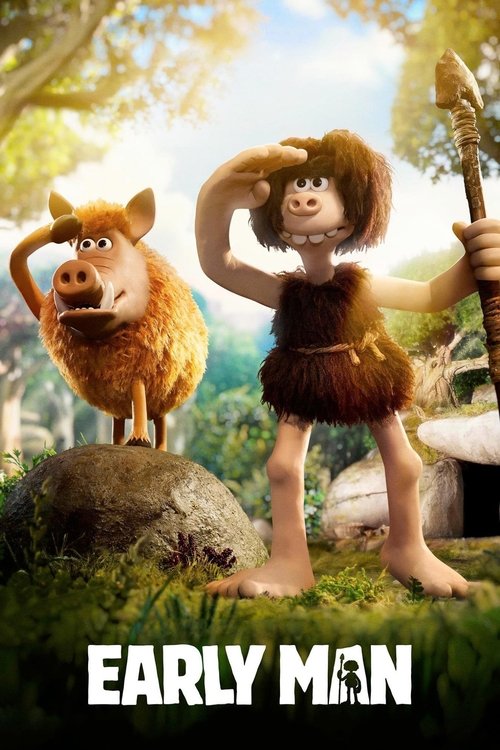
Early Man
Dug, along with his sidekick Hognob, unite a cavemen tribe to save their hidden valley from being spoiled and, all together as a team, to face the menace of a mysterious and mighty enemy, on the turf of an ancient and sacred sport.
Working with a mid-range budget of $50.0M, the film achieved a respectable showing with $53.4M in global revenue (+7% profit margin).
1 win & 15 nominations


Plot Structure
Story beats plotted across runtime


Narrative Arc
Emotional journey through the story's key moments
Story Circle
Blueprint 15-beat structure
Arcplot Score Breakdown
Weighted: Precision (70%) + Arc (15%) + Theme (15%)
Early Man (2018) showcases carefully calibrated dramatic framework, characteristic of Nick Park's storytelling approach. This structural analysis examines how the film's 15-point plot structure maps to proven narrative frameworks across 1 hour and 29 minutes. With an Arcplot score of 7.1, the film balances conventional beats with creative variation.
Characters
Cast & narrative archetypes

Dug
Goona
Lord Nooth
Chief Bobnar
Hognob
Main Cast & Characters
Dug
Played by Eddie Redmayne
An optimistic caveman who leads his tribe to reclaim their valley through football
Goona
Played by Maisie Williams
A Bronze Age girl who defies her society to help the cavemen learn football
Lord Nooth
Played by Tom Hiddleston
The greedy Bronze Age governor who rules the valley and profits from football matches
Chief Bobnar
Played by Timothy Spall
Dug's elderly mentor and tribal chief who believes in tradition and caution
Hognob
Played by Nick Park
Dug's loyal pet boar who accompanies him on his adventures
Structural Analysis
The Status Quo at 1 minutes (1% through the runtime) establishes The Stone Age tribe lives peacefully in their valley, hunting rabbits and playing a primitive form of football, unaware of the coming Bronze Age civilization.. Significantly, this early placement immediately immerses viewers in the story world.
The inciting incident occurs at 10 minutes when Lord Nooth and his Bronze Age army invade the valley with advanced technology, destroying the tribe's home and claiming the land for ore mining.. At 11% through the film, this Disruption aligns precisely with traditional story structure. This beat shifts the emotional landscape, launching the protagonist into the central conflict.
The First Threshold at 22 minutes marks the transition into Act II, occurring at 25% of the runtime. This shows the protagonist's commitment to Dug convinces his reluctant tribe to accept the football challenge against Real Bronzio, committing them to learn a game they've never played to win back their home., moving from reaction to action.
At 44 minutes, the Midpoint arrives at 49% of the runtime—precisely centered, creating perfect narrative symmetry. Notably, this crucial beat The tribe discovers cave paintings proving their Stone Age ancestors invented football, giving them confidence and a sense of destiny that they can win, raising the stakes emotionally., fundamentally raising what's at risk. The emotional intensity shifts, dividing the narrative into clear before-and-after phases.
The Collapse moment at 66 minutes (74% through) represents the emotional nadir. Here, The tribe is losing badly and humiliated on the field; Goona is captured and faces punishment; all seems lost as both their valley and their dignity appear gone forever., reveals the protagonist at their lowest point. This beat's placement in the final quarter sets up the climactic reversal.
The Second Threshold at 71 minutes initiates the final act resolution at 80% of the runtime. The tribe returns to the field with renewed spirit and strategy, combining their Stone Age instincts with football skills, finally playing as a unified team with belief., demonstrating the transformation achieved throughout the journey.
Emotional Journey
Early Man's emotional architecture traces a deliberate progression across 15 carefully calibrated beats.
Narrative Framework
This structural analysis employs proven narrative structure principles that track dramatic progression. By mapping Early Man against these established plot points, we can identify how Nick Park utilizes or subverts traditional narrative conventions. The plot point approach reveals not only adherence to structural principles but also creative choices that distinguish Early Man within the family genre.
Nick Park's Structural Approach
Among the 4 Nick Park films analyzed on Arcplot, the average structural score is 7.2, reflecting strong command of classical structure. Early Man takes a more unconventional approach compared to the director's typical style. For comparative analysis, explore the complete Nick Park filmography.
Comparative Analysis
Additional family films include The Black Stallion, The Bad Guys and Ella Enchanted. For more Nick Park analyses, see The Wrong Trousers, A Close Shave and Wallace & Gromit: Vengeance Most Fowl.
Plot Points by Act
Act I
SetupStatus Quo
The Stone Age tribe lives peacefully in their valley, hunting rabbits and playing a primitive form of football, unaware of the coming Bronze Age civilization.
Theme
Bobnar tells young Dug that their ancestors once hunted mammoth and were capable of greatness, planting the theme that courage and teamwork can overcome technological disadvantage.
Worldbuilding
Establishment of the Stone Age tribe's simple life in their valley, their rabbit-hunting culture, leadership structure under Chief Bobnar, and Dug's role as an aspiring hunter.
Disruption
Lord Nooth and his Bronze Age army invade the valley with advanced technology, destroying the tribe's home and claiming the land for ore mining.
Resistance
Dug accidentally enters the Bronze Age city, discovers football (sacred game), and challenges Nooth to a match to win back their valley, despite his tribe's doubts and lack of knowledge about the game.
Act II
ConfrontationFirst Threshold
Dug convinces his reluctant tribe to accept the football challenge against Real Bronzio, committing them to learn a game they've never played to win back their home.
Mirror World
Goona, a Bronze Age girl who dreams of playing football but is forbidden because she's female, secretly agrees to coach the tribe, representing the thematic bridge between worlds.
Premise
The tribe learns football from Goona through comical training montages, discovering their ancestors actually invented the game, while bonding as a team and finding hope in their impossible mission.
Midpoint
The tribe discovers cave paintings proving their Stone Age ancestors invented football, giving them confidence and a sense of destiny that they can win, raising the stakes emotionally.
Opposition
Nooth schemes to ensure victory through cheating, the tribe's weaknesses are exposed, Goona is discovered and banned, and the cavemen enter the match massively outmatched and falling behind.
Collapse
The tribe is losing badly and humiliated on the field; Goona is captured and faces punishment; all seems lost as both their valley and their dignity appear gone forever.
Crisis
Dug rallies the demoralized tribe at halftime, reminding them of their ancestors' courage and their bond as a team, processing the despair and finding inner resolve.
Act III
ResolutionSecond Threshold
The tribe returns to the field with renewed spirit and strategy, combining their Stone Age instincts with football skills, finally playing as a unified team with belief.
Synthesis
The cavemen mount an incredible comeback using teamwork and creativity, Goona escapes to help, Dug scores the winning goal, they reclaim their valley, and Nooth's corruption is exposed.
Transformation
The tribe returns to their valley playing football together, now confident and united, with Goona as part of their family, transformed from fearful survivors to champions who proved their worth.