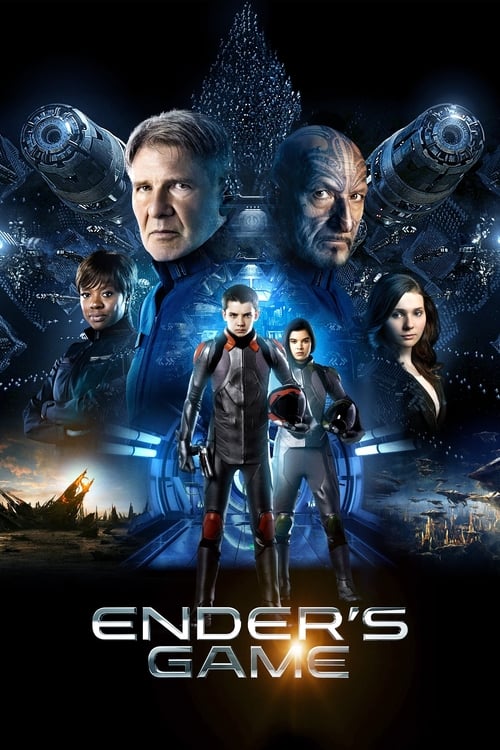
Ender's Game
Based on the classic novel by Orson Scott Card, Ender's Game is the story of the Earth's most gifted children training to defend their homeplanet in the space wars of the future.
Working with a significant budget of $110.0M, the film achieved a modest success with $125.5M in global revenue (+14% profit margin).
1 win & 6 nominations


Plot Structure
Story beats plotted across runtime


Narrative Arc
Emotional journey through the story's key moments
Story Circle
Blueprint 15-beat structure
Arcplot Score Breakdown
Weighted: Precision (70%) + Arc (15%) + Theme (15%)
Ender's Game (2013) demonstrates precise narrative architecture, characteristic of Gavin Hood's storytelling approach. This structural analysis examines how the film's 15-point plot structure maps to proven narrative frameworks across 1 hour and 54 minutes. With an Arcplot score of 6.2, the film takes an unconventional approach to traditional narrative frameworks.
Characters
Cast & narrative archetypes

Ender Wiggin
Colonel Hyrum Graff
Major Gwen Anderson
Petra Arkanian
Bonzo Madrid
Mazer Rackham
Valentine Wiggin
Peter Wiggin
Main Cast & Characters
Ender Wiggin
Played by Asa Butterfield
Brilliant child strategist recruited to Battle School to lead humanity's defense against an alien invasion.
Colonel Hyrum Graff
Played by Harrison Ford
Ruthless military commander who manipulates Ender to become the perfect weapon against the Formics.
Major Gwen Anderson
Played by Viola Davis
Compassionate psychologist who monitors Ender's emotional state and questions Graff's methods.
Petra Arkanian
Played by Hailee Steinfeld
Skilled Battle School student who becomes Ender's friend and ally in Dragon Army.
Bonzo Madrid
Played by Moises Arias
Aggressive Salamander Army commander who becomes Ender's dangerous rival.
Mazer Rackham
Played by Ben Kingsley
Legendary war hero who defeated the Formics and becomes Ender's final mentor and trainer.
Valentine Wiggin
Played by Abigail Breslin
Ender's compassionate older sister who provides emotional support and moral grounding.
Peter Wiggin
Played by Jimmy Pinchak
Ender's sadistic older brother who represents the darkness Ender fears within himself.
Structural Analysis
The Status Quo at 1 minutes (1% through the runtime) establishes Ender Wiggin, a bullied but brilliant third child, attends school on Earth while being monitored by the International Fleet as a potential recruit for the war against the insectoid Formics who previously attacked humanity.. Structural examination shows that this early placement immediately immerses viewers in the story world.
The inciting incident occurs at 13 minutes when Colonel Graff and Major Anderson arrive at Ender's home to recruit him to Battle School despite his monitor being removed. Graff reveals they witnessed Ender's tactical thinking in the Stilson fight and offers him a chance to save the world.. At 11% through the film, this Disruption aligns precisely with traditional story structure. This beat shifts the emotional landscape, launching the protagonist into the central conflict.
The First Threshold at 28 minutes marks the transition into Act II, occurring at 25% of the runtime. This indicates the protagonist's commitment to Ender chooses to enter the Battle Room for the first time and engages in his first combat simulation. He masters the zero-gravity combat environment, demonstrating innovative tactics that rewrite how battles are fought, fully committing to his role as a warrior., moving from reaction to action.
At 56 minutes, the Midpoint arrives at 50% of the runtime—precisely centered, creating perfect narrative symmetry. Of particular interest, this crucial beat Ender is pushed too far by Graff's manipulations and faces Bonzo Madrid in a confrontation in the showers. Ender defends himself and seriously injures Bonzo (though he doesn't know Bonzo dies). This false victory—winning the fight—is actually a defeat: Ender has become what he feared, a killer like his brother Peter., fundamentally raising what's at risk. The emotional intensity shifts, dividing the narrative into clear before-and-after phases.
The Collapse moment at 85 minutes (74% through) represents the emotional nadir. Here, During what Ender believes is his final simulation test, he faces an impossible scenario at the Formic homeworld. Exhausted and broken, he decides to end the "game" by destroying the entire planet, believing he has failed by resorting to genocide in a simulation. The whiff of death: the extinction of an entire species., reveals the protagonist at their lowest point. This beat's placement in the final quarter sets up the climactic reversal.
The Second Threshold at 90 minutes initiates the final act resolution at 79% of the runtime. Ender discovers the Formic Queen pupa communicating with him telepathically through the mind game. He learns the Formics had no intention of attacking again—the previous invasion was a misunderstanding. They preserved their Queen for him to carry to a new world, seeking forgiveness and a future., demonstrating the transformation achieved throughout the journey.
Emotional Journey
Ender's Game's emotional architecture traces a deliberate progression across 15 carefully calibrated beats.
Narrative Framework
This structural analysis employs structural analysis methodology used to understand storytelling architecture. By mapping Ender's Game against these established plot points, we can identify how Gavin Hood utilizes or subverts traditional narrative conventions. The plot point approach reveals not only adherence to structural principles but also creative choices that distinguish Ender's Game within the science fiction genre.
Gavin Hood's Structural Approach
Among the 4 Gavin Hood films analyzed on Arcplot, the average structural score is 6.5, demonstrating varied approaches to story architecture. Ender's Game takes a more unconventional approach compared to the director's typical style. For comparative analysis, explore the complete Gavin Hood filmography.
Comparative Analysis
Additional science fiction films include The Postman, Mad Max 2 and AVP: Alien vs. Predator. For more Gavin Hood analyses, see Official Secrets, X-Men Origins: Wolverine and Rendition.
Plot Points by Act
Act I
SetupStatus Quo
Ender Wiggin, a bullied but brilliant third child, attends school on Earth while being monitored by the International Fleet as a potential recruit for the war against the insectoid Formics who previously attacked humanity.
Theme
Colonel Graff tells Ender: "The way we win matters." This establishes the central thematic question of whether victory justifies any means, and whether compassion and ruthlessness can coexist.
Worldbuilding
Introduction to Ender's world: his family dynamics with Peter and Valentine, the monitor removal, the schoolyard confrontation with Stilson that reveals Ender's strategic brilliance and capacity for violence, and the IF's recruitment system seeking the next great military commander.
Disruption
Colonel Graff and Major Anderson arrive at Ender's home to recruit him to Battle School despite his monitor being removed. Graff reveals they witnessed Ender's tactical thinking in the Stilson fight and offers him a chance to save the world.
Resistance
Ender debates leaving his family and traveling to Battle School. He says goodbye to Valentine. On the shuttle, Graff publicly isolates Ender by praising only him, creating resentment among other recruits. Ender begins adapting to the zero-gravity environment and proving his tactical genius.
Act II
ConfrontationFirst Threshold
Ender chooses to enter the Battle Room for the first time and engages in his first combat simulation. He masters the zero-gravity combat environment, demonstrating innovative tactics that rewrite how battles are fought, fully committing to his role as a warrior.
Mirror World
Ender forms a bond with Petra Arkanian, who becomes his mentor and friend in the Battle Room. She teaches him advanced techniques and represents the possibility of maintaining humanity and connection even in a militaristic system designed to isolate him.
Premise
The "fun and games" of Battle School: Ender rises through the ranks, leads his launch group, gets promoted to Salamander Army under Bonzo Madrid, then forms and commands Dragon Army. He revolutionizes battle tactics, wins impossible scenarios, and becomes a legend among the students.
Midpoint
Ender is pushed too far by Graff's manipulations and faces Bonzo Madrid in a confrontation in the showers. Ender defends himself and seriously injures Bonzo (though he doesn't know Bonzo dies). This false victory—winning the fight—is actually a defeat: Ender has become what he feared, a killer like his brother Peter.
Opposition
Ender is rushed through Command School training under Mazer Rackham. He becomes increasingly exhausted and isolated as the simulations grow more difficult. His team is pushed to breaking points, and Ender begins to question the cost of winning, feeling the weight of command and manipulation.
Collapse
During what Ender believes is his final simulation test, he faces an impossible scenario at the Formic homeworld. Exhausted and broken, he decides to end the "game" by destroying the entire planet, believing he has failed by resorting to genocide in a simulation. The whiff of death: the extinction of an entire species.
Crisis
Ender learns the devastating truth: it wasn't a simulation. He commanded the real fleet and just committed xenocide against the entire Formic species. He is celebrated as a hero while internally destroyed, realizing he was manipulated into becoming a mass murderer. He grieves for what he's done.
Act III
ResolutionSecond Threshold
Ender discovers the Formic Queen pupa communicating with him telepathically through the mind game. He learns the Formics had no intention of attacking again—the previous invasion was a misunderstanding. They preserved their Queen for him to carry to a new world, seeking forgiveness and a future.
Synthesis
Ender accepts his mission to find a new home for the Formic Queen, becoming a speaker for the dead rather than a destroyer. He rejects Earth's demand for him to return as a military leader and chooses to dedicate his life to redemption by preserving what remains of the species he destroyed.
Transformation
Ender departs Earth carrying the Formic Queen, transformed from a weapon into a peacemaker. Where he once was isolated and controlled, he now acts with autonomous moral purpose. The child soldier becomes a guardian of life, choosing compassion over glory.