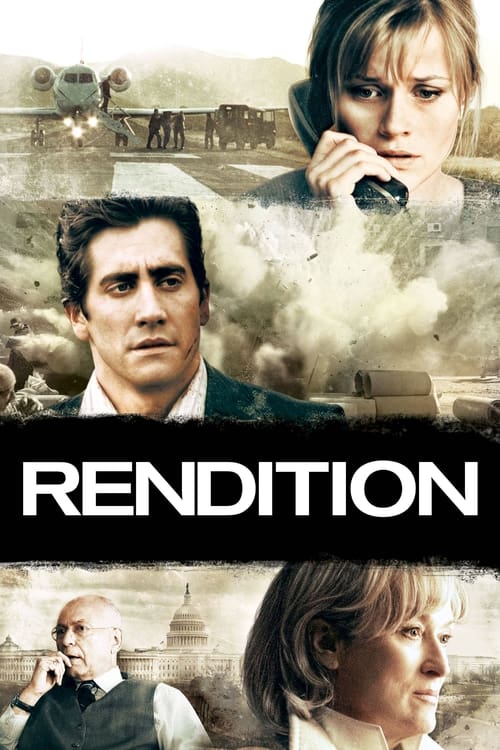
Rendition
When an Egyptian terrorism suspect "disappears" on a flight from Africa to Washington DC, his American wife and a CIA analyst find themselves caught up in a struggle to secure his release from a secret detention facility somewhere outside the US.
The film disappointed at the box office against its mid-range budget of $27.5M, earning $24.7M globally (-10% loss).
1 win & 2 nominations


Plot Structure
Story beats plotted across runtime


Narrative Arc
Emotional journey through the story's key moments
Story Circle
Blueprint 15-beat structure
Arcplot Score Breakdown
Weighted: Precision (70%) + Arc (15%) + Theme (15%)
Rendition (2007) reveals carefully calibrated narrative design, characteristic of Gavin Hood's storytelling approach. This structural analysis examines how the film's 15-point plot structure maps to proven narrative frameworks across 2 hours. With an Arcplot score of 6.5, the film balances conventional beats with creative variation.
Characters
Cast & narrative archetypes

Isabella El-Ibrahimi
Anwar El-Ibrahimi
Douglas Freeman
Abasi Fawal
Alan Smith
Fatima Fawal
Khalid El-Emin
Senator Hawkins
Main Cast & Characters
Isabella El-Ibrahimi
Played by Reese Witherspoon
Pregnant wife desperately searching for her husband who has been disappeared by the CIA.
Anwar El-Ibrahimi
Played by Omar Metwally
Egyptian-American chemical engineer who is secretly detained and tortured based on false intelligence.
Douglas Freeman
Played by Jake Gyllenhaal
CIA analyst who becomes disillusioned after witnessing the torture of an innocent man.
Abasi Fawal
Played by Yigal Naor
North African intelligence chief who conducts brutal interrogations on behalf of the CIA.
Alan Smith
Played by Peter Sarsgaard
Senior CIA official who authorizes extraordinary rendition and defends the practice.
Fatima Fawal
Played by Zineb Oukach
Daughter of intelligence chief who falls in love with a young terrorist and becomes caught in the cycle of violence.
Khalid El-Emin
Played by Moa Khouas
Young man radicalized by his grandmother's death who becomes a suicide bomber.
Senator Hawkins
Played by Alan Arkin
Powerful U.S. senator who initially refuses to help Isabella but eventually intervenes.
Structural Analysis
The Status Quo at 1 minutes (1% through the runtime) establishes Anwar El-Ibrahimi boards a flight in South Africa to return home to his pregnant wife Isabella in Chicago. Meanwhile, CIA analyst Douglas Freeman arrives in an unnamed North African country. Their separate, ordinary lives are about to collide.. The analysis reveals that this early placement immediately immerses viewers in the story world.
The inciting incident occurs at 15 minutes when Anwar is seized by U.S. Authorities during a layover, hooded, and rendered to a secret detention facility in North Africa based on phone records linking him to a terrorist. His disappearance shatters Isabella's world when he never arrives home.. At 12% through the film, this Disruption aligns precisely with traditional story structure. This beat shifts the emotional landscape, launching the protagonist into the central conflict.
The First Threshold at 31 minutes marks the transition into Act II, occurring at 26% of the runtime. This indicates the protagonist's commitment to Isabella, getting nowhere through official channels, makes the active choice to go to Washington D.C. To confront Senator Hawkins directly and demand answers about her husband. Douglas decides he cannot remain passive and begins to question the torture he's witnessing., moving from reaction to action.
At 61 minutes, the Midpoint arrives at 51% of the runtime—precisely centered, creating perfect narrative symmetry. Significantly, this crucial beat Under extreme torture, Anwar falsely confesses to being involved in terrorist activities and gives names. This false victory for his interrogators is actually a devastating defeat—it proves the unreliability of information obtained through torture and marks Anwar's psychological breaking point., fundamentally raising what's at risk. The emotional intensity shifts, dividing the narrative into clear before-and-after phases.
The Collapse moment at 90 minutes (75% through) represents the emotional nadir. Here, A suicide bombing kills dozens, including Abasi Fawal. The narrative reveals this was carried out by Khalid, with Fatima as an unwitting accomplice/suicide bomber. Fawal—the torturer trying to protect his family—loses everything he sought to protect. Death comes literally and metaphorically., indicates the protagonist at their lowest point. This beat's placement in the final quarter sets up the climactic reversal.
The Second Threshold at 97 minutes initiates the final act resolution at 81% of the runtime. Douglas makes the definitive choice to act on his conscience. He defies orders, helps Anwar escape from detention, and arranges for him to be smuggled out of the country. This is the moral breakthrough—choosing human decency over institutional authority and career., demonstrating the transformation achieved throughout the journey.
Emotional Journey
Rendition's emotional architecture traces a deliberate progression across 15 carefully calibrated beats.
Narrative Framework
This structural analysis employs a 15-point narrative structure framework that maps key story moments. By mapping Rendition against these established plot points, we can identify how Gavin Hood utilizes or subverts traditional narrative conventions. The plot point approach reveals not only adherence to structural principles but also creative choices that distinguish Rendition within the drama genre.
Gavin Hood's Structural Approach
Among the 4 Gavin Hood films analyzed on Arcplot, the average structural score is 6.5, demonstrating varied approaches to story architecture. Rendition takes a more unconventional approach compared to the director's typical style. For comparative analysis, explore the complete Gavin Hood filmography.
Comparative Analysis
Additional drama films include After Thomas, South Pacific and Dirty Dancing: Havana Nights. For more Gavin Hood analyses, see Official Secrets, X-Men Origins: Wolverine and Ender's Game.
Plot Points by Act
Act I
SetupStatus Quo
Anwar El-Ibrahimi boards a flight in South Africa to return home to his pregnant wife Isabella in Chicago. Meanwhile, CIA analyst Douglas Freeman arrives in an unnamed North African country. Their separate, ordinary lives are about to collide.
Theme
Senator Hawkins tells Isabella's aide Alan: "The United States does not torture." This establishes the central thematic conflict between stated values and actual practices, between what governments claim and what they do.
Worldbuilding
Introduction to multiple storylines: Anwar's family life in Chicago with pregnant wife Isabella; Douglas Freeman's CIA work in North Africa; the local police chief Abasi Fawal and his family; the post-9/11 climate of fear and extraordinary rendition. The web of characters and their worlds is established.
Disruption
Anwar is seized by U.S. authorities during a layover, hooded, and rendered to a secret detention facility in North Africa based on phone records linking him to a terrorist. His disappearance shatters Isabella's world when he never arrives home.
Resistance
Isabella desperately tries to locate her husband through official channels, stonewalled at every turn. Douglas observes Anwar's interrogation and torture by Fawal with growing discomfort. Abasi's daughter Fatima becomes involved with a young man named Khalid. Each character debates their next move.
Act II
ConfrontationFirst Threshold
Isabella, getting nowhere through official channels, makes the active choice to go to Washington D.C. to confront Senator Hawkins directly and demand answers about her husband. Douglas decides he cannot remain passive and begins to question the torture he's witnessing.
Mirror World
Douglas begins interacting more directly with Fawal and his family, particularly noticing Fawal's daughter Fatima. This humanizes the "other side" and presents a thematic mirror: Fawal tortures in the name of protecting his family, just as American officials claim to protect their citizens.
Premise
The film explores its premise across parallel storylines: Isabella's political battle in Washington; Anwar's deteriorating condition under torture as he maintains his innocence; Douglas's growing moral crisis; and the developing relationship between Fatima and Khalid, revealed to be part of a terrorist cell.
Midpoint
Under extreme torture, Anwar falsely confesses to being involved in terrorist activities and gives names. This false victory for his interrogators is actually a devastating defeat—it proves the unreliability of information obtained through torture and marks Anwar's psychological breaking point.
Opposition
The consequences intensify: Isabella faces bureaucratic walls and official denials; Douglas's moral opposition to the torture grows stronger as he sees it produces false confessions; Anwar descends into despair in his cell; Fatima becomes more deeply involved with Khalid's terrorist activities, unaware of his true intentions.
Collapse
A suicide bombing kills dozens, including Abasi Fawal. The narrative reveals this was carried out by Khalid, with Fatima as an unwitting accomplice/suicide bomber. Fawal—the torturer trying to protect his family—loses everything he sought to protect. Death comes literally and metaphorically.
Crisis
In the aftermath of the bombing, Douglas processes the futility and moral cost of everything that has transpired. Isabella sits in darkness, not knowing if she'll ever see Anwar again. The torture produced no useful intelligence and destroyed lives on all sides. All seems lost.
Act III
ResolutionSecond Threshold
Douglas makes the definitive choice to act on his conscience. He defies orders, helps Anwar escape from detention, and arranges for him to be smuggled out of the country. This is the moral breakthrough—choosing human decency over institutional authority and career.
Synthesis
Douglas executes Anwar's escape and return home. Isabella receives the call that Anwar is alive. The parallel timelines converge, revealing that Fatima's story was actually happening before the main narrative—a structural synthesis that recontextualizes everything we've seen about the human cost of the war on terror.
Transformation
Anwar reunites with Isabella and meets his newborn child. This mirrors the Status Quo of family life, but transformed: Anwar is traumatized, marked by torture, and their innocence is gone. Douglas has sacrificed his career but retained his humanity. The cost of moral compromise is made clear.