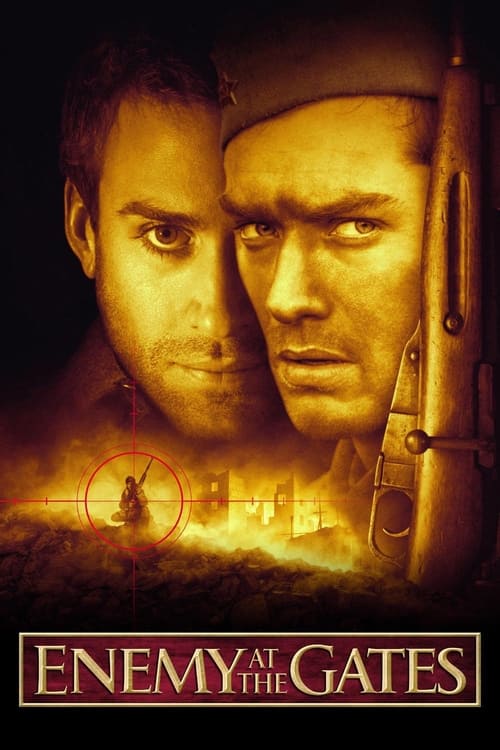
Enemy at the Gates
A Russian and a German sniper play a game of cat-and-mouse during the Battle of Stalingrad in WWII.
Working with a respectable budget of $68.0M, the film achieved a modest success with $97.0M in global revenue (+43% profit margin).


Plot Structure
Story beats plotted across runtime


Narrative Arc
Emotional journey through the story's key moments
Story Circle
Blueprint 15-beat structure
Arcplot Score Breakdown
Weighted: Precision (70%) + Arc (15%) + Theme (15%)
Enemy at the Gates (2001) exhibits deliberately positioned narrative design, characteristic of Jean-Jacques Annaud's storytelling approach. This structural analysis examines how the film's 15-point plot structure maps to proven narrative frameworks across 2 hours and 11 minutes. With an Arcplot score of 6.4, the film takes an unconventional approach to traditional narrative frameworks.
Characters
Cast & narrative archetypes

Vassili Zaitsev
Danilov
Tania Chernova
Major Erwin König
Nikita Khrushchev
Sacha Filipov
Main Cast & Characters
Vassili Zaitsev
Played by Jude Law
A humble shepherd turned legendary Soviet sniper during the Battle of Stalingrad, who becomes a symbol of hope for the Red Army.
Danilov
Played by Joseph Fiennes
A political officer who discovers Vassili and transforms him into a propaganda hero to boost morale among Soviet troops.
Tania Chernova
Played by Rachel Weisz
A fierce female soldier and sniper fighting for the Red Army, who becomes romantically involved with both Vassili and Danilov.
Major Erwin König
Played by Ed Harris
An aristocratic German sniper sent to Stalingrad specifically to hunt down and kill Vassili Zaitsev.
Nikita Khrushchev
Played by Bob Hoskins
A ruthless Soviet political commissar overseeing the defense of Stalingrad with brutal efficiency.
Sacha Filipov
Played by Gabriel Thomson
A young Russian boy who acts as a scout and spy for Vassili, navigating the dangerous ruins of Stalingrad.
Structural Analysis
The Status Quo at 1 minutes (1% through the runtime) establishes Young Vassili with his grandfather in the Urals, learning to shoot wolves. His grandfather tells him a hunter must be patient and wait for the perfect moment. This establishes Vassili's humble origins and the skills that will define him.. Significantly, this early placement immediately immerses viewers in the story world.
The inciting incident occurs at 16 minutes when Hiding among corpses, Vassili uses a fallen soldier's rifle to kill five German officers with remarkable precision while Danilov watches in amazement. This display of skill disrupts both men's fates and sets the propaganda machine in motion.. At 12% through the film, this Disruption aligns precisely with traditional story structure. This beat shifts the emotional landscape, launching the protagonist into the central conflict.
The First Threshold at 33 minutes marks the transition into Act II, occurring at 25% of the runtime. This demonstrates the protagonist's commitment to The Germans deploy Major König, their most elite sniper, specifically to hunt and kill Vassili. When Vassili realizes he's being hunted by a master marksman after König kills his spotter, he actively chooses to accept this personal duel rather than hide. The hunt becomes mutual., moving from reaction to action.
At 66 minutes, the Midpoint arrives at 50% of the runtime—precisely centered, creating perfect narrative symmetry. Of particular interest, this crucial beat König outsmarts Vassili and kills Kulikov, Vassili's friend and fellow sniper, in a devastating trap. Vassili barely escapes with his life by playing dead. This false defeat reveals König's superior skill and raises the stakes—Vassili now knows he may not survive this duel., fundamentally raising what's at risk. The emotional intensity shifts, dividing the narrative into clear before-and-after phases.
The Collapse moment at 98 minutes (75% through) represents the emotional nadir. Here, König hangs young Sacha's body from a pole as a message to Vassili. The boy who idolized Vassili is dead because of him. Tania is wounded and evacuated, possibly dying. Everything Vassili cared about has been destroyed by his role as the legendary sniper. The whiff of death is everywhere., illustrates the protagonist at their lowest point. This beat's placement in the final quarter sets up the climactic reversal.
The Second Threshold at 105 minutes initiates the final act resolution at 80% of the runtime. Danilov, recognizing his own jealousy and the damage his propaganda caused, sacrifices himself by deliberately drawing König's fire—revealing the German sniper's position to Vassili. This act of redemption gives Vassili both the tactical advantage and moral clarity to end the duel., demonstrating the transformation achieved throughout the journey.
Emotional Journey
Enemy at the Gates's emotional architecture traces a deliberate progression across 15 carefully calibrated beats.
Narrative Framework
This structural analysis employs proven narrative structure principles that track dramatic progression. By mapping Enemy at the Gates against these established plot points, we can identify how Jean-Jacques Annaud utilizes or subverts traditional narrative conventions. The plot point approach reveals not only adherence to structural principles but also creative choices that distinguish Enemy at the Gates within the drama genre.
Jean-Jacques Annaud's Structural Approach
Among the 8 Jean-Jacques Annaud films analyzed on Arcplot, the average structural score is 6.9, demonstrating varied approaches to story architecture. Enemy at the Gates takes a more unconventional approach compared to the director's typical style. For comparative analysis, explore the complete Jean-Jacques Annaud filmography.
Comparative Analysis
Additional drama films include After Thomas, South Pacific and Dirty Dancing: Havana Nights. For more Jean-Jacques Annaud analyses, see The Name of the Rose, The Bear and The Lover.
Plot Points by Act
Act I
SetupStatus Quo
Young Vassili with his grandfather in the Urals, learning to shoot wolves. His grandfather tells him a hunter must be patient and wait for the perfect moment. This establishes Vassili's humble origins and the skills that will define him.
Theme
Danilov tells Vassili that in the Soviet system, all men are supposed to be equal but some need heroes to believe in. This states the central thematic tension: can an individual remain human while being transformed into a symbol?
Worldbuilding
The brutal reality of Stalingrad is established as Soviet soldiers arrive on boats under German bombardment. Vassili survives the disastrous first assault where unarmed soldiers are mowed down by both Germans and their own officers. The horror of war and the desperation of the Soviet position are made viscerally clear.
Disruption
Hiding among corpses, Vassili uses a fallen soldier's rifle to kill five German officers with remarkable precision while Danilov watches in amazement. This display of skill disrupts both men's fates and sets the propaganda machine in motion.
Resistance
Danilov brings Vassili to Khrushchev and proposes making him a propaganda hero. Vassili is uncomfortable with fame but accepts his role as Soviet newspapers spread stories of his kills. He debates whether he can live up to the legend being built around him while continuing his deadly work as a sniper.
Act II
ConfrontationFirst Threshold
The Germans deploy Major König, their most elite sniper, specifically to hunt and kill Vassili. When Vassili realizes he's being hunted by a master marksman after König kills his spotter, he actively chooses to accept this personal duel rather than hide. The hunt becomes mutual.
Mirror World
Vassili meets Tania Chernova, a Jewish intellectual who joined the army after her parents were killed. Their connection represents love and humanity amid the dehumanizing war. She becomes what he's fighting to protect—a reminder of life beyond the scope of his rifle.
Premise
The deadly cat-and-mouse game between Vassili and König plays out in the ruins of Stalingrad. Each sets traps for the other, studying habits and patterns. Vassili's legend grows as he racks up kills, while König patiently waits for his moment. The romance with Tania deepens, creating a love triangle with the jealous Danilov.
Midpoint
König outsmarts Vassili and kills Kulikov, Vassili's friend and fellow sniper, in a devastating trap. Vassili barely escapes with his life by playing dead. This false defeat reveals König's superior skill and raises the stakes—Vassili now knows he may not survive this duel.
Opposition
König gains the upper hand psychologically. He discovers Tania's connection to Vassili and uses it as bait. Danilov's jealousy poisons his friendship with Vassili. Young Sacha, who's been feeding information to both sides, is caught in the middle. Vassili doubts himself as the legend feels hollow and König seems unstoppable.
Collapse
König hangs young Sacha's body from a pole as a message to Vassili. The boy who idolized Vassili is dead because of him. Tania is wounded and evacuated, possibly dying. Everything Vassili cared about has been destroyed by his role as the legendary sniper. The whiff of death is everywhere.
Crisis
Vassili is devastated by Sacha's death and Tania's wounding. He feels responsible for turning a child into a spy who paid with his life. Danilov sees what his propaganda has wrought—a good man crushed by the weight of being a symbol. Vassili contemplates giving up the hunt entirely.
Act III
ResolutionSecond Threshold
Danilov, recognizing his own jealousy and the damage his propaganda caused, sacrifices himself by deliberately drawing König's fire—revealing the German sniper's position to Vassili. This act of redemption gives Vassili both the tactical advantage and moral clarity to end the duel.
Synthesis
Armed with König's position, Vassili sets his final trap using patience—the lesson from his grandfather. He waits through the night and into dawn. When König finally moves to investigate what he believes is Vassili's corpse, Vassili takes the perfect shot, killing his nemesis. The duel ends with the humble shepherd victorious over the aristocratic hunter.
Transformation
Vassili finds Tania alive in a field hospital. They embrace, both survivors of the nightmare. He is no longer the propaganda legend but simply a man who endured. The final image shows human connection triumphing over the machinery of war—he fought not for glory but for something worth living for.