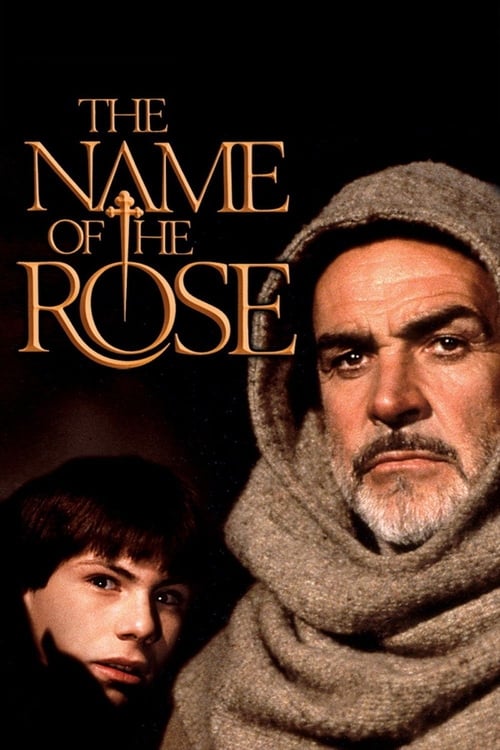
The Name of the Rose
14th-century Franciscan monk William of Baskerville and his young novice arrive at a conference to find that several monks have been murdered under mysterious circumstances. To solve the crimes, William must rise up against the Church's authority and fight the shadowy conspiracy of monastery monks using only his intelligence; which is considerable.
Despite a respectable budget of $18.0M, The Name of the Rose became a box office success, earning $77.2M worldwide—a 329% return.
2 BAFTA 17 wins & 6 nominations


Plot Structure
Story beats plotted across runtime


Narrative Arc
Emotional journey through the story's key moments
Story Circle
Blueprint 15-beat structure
Arcplot Score Breakdown
Weighted: Precision (70%) + Arc (15%) + Theme (15%)
The Name of the Rose (1986) exhibits strategically placed plot construction, characteristic of Jean-Jacques Annaud's storytelling approach. This structural analysis examines how the film's 15-point plot structure maps to proven narrative frameworks across 2 hours and 10 minutes. With an Arcplot score of 7.1, the film balances conventional beats with creative variation.
Structural Analysis
The Status Quo at 2 minutes (2% through the runtime) establishes William of Baskerville and his novice Adso arrive at the isolated Benedictine monastery in the Italian Alps, a place of scholarly pursuit but also rigid orthodoxy, establishing William as a logical, empirical investigator in a world governed by faith and fear.. Notably, this early placement immediately immerses viewers in the story world.
The inciting incident occurs at 15 minutes when William is officially tasked by the Abbot to investigate the suspicious death before the Inquisition arrives, transforming his visit from diplomatic mission to murder investigation and placing him in a dangerous position between truth-seeking and political survival.. At 12% through the film, this Disruption aligns precisely with traditional story structure. This beat shifts the emotional landscape, launching the protagonist into the central conflict.
The First Threshold at 33 minutes marks the transition into Act II, occurring at 25% of the runtime. This reveals the protagonist's commitment to William makes the active choice to penetrate the forbidden library's labyrinth despite warnings and prohibitions, committing himself fully to uncovering the truth regardless of the personal and spiritual dangers, marking his complete entry into the investigative world., moving from reaction to action.
At 65 minutes, the Midpoint arrives at 50% of the runtime—precisely centered, creating perfect narrative symmetry. The analysis reveals that this crucial beat William discovers that all victims had blackened fingers and tongues, revealing that the murders are connected to a specific poisoned book - a false victory as he thinks he's solving the case, but this knowledge actually puts him and Adso in mortal danger from the true killer., fundamentally raising what's at risk. The emotional intensity shifts, dividing the narrative into clear before-and-after phases.
The Collapse moment at 98 minutes (75% through) represents the emotional nadir. Here, The peasant girl and other innocents are sentenced to be burned at the stake by Bernardo Gui. William fails to save them through logic and evidence, representing the death of reason and the triumph of fear and dogma - his darkest moment of powerlessness., reveals the protagonist at their lowest point. This beat's placement in the final quarter sets up the climactic reversal.
The Second Threshold at 104 minutes initiates the final act resolution at 80% of the runtime. William synthesizes all clues and realizes that Jorge, the blind librarian, is the killer protecting a forbidden book - the lost second volume of Aristotle's Poetics on comedy. Armed with this knowledge, he confronts Jorge in the library's heart., demonstrating the transformation achieved throughout the journey.
Emotional Journey
The Name of the Rose's emotional architecture traces a deliberate progression across 15 carefully calibrated beats.
Narrative Framework
This structural analysis employs systematic plot point analysis that identifies crucial turning points. By mapping The Name of the Rose against these established plot points, we can identify how Jean-Jacques Annaud utilizes or subverts traditional narrative conventions. The plot point approach reveals not only adherence to structural principles but also creative choices that distinguish The Name of the Rose within the drama genre.
Jean-Jacques Annaud's Structural Approach
Among the 8 Jean-Jacques Annaud films analyzed on Arcplot, the average structural score is 6.9, demonstrating varied approaches to story architecture. The Name of the Rose represents one of the director's most structurally precise works. For comparative analysis, explore the complete Jean-Jacques Annaud filmography.
Comparative Analysis
Additional drama films include After Thomas, South Pacific and Dirty Dancing: Havana Nights. For more Jean-Jacques Annaud analyses, see The Bear, Enemy at the Gates and The Lover.
Plot Points by Act
Act I
SetupStatus Quo
William of Baskerville and his novice Adso arrive at the isolated Benedictine monastery in the Italian Alps, a place of scholarly pursuit but also rigid orthodoxy, establishing William as a logical, empirical investigator in a world governed by faith and fear.
Theme
The Abbot warns William about the dangers of curiosity and knowledge, stating that some books are dangerous and some truths are best left hidden - establishing the central thematic conflict between enlightenment and dogmatic control.
Worldbuilding
Introduction to the monastery's complex social hierarchy, the tension between Franciscan and Dominican orders, the legendary labyrinthine library, and the discovery that a young monk has died under mysterious circumstances before an important papal debate.
Disruption
William is officially tasked by the Abbot to investigate the suspicious death before the Inquisition arrives, transforming his visit from diplomatic mission to murder investigation and placing him in a dangerous position between truth-seeking and political survival.
Resistance
William debates whether to take the case seriously, explores the monastery, begins questioning monks, and teaches Adso his methods of deductive reasoning while another monk dies. The arrival of the fearsome Inquisitor Bernardo Gui raises the stakes and danger.
Act II
ConfrontationFirst Threshold
William makes the active choice to penetrate the forbidden library's labyrinth despite warnings and prohibitions, committing himself fully to uncovering the truth regardless of the personal and spiritual dangers, marking his complete entry into the investigative world.
Mirror World
Adso encounters the peasant girl and experiences sexual awakening and love, representing the film's thematic counterpoint - natural human experience and feeling versus the monastery's repressive intellectual and spiritual control.
Premise
William and Adso navigate the library labyrinth, decode its mysteries, uncover clues about forbidden books, and piece together the pattern of deaths while Bernardo Gui begins his brutal inquisition, torturing suspects and creating an atmosphere of terror.
Midpoint
William discovers that all victims had blackened fingers and tongues, revealing that the murders are connected to a specific poisoned book - a false victory as he thinks he's solving the case, but this knowledge actually puts him and Adso in mortal danger from the true killer.
Opposition
The investigation intensifies as more deaths occur, Bernardo Gui's inquisition escalates with innocents condemned, the peasant girl is arrested as a witch, and the ancient blind monk Jorge emerges as a suspicious figure. William's methods and authority are increasingly challenged.
Collapse
The peasant girl and other innocents are sentenced to be burned at the stake by Bernardo Gui. William fails to save them through logic and evidence, representing the death of reason and the triumph of fear and dogma - his darkest moment of powerlessness.
Crisis
William despairs at his failure and contemplates abandoning the investigation, while Adso grieves the girl's fate. They face the limits of reason in a world governed by fear, questioning whether truth matters if it cannot prevent injustice.
Act III
ResolutionSecond Threshold
William synthesizes all clues and realizes that Jorge, the blind librarian, is the killer protecting a forbidden book - the lost second volume of Aristotle's Poetics on comedy. Armed with this knowledge, he confronts Jorge in the library's heart.
Synthesis
The final confrontation with Jorge reveals his philosophy: laughter and joy undermine fear of God, so the book must be destroyed. Jorge eats the poisoned pages and sets the library ablaze. William and Adso escape as centuries of knowledge burn, unable to save the accumulated wisdom.
Transformation
An aged Adso narrates that he never forgot that week, when he learned that sometimes the pursuit of truth leads only to ashes. The closing image shows the smoldering ruins of the library - knowledge destroyed by fear, showing both the cost of dogma and the fragility of enlightenment.