Escape Plan
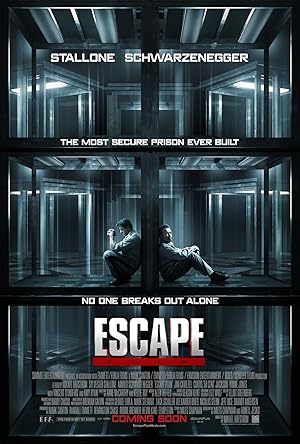
Ray Breslin is a man who has devoted his life to making prisons inescapable by going into a prison as an inmate and trying to see if he can break out. And he has done a good job so far. A woman who says she works for the CIA approaches Ray and says that a new maximum security prison where the worst criminals are to be incarcerated, is about to be launched. So she wants him to go and make sure no one can get out. He agrees. So they make the necessary preps but when Ray arrives at the prison, he discovers that someone doesn't want him to get out. He then tries to find a way out but he needs help. Another prisoner, Rottmeyer becomes friendly with him. And they decide to work together to get out.
Despite a mid-range budget of $50.0M, Escape Plan became a box office success, earning $137.3M worldwide—a 175% return.


Plot Structure
Story beats plotted across runtime


Narrative Arc
Emotional journey through the story's key moments
Story Circle
Blueprint 15-beat structure
Arcplot Score Breakdown
Weighted: Precision (70%) + Arc (15%) + Theme (15%)
Escape Plan (2013) exhibits meticulously timed story structure, characteristic of Mikael Håfström's storytelling approach. This structural analysis examines how the film's 15-point plot structure maps to proven narrative frameworks across 1 hour and 55 minutes. With an Arcplot score of 7.5, the film showcases strong structural fundamentals.
Characters
Cast & narrative archetypes

Ray Breslin
Emil Rottmayer
Warden Hobbes
Abigail Ross
Lester Clark
Hush
Dr. Kyrie
Main Cast & Characters
Ray Breslin
Played by Sylvester Stallone
Expert security specialist who designs and tests maximum security prisons by breaking out of them, framed and trapped in a prison of his own design.
Emil Rottmayer
Played by Arnold Schwarzenegger
Mysterious inmate who becomes Breslin's ally, harboring secrets about his true identity and mission inside the prison.
Warden Hobbes
Played by Jim Caviezel
Sadistic and calculating warden who runs the secret prison known as "The Tomb" with ruthless efficiency and psychological manipulation.
Abigail Ross
Played by Amy Ryan
Breslin's business partner and confidante who works from the outside to uncover the conspiracy behind his disappearance.
Lester Clark
Played by Vincent D'Onofrio
CIA operative who orchestrates Breslin's incarceration under false pretenses, part of the conspiracy to silence him.
Hush
Played by 50 Cent
Skilled inmate and computer expert who assists Breslin and Rottmayer in their escape plan with technical expertise.
Dr. Kyrie
Played by Sam Neill
Prison doctor who serves the warden but shows moments of conflicted conscience about the inhumane treatment of prisoners.
Structural Analysis
The Status Quo at 1 minutes (1% through the runtime) establishes Ray Breslin is shown as the world's foremost authority on structural security, successfully escaping from a high-security prison to expose its vulnerabilities. He runs a lucrative business testing prison security systems.. Significantly, this early placement immediately immerses viewers in the story world.
The inciting incident occurs at 14 minutes when CIA operative Jessica Miller offers Breslin a lucrative deal to test a top-secret black site prison designed to hold the world's most dangerous criminals. The offer is too good to refuse, but comes with unusual conditions and secrecy.. At 12% through the film, this Disruption aligns precisely with traditional story structure. This beat shifts the emotional landscape, launching the protagonist into the central conflict.
The First Threshold at 29 minutes marks the transition into Act II, occurring at 25% of the runtime. This demonstrates the protagonist's commitment to Breslin is abducted and wakes up in "The Tomb" - but his extraction code is ignored and he realizes he's been double-crossed. His usual escape protocols have been stripped away. He's trapped in a prison he helped design the principles for., moving from reaction to action.
At 58 minutes, the Midpoint arrives at 50% of the runtime—precisely centered, creating perfect narrative symmetry. The analysis reveals that this crucial beat Breslin successfully locates the prison's position (on a cargo ship) and gets a message out to his team. False victory - he believes rescue is coming and the pieces are falling into place. Stakes raise as Dr. Kyrie is revealed to be complicit in the conspiracy., fundamentally raising what's at risk. The emotional intensity shifts, dividing the narrative into clear before-and-after phases.
The Collapse moment at 86 minutes (75% through) represents the emotional nadir. Here, Breslin is thrown into "the hole" - an isolation box that breaks men's minds through extreme sensory deprivation. His expertise seems useless. Rottmayer appears to betray him to save himself. Breslin faces complete psychological breakdown - the death of his identity as the master escape artist., illustrates the protagonist at their lowest point. This beat's placement in the final quarter sets up the climactic reversal.
The Second Threshold at 92 minutes initiates the final act resolution at 80% of the runtime. Breslin discovers Rottmayer's "betrayal" was a ruse and they're still partners. He synthesizes his structural expertise with Rottmayer's improvisation and the loyalty of other inmates. The realization: escape requires trust and collaboration, not solo genius. They devise a final plan combining both their strengths., demonstrating the transformation achieved throughout the journey.
Emotional Journey
Escape Plan's emotional architecture traces a deliberate progression across 15 carefully calibrated beats.
Narrative Framework
This structural analysis employs a 15-point narrative structure framework that maps key story moments. By mapping Escape Plan against these established plot points, we can identify how Mikael Håfström utilizes or subverts traditional narrative conventions. The plot point approach reveals not only adherence to structural principles but also creative choices that distinguish Escape Plan within the action genre.
Mikael Håfström's Structural Approach
Among the 8 Mikael Håfström films analyzed on Arcplot, the average structural score is 7.3, reflecting strong command of classical structure. Escape Plan represents one of the director's most structurally precise works. For comparative analysis, explore the complete Mikael Håfström filmography.
Comparative Analysis
Additional action films include The Bad Guys, Puss in Boots and Venom: The Last Dance. For more Mikael Håfström analyses, see The Rite, Stockholm Bloodbath and Derailed.
Plot Points by Act
Act I
SetupStatus Quo
Ray Breslin is shown as the world's foremost authority on structural security, successfully escaping from a high-security prison to expose its vulnerabilities. He runs a lucrative business testing prison security systems.
Theme
Breslin's business partner Lester Clark warns him: "You can't just break men out of prison and expect there to be no consequences." The theme of trust, betrayal, and the cost of expertise is established.
Worldbuilding
Introduction to Breslin's team including tech expert Hush and researcher Abigail. We learn Breslin wrote the book on prison design and uses his knowledge to break out. His methodical approach and traumatic backstory involving a wrongly convicted friend are revealed.
Disruption
CIA operative Jessica Miller offers Breslin a lucrative deal to test a top-secret black site prison designed to hold the world's most dangerous criminals. The offer is too good to refuse, but comes with unusual conditions and secrecy.
Resistance
Breslin debates accepting the dangerous assignment. His team expresses concern about the lack of safety protocols. Abigail particularly warns against it. Breslin agrees to do it for the money, insisting on his standard extraction protocols.
Act II
ConfrontationFirst Threshold
Breslin is abducted and wakes up in "The Tomb" - but his extraction code is ignored and he realizes he's been double-crossed. His usual escape protocols have been stripped away. He's trapped in a prison he helped design the principles for.
Mirror World
Breslin meets Emil Rottmayer, a charismatic inmate who initially seems antagonistic but becomes his ally. Rottmayer represents everything Breslin isn't - emotional, improvisational, trusting. Their partnership will teach Breslin he can't escape alone.
Premise
Breslin uses his expertise to study The Tomb's layout, security systems, and routines. He and Rottmayer test the guards, map the facility, and develop trust. Meanwhile, Warden Hobbes proves to be a cunning adversary who knows Breslin's reputation. The "fun" of watching an escape expert work his craft.
Midpoint
Breslin successfully locates the prison's position (on a cargo ship) and gets a message out to his team. False victory - he believes rescue is coming and the pieces are falling into place. Stakes raise as Dr. Kyrie is revealed to be complicit in the conspiracy.
Opposition
Warden Hobbes tightens security and puts Breslin in solitary confinement with sensory torture. Outside, Breslin's team discovers the conspiracy goes deeper - Clark betrayed him for money. Rottmayer is beaten. Their escape plans keep failing as Hobbes anticipates Breslin's moves.
Collapse
Breslin is thrown into "the hole" - an isolation box that breaks men's minds through extreme sensory deprivation. His expertise seems useless. Rottmayer appears to betray him to save himself. Breslin faces complete psychological breakdown - the death of his identity as the master escape artist.
Crisis
Breslin barely survives the box, questioning everything. He realizes he's been playing the wrong game - trying to outsmart the system alone when he needs to embrace chaos and trust. Dark contemplation before finding new resolve.
Act III
ResolutionSecond Threshold
Breslin discovers Rottmayer's "betrayal" was a ruse and they're still partners. He synthesizes his structural expertise with Rottmayer's improvisation and the loyalty of other inmates. The realization: escape requires trust and collaboration, not solo genius. They devise a final plan combining both their strengths.
Synthesis
Breslin and Rottmayer execute an elaborate breakout using a prison riot as cover. They overcome Hobbes' countermeasures through teamwork. Outside, Abigail and Hush confront Clark. The final confrontation sees Breslin beat Hobbes using improvisation, not just planning. Rottmayer is revealed to be protecting a man who can expose corporate criminals.
Transformation
Breslin stands free with Rottmayer, having gained a true friend. Unlike the opening where he worked alone for money, he now values human connection. He walks away from the business of prison-breaking, transformed from isolated expert to someone who trusts and builds relationships.