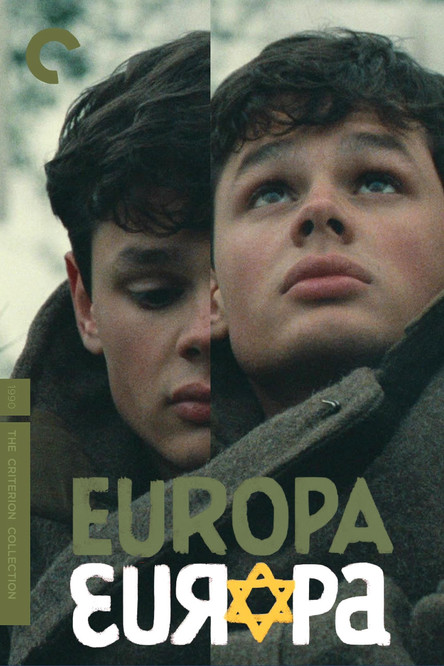
Europa Europa
A Jewish boy separated from his family in the early days of WWII poses as a German orphan and is taken into the heart of the Nazi world as a 'war hero' and eventually becomes a Hitler Youth.
The film earned $5.6M at the global box office.
Nominated for 1 Oscar. 8 wins & 8 nominations


Plot Structure
Story beats plotted across runtime


Narrative Arc
Emotional journey through the story's key moments
Story Circle
Blueprint 15-beat structure
Arcplot Score Breakdown
Weighted: Precision (70%) + Arc (15%) + Theme (15%)
Europa Europa (1990) exemplifies carefully calibrated story structure, characteristic of Agnieszka Holland's storytelling approach. This structural analysis examines how the film's 15-point plot structure maps to proven narrative frameworks across 1 hour and 52 minutes. With an Arcplot score of 6.5, the film balances conventional beats with creative variation.
Characters
Cast & narrative archetypes

Solomon "Solly" Perel
Isaak Perel
Leni
Robert Kellerman
Bertha Perel
Isaak Perel (brother)
David Perel
Main Cast & Characters
Solomon "Solly" Perel
Played by Marco Hofschneider
A German-Jewish teenager who survives WWII by hiding his identity and passing as an Aryan in the Hitler Youth.
Isaak Perel
Played by Klaus Abramowsky
Solly's father, a traditional Jewish patriarch who flees Nazi Germany with his family.
Leni
Played by Julie Delpy
A beautiful German girl and fervent Nazi who becomes Solly's love interest at the Hitler Youth school.
Robert Kellerman
Played by André Wilms
Solly's gay classmate at the Hitler Youth school who confides in him and shows vulnerability.
Bertha Perel
Played by Michèle Gleizer
Solly's mother, a loving Jewish woman who perishes during the family's flight from persecution.
Isaak Perel (brother)
Played by René Hofschneider
Solly's older brother who escapes to the Soviet Union and fights in the Red Army.
David Perel
Played by Piotr Kozłowski
Solly's older brother who remains with the family in Lodz.
Structural Analysis
The Status Quo at 1 minutes (1% through the runtime) establishes Young Solomon (Solly) Perel celebrates his bar mitzvah in 1930s Germany, surrounded by his loving Jewish family in a moment of cultural pride and religious tradition before the Nazi rise threatens their existence.. Notably, this early placement immediately immerses viewers in the story world.
The inciting incident occurs at 13 minutes when Nazi Germany invades the Soviet Union. Solly is caught fleeing and captured by German soldiers, forcing an instant decision that will define his survival: he must hide his Jewish identity or die.. At 12% through the film, this Disruption aligns precisely with traditional story structure. This beat shifts the emotional landscape, launching the protagonist into the central conflict.
The First Threshold at 27 minutes marks the transition into Act II, occurring at 24% of the runtime. This demonstrates the protagonist's commitment to Solly actively chooses to deepen the deception by enrolling in an elite Hitler Youth academy. This is his irreversible commitment to live as "Josef" and embrace the Nazi world to survive., moving from reaction to action.
At 56 minutes, the Midpoint arrives at 50% of the runtime—precisely centered, creating perfect narrative symmetry. Notably, this crucial beat Solly is selected as a prime example of Aryan perfection and featured in Nazi propaganda. This false victory becomes a moment of horrific irony and internal crisis as he realizes how deep the lie has become., fundamentally raising what's at risk. The emotional intensity shifts, dividing the narrative into clear before-and-after phases.
The Collapse moment at 84 minutes (75% through) represents the emotional nadir. Here, Solly sees his mother among Jewish prisoners being marched to their death. They make eye contact but he cannot save her or even acknowledge her without revealing his identity. She dies, and his innocence dies with her., demonstrates the protagonist at their lowest point. This beat's placement in the final quarter sets up the climactic reversal.
The Second Threshold at 89 minutes initiates the final act resolution at 80% of the runtime. The war ends and Germany surrenders. Solly realizes he can finally stop pretending. He reveals his true identity to Soviet soldiers and chooses to reclaim his Jewish name and heritage despite the years of deception., demonstrating the transformation achieved throughout the journey.
Emotional Journey
Europa Europa's emotional architecture traces a deliberate progression across 15 carefully calibrated beats.
Narrative Framework
This structural analysis employs a 15-point narrative structure framework that maps key story moments. By mapping Europa Europa against these established plot points, we can identify how Agnieszka Holland utilizes or subverts traditional narrative conventions. The plot point approach reveals not only adherence to structural principles but also creative choices that distinguish Europa Europa within the history genre.
Agnieszka Holland's Structural Approach
Among the 4 Agnieszka Holland films analyzed on Arcplot, the average structural score is 6.9, demonstrating varied approaches to story architecture. Europa Europa takes a more unconventional approach compared to the director's typical style. For comparative analysis, explore the complete Agnieszka Holland filmography.
Comparative Analysis
Additional history films include The Attacks Of 26/11, Joyeux Noel and Rob Roy. For more Agnieszka Holland analyses, see The Secret Garden, In Darkness and Copying Beethoven.
Plot Points by Act
Act I
SetupStatus Quo
Young Solomon (Solly) Perel celebrates his bar mitzvah in 1930s Germany, surrounded by his loving Jewish family in a moment of cultural pride and religious tradition before the Nazi rise threatens their existence.
Theme
Solly's father tells him, "You must live, no matter what happens—survival is everything." This statement of identity versus survival becomes the central thematic tension of the film.
Worldbuilding
Establishment of the Perel family's life in Germany, Kristallnacht violence, the family's flight to Poland, separation from parents, and Solly's early experiences in a Soviet orphanage where he learns to adapt his identity.
Disruption
Nazi Germany invades the Soviet Union. Solly is caught fleeing and captured by German soldiers, forcing an instant decision that will define his survival: he must hide his Jewish identity or die.
Resistance
Solly claims to be a ethnic German named Josef Peters. He wrestles with the terror of discovery, debates internally whether he can maintain the deception, and is befriended by German soldiers who believe his lie.
Act II
ConfrontationFirst Threshold
Solly actively chooses to deepen the deception by enrolling in an elite Hitler Youth academy. This is his irreversible commitment to live as "Josef" and embrace the Nazi world to survive.
Mirror World
Solly meets Leni, a beautiful German girl who becomes infatuated with him. This romance represents the thematic counterpoint: genuine human connection built on a foundation of lies about his identity.
Premise
Solly navigates life as a model Hitler Youth student, excelling in Nazi ideology classes, developing his relationship with Leni, performing in propaganda activities, and constantly hiding his circumcision and Jewish identity through elaborate schemes.
Midpoint
Solly is selected as a prime example of Aryan perfection and featured in Nazi propaganda. This false victory becomes a moment of horrific irony and internal crisis as he realizes how deep the lie has become.
Opposition
The pressure intensifies from all sides: Leni wants physical intimacy, medical examinations threaten exposure, he witnesses Nazi atrocities firsthand, and he encounters his mother in a group of Jewish prisoners but cannot reveal himself without being killed.
Collapse
Solly sees his mother among Jewish prisoners being marched to their death. They make eye contact but he cannot save her or even acknowledge her without revealing his identity. She dies, and his innocence dies with her.
Crisis
Solly experiences profound despair and self-hatred. He attempts self-circumcision reversal in a desperate, agonizing scene that represents his complete psychological fracture between his true identity and his survival persona.
Act III
ResolutionSecond Threshold
The war ends and Germany surrenders. Solly realizes he can finally stop pretending. He reveals his true identity to Soviet soldiers and chooses to reclaim his Jewish name and heritage despite the years of deception.
Synthesis
Solly navigates the immediate post-war chaos, reconnects with his brother who survived, processes the trauma of his experience, and begins the long journey of psychological integration between Josef and Solomon.
Transformation
The real Solomon Perel appears on screen as an elderly man, having survived and emigrated to Israel. The closing image reveals that survival was not the end but the beginning of living with the complexity of his identity.