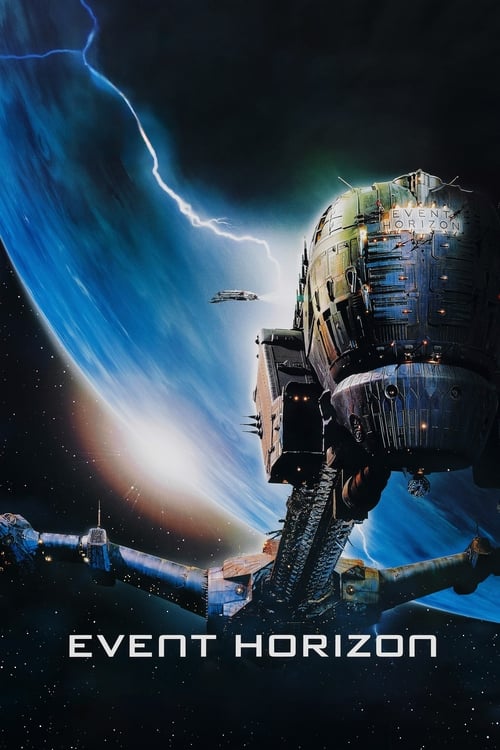
Event Horizon
In 2047, a group of astronauts are sent to investigate and salvage the starship Event Horizon which disappeared mysteriously seven years before on its maiden voyage. However, it soon becomes evident that something sinister resides in its corridors.
The film commercial failure against its moderate budget of $60.0M, earning $26.7M globally (-56% loss). While initial box office returns were modest, the film has gained appreciation for its unconventional structure within the horror genre.
1 win & 2 nominations


Plot Structure
Story beats plotted across runtime


Narrative Arc
Emotional journey through the story's key moments
Story Circle
Blueprint 15-beat structure
Arcplot Score Breakdown
Weighted: Precision (70%) + Arc (15%) + Theme (15%)
Event Horizon (1997) exemplifies deliberately positioned narrative architecture, characteristic of Paul W. S. Anderson's storytelling approach. This structural analysis examines how the film's 15-point plot structure maps to proven narrative frameworks across 1 hour and 36 minutes. With an Arcplot score of 7.1, the film balances conventional beats with creative variation.
Characters
Cast & narrative archetypes

Captain Miller
Dr. William Weir
Lieutenant Starck
Justin
Cooper
Peters
Smith
DJ
Main Cast & Characters
Captain Miller
Played by Laurence Fishburne
Commanding officer of the Lewis and Clark rescue mission who struggles to maintain order as his crew faces supernatural terror.
Dr. William Weir
Played by Sam Neill
Brilliant but haunted designer of the Event Horizon's gravity drive who becomes possessed by the ship's malevolent force.
Lieutenant Starck
Played by Joely Richardson
Miller's second-in-command and voice of reason who advocates for abandoning the mission as dangers escalate.
Justin
Played by Jack Noseworthy
Medical officer and rescue technician who falls victim to the ship's psychological manipulations early in the mission.
Cooper
Played by Richard T. Jones
Pilot of the Lewis and Clark with a gruff exterior who provides technical expertise and comic relief.
Peters
Played by Kathleen Quinlan
Engineering technician who is among the first to be psychologically tormented by the Event Horizon.
Smith
Played by Sean Pertwee
Trauma doctor and crew member who witnesses disturbing visions before meeting a gruesome fate.
DJ
Played by Jason Isaacs
Young engineering specialist who struggles with fear as the supernatural events unfold aboard the ship.
Structural Analysis
The Status Quo at 1 minutes (1% through the runtime) establishes Dr. William Weir wakes from cryosleep aboard the Lewis and Clark, haunted by nightmares of his dead wife Claire. The rescue vessel travels through space on a classified mission, establishing Weir as a brilliant but grief-stricken scientist unable to let go of the past.. Notably, this early placement immediately immerses viewers in the story world.
The inciting incident occurs at 12 minutes when Weir reveals the Event Horizon's distress signal contains not a call for help but something far more disturbing - a recording of the original crew's final moments, filled with Latin phrases that translate to "Save yourself from Hell." The mission shifts from rescue to investigation of something incomprehensible.. At 12% through the film, this Disruption aligns precisely with traditional story structure. This beat shifts the emotional landscape, launching the protagonist into the central conflict.
The First Threshold at 24 minutes marks the transition into Act II, occurring at 25% of the runtime. This shows the protagonist's commitment to The crew boards the Event Horizon despite every warning sign. Miller makes the active choice to lead his team into the derelict vessel to search for survivors. The moment they cross the airlock, they commit to confronting whatever transformed the ship., moving from reaction to action.
At 48 minutes, the Midpoint arrives at 50% of the runtime—precisely centered, creating perfect narrative symmetry. The analysis reveals that this crucial beat The full video log is decoded, revealing the Event Horizon's crew didn't just die - they tortured and consumed each other in a hellish ritual. Weir realizes the ship didn't just travel to another dimension; it went to a realm of pure chaos and evil. The ship itself is now alive and malevolent. This is a false defeat that raises the stakes from rescue mission to survival horror., fundamentally raising what's at risk. The emotional intensity shifts, dividing the narrative into clear before-and-after phases.
The Collapse moment at 72 minutes (75% through) represents the emotional nadir. Here, Weir, now fully possessed and transformed into a demonic figure with gouged-out eyes, reveals he sabotaged the Lewis and Clark and activated the gravity drive. He declares the ship is returning to the hell dimension - and taking all of them with it. The whiff of death is literal as crew members lie dead and the survivors face eternal damnation., indicates the protagonist at their lowest point. This beat's placement in the final quarter sets up the climactic reversal.
The Second Threshold at 77 minutes initiates the final act resolution at 80% of the runtime. Miller realizes the only way to save the survivors is to separate the ship - the forward section with the remaining crew can be detonated away from the gravity drive section. He chooses to stay behind and manually detonate the explosives, sacrificing himself to give the others a chance to escape the hell dimension., demonstrating the transformation achieved throughout the journey.
Emotional Journey
Event Horizon's emotional architecture traces a deliberate progression across 15 carefully calibrated beats.
Narrative Framework
This structural analysis employs a 15-point narrative structure framework that maps key story moments. By mapping Event Horizon against these established plot points, we can identify how Paul W. S. Anderson utilizes or subverts traditional narrative conventions. The plot point approach reveals not only adherence to structural principles but also creative choices that distinguish Event Horizon within the horror genre.
Paul W. S. Anderson's Structural Approach
Among the 10 Paul W. S. Anderson films analyzed on Arcplot, the average structural score is 7.2, reflecting strong command of classical structure. Event Horizon takes a more unconventional approach compared to the director's typical style. For comparative analysis, explore the complete Paul W. S. Anderson filmography.
Comparative Analysis
Additional horror films include Thinner, A Nightmare on Elm Street and Mary Reilly. For more Paul W. S. Anderson analyses, see AVP: Alien vs. Predator, Mortal Kombat and Monster Hunter.
Plot Points by Act
Act I
SetupStatus Quo
Dr. William Weir wakes from cryosleep aboard the Lewis and Clark, haunted by nightmares of his dead wife Claire. The rescue vessel travels through space on a classified mission, establishing Weir as a brilliant but grief-stricken scientist unable to let go of the past.
Theme
Captain Miller tells his crew, "We're a rescue vessel. We go in, we get the survivors, we get out." This establishes the theme of confronting the unknown versus escaping it - the crew wants extraction while the ship demands they face their darkest selves.
Worldbuilding
The crew of the Lewis and Clark is introduced: Captain Miller, Lt. Starck, Peters, Cooper, Justin, DJ, and Smith. Dr. Weir explains that the Event Horizon was an experimental vessel with a gravity drive that creates artificial black holes for faster-than-light travel. The ship vanished seven years ago and has now reappeared near Neptune.
Disruption
Weir reveals the Event Horizon's distress signal contains not a call for help but something far more disturbing - a recording of the original crew's final moments, filled with Latin phrases that translate to "Save yourself from Hell." The mission shifts from rescue to investigation of something incomprehensible.
Resistance
The Lewis and Clark approaches the Event Horizon in decaying orbit around Neptune. The crew debates the danger of boarding. Weir serves as reluctant guide, explaining the gravity drive technology while hiding his personal obsession with his creation. The derelict ship looms ominously as they prepare to dock.
Act II
ConfrontationFirst Threshold
The crew boards the Event Horizon despite every warning sign. Miller makes the active choice to lead his team into the derelict vessel to search for survivors. The moment they cross the airlock, they commit to confronting whatever transformed the ship.
Mirror World
Justin is drawn to the gravity drive core and pulled into its swirling vortex. When rescued, he's catatonic and bleeding from his eyes, babbling about seeing "the dark." This introduces the ship's supernatural influence as a mirror reflecting each person's deepest guilt and trauma.
Premise
The crew explores the hellish interior of the Event Horizon. They discover evidence of violence and mutilation. The ship's log reveals the original crew massacred each other in an orgy of madness. Each crew member begins experiencing personalized hallucinations - Peters sees her dying son, Weir sees his wife beckoning him.
Midpoint
The full video log is decoded, revealing the Event Horizon's crew didn't just die - they tortured and consumed each other in a hellish ritual. Weir realizes the ship didn't just travel to another dimension; it went to a realm of pure chaos and evil. The ship itself is now alive and malevolent. This is a false defeat that raises the stakes from rescue mission to survival horror.
Opposition
The Event Horizon actively attacks the crew. An explosion damages the Lewis and Clark, trapping them aboard the possessed vessel. Smith is killed in the blast. DJ is found eviscerated. Weir succumbs to the ship's influence, his grief over Claire weaponized against him. The ship uses their guilt and trauma to break them down one by one.
Collapse
Weir, now fully possessed and transformed into a demonic figure with gouged-out eyes, reveals he sabotaged the Lewis and Clark and activated the gravity drive. He declares the ship is returning to the hell dimension - and taking all of them with it. The whiff of death is literal as crew members lie dead and the survivors face eternal damnation.
Crisis
Miller and the surviving crew confront the impossibility of their situation. Cooper is stranded outside the ship. Peters dies pursuing a vision of her son. The gravity drive counts down toward activation. Miller must accept that some of his crew cannot be saved and face his own trauma from a fire that killed soldiers under his command.
Act III
ResolutionSecond Threshold
Miller realizes the only way to save the survivors is to separate the ship - the forward section with the remaining crew can be detonated away from the gravity drive section. He chooses to stay behind and manually detonate the explosives, sacrificing himself to give the others a chance to escape the hell dimension.
Synthesis
Miller battles the possessed Weir in the gravity drive chamber. Cooper rescues Starck and Justin, getting them to the forward section. Miller defeats Weir and detonates the explosives just as the drive activates, separating the ship. The forward section drifts free while the aft section is pulled into the hell dimension with Miller and Weir aboard.
Transformation
Seventy-two days later, a rescue team boards the drifting forward section. Starck wakes from cryosleep screaming as the rescuer's face momentarily appears as Weir's demonic visage. Whether this is trauma or the ship's lingering influence is ambiguous. The survivors escaped Hell, but Hell may not have released them entirely.