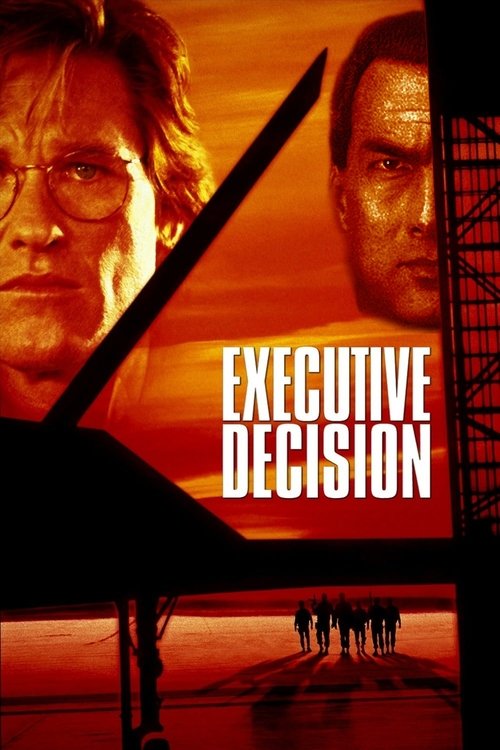
Executive Decision
Terrorists hijack a 747 inbound to Washington D.C., demanding the release of their imprisoned leader. Intelligence expert David Grant (Kurt Russell) suspects another reason and he is soon the reluctant member of a special assault team that is assigned to intercept the plane and hijackers.
Despite a respectable budget of $55.0M, Executive Decision became a commercial success, earning $122.0M worldwide—a 122% return.
2 wins & 2 nominations


Plot Structure
Story beats plotted across runtime


Narrative Arc
Emotional journey through the story's key moments
Story Circle
Blueprint 15-beat structure
Arcplot Score Breakdown
Weighted: Precision (70%) + Arc (15%) + Theme (15%)
Executive Decision (1996) demonstrates precise narrative design, characteristic of Stuart Baird's storytelling approach. This structural analysis examines how the film's 15-point plot structure maps to proven narrative frameworks across 2 hours and 12 minutes. With an Arcplot score of 6.9, the film balances conventional beats with creative variation.
Characters
Cast & narrative archetypes

Dr. David Grant
Lt. Colonel Austin Travis
Nagi Hassan
Capt. Rat
Jean
Cappy
Secretary of Defense Charles White
Dennis Cahill
Main Cast & Characters
Dr. David Grant
Played by Kurt Russell
Intelligence consultant and analyst who becomes unlikely hero when forced into field operations to stop hijacked plane.
Lt. Colonel Austin Travis
Played by Steven Seagal
Special forces commander who leads the rescue team before being killed during boarding operation.
Nagi Hassan
Played by David Suchet
Ruthless terrorist leader who hijacks the 747 as part of deadly nerve gas plot.
Capt. Rat
Played by Joe Morton
Expert special forces flight engineer who helps Grant navigate the hijacked aircraft systems.
Jean
Played by Halle Berry
Flight attendant who becomes crucial ally to the rescue team from inside the passenger cabin.
Cappy
Played by Oliver Platt
Special forces demolitions expert who provides technical expertise during the operation.
Secretary of Defense Charles White
Played by Len Cariou
Government official overseeing the crisis response and making critical decisions.
Dennis Cahill
Played by John Leguizamo
Commanding officer coordinating the military response to the hijacking.
Structural Analysis
The Status Quo at 2 minutes (1% through the runtime) establishes Dr. David Grant analyzing intelligence data in his comfortable academic world, theorizing about terrorist Nagi Hassan's plans while safely removed from direct action.. Structural examination shows that this early placement immediately immerses viewers in the story world.
The inciting incident occurs at 17 minutes when Hassan hijacks the 747 bound for Washington D.C. With 400 passengers and a stolen Soviet nerve gas weapon capable of killing millions. The stakes become catastrophically high.. At 13% through the film, this Disruption is delayed, allowing extended setup of the story world. This beat shifts the emotional landscape, launching the protagonist into the central conflict.
The First Threshold at 33 minutes marks the transition into Act II, occurring at 25% of the runtime. This demonstrates the protagonist's commitment to Grant makes the active choice to board the stealth plane and join the commando team, leaving his safe analytical world to enter the deadly operational realm despite having no combat training., moving from reaction to action.
At 66 minutes, the Midpoint arrives at 50% of the runtime—precisely centered, creating perfect narrative symmetry. Notably, this crucial beat False defeat: The team discovers the nerve gas bomb is on a timer and will detonate regardless of negotiations. The scope of the threat becomes clear - they're not just saving hostages, but potentially millions in the Eastern seaboard. Stakes massively raised., fundamentally raising what's at risk. The emotional intensity shifts, dividing the narrative into clear before-and-after phases.
The Collapse moment at 99 minutes (75% through) represents the emotional nadir. Here, All seems lost: most of the team is dead, the F-14s have lock-on to destroy the 747, Hassan has control, and the bomb continues ticking toward detonation. Grant faces the whiff of death as failure means millions die., illustrates the protagonist at their lowest point. This beat's placement in the final quarter sets up the climactic reversal.
The Second Threshold at 106 minutes initiates the final act resolution at 80% of the runtime. Grant synthesizes his intelligence expertise with newfound operational courage. He realizes they must simultaneously retake the plane, defuse the bomb, and convince the military to hold fire. The analyst becomes the field commander., demonstrating the transformation achieved throughout the journey.
Emotional Journey
Executive Decision's emotional architecture traces a deliberate progression across 15 carefully calibrated beats.
Narrative Framework
This structural analysis employs a 15-point narrative structure framework that maps key story moments. By mapping Executive Decision against these established plot points, we can identify how Stuart Baird utilizes or subverts traditional narrative conventions. The plot point approach reveals not only adherence to structural principles but also creative choices that distinguish Executive Decision within the action genre.
Stuart Baird's Structural Approach
Among the 3 Stuart Baird films analyzed on Arcplot, the average structural score is 7.2, reflecting strong command of classical structure. Executive Decision takes a more unconventional approach compared to the director's typical style. For comparative analysis, explore the complete Stuart Baird filmography.
Comparative Analysis
Additional action films include The Bad Guys, Puss in Boots and Venom: The Last Dance. For more Stuart Baird analyses, see U.S. Marshals, Star Trek: Nemesis.
Plot Points by Act
Act I
SetupStatus Quo
Dr. David Grant analyzing intelligence data in his comfortable academic world, theorizing about terrorist Nagi Hassan's plans while safely removed from direct action.
Theme
Colonel Austin Travis states the theme about the difference between theory and action: "When you're up there, you don't have time to think." The intellectual must become a man of action.
Worldbuilding
Establishing Grant's world as an analyst, Travis's failed rescue mission in Italy where Hassan escapes, and the terrorists hijacking Oceanic Flight 343 with a deadly DZ-5 nerve gas bomb aboard.
Disruption
Hassan hijacks the 747 bound for Washington D.C. with 400 passengers and a stolen Soviet nerve gas weapon capable of killing millions. The stakes become catastrophically high.
Resistance
Grant debates with military and government officials about Hassan's true intentions. He resists the conventional wisdom, arguing the plane itself is the weapon. Travis recruits him for an unprecedented mid-air boarding operation using an experimental stealth aircraft.
Act II
ConfrontationFirst Threshold
Grant makes the active choice to board the stealth plane and join the commando team, leaving his safe analytical world to enter the deadly operational realm despite having no combat training.
Mirror World
Grant forms a working relationship with the Special Operations team, particularly flight engineer Dennis Cahill. This partnership will teach Grant that theory must combine with practical expertise and courage.
Premise
The promised premise: the thrilling mid-air boarding attempt, the shocking death of Travis during the docking, and the team secretly navigating the 747's underbelly while Grant must step up to lead the intelligence effort.
Midpoint
False defeat: The team discovers the nerve gas bomb is on a timer and will detonate regardless of negotiations. The scope of the threat becomes clear - they're not just saving hostages, but potentially millions in the Eastern seaboard. Stakes massively raised.
Opposition
The terrorists grow suspicious and begin searching the plane. Team members are discovered and killed. Grant's intelligence proves correct but the military situation deteriorates. Fighter jets are authorized to shoot down the civilian aircraft. Time runs out.
Collapse
All seems lost: most of the team is dead, the F-14s have lock-on to destroy the 747, Hassan has control, and the bomb continues ticking toward detonation. Grant faces the whiff of death as failure means millions die.
Crisis
Grant processes the losses and desperate situation. He and the remaining team members face the dark reality that they may have to sacrifice themselves, but more importantly, must find a way to stop both Hassan and the U.S. missiles.
Act III
ResolutionSecond Threshold
Grant synthesizes his intelligence expertise with newfound operational courage. He realizes they must simultaneously retake the plane, defuse the bomb, and convince the military to hold fire. The analyst becomes the field commander.
Synthesis
The final assault: Grant leads the takedown of the terrorists, Cahill desperately works to defuse the bomb while Grant must shoot Hassan. The plane is saved, the bomb neutralized with seconds to spare, and the missile strike is called off.
Transformation
Grant emerges from the aircraft a transformed man - no longer just an analyst theorizing from safety, but someone who has proven that intelligence and action, thought and courage, must work together. He has become the complete operator.