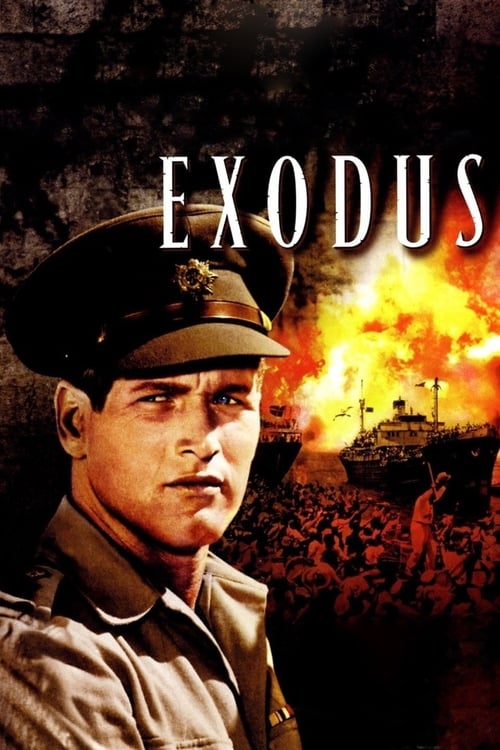
Exodus
Ari Ben Canaan, a passionate member of the Jewish paramilitary group Haganah, attempts to transport 600 Jewish refugees on a dangerous voyage from Cyprus to Palestine on a ship named the Exodus. He faces obstruction from British forces, who will not grant the ship passage to its destination.
Despite its small-scale budget of $4.0M, Exodus became a financial success, earning $20.0M worldwide—a 400% return. The film's fresh perspective attracted moviegoers, showing that strong storytelling can transcend budget limitations.
1 Oscar. 5 wins & 7 nominations


Plot Structure
Story beats plotted across runtime


Narrative Arc
Emotional journey through the story's key moments
Story Circle
Blueprint 15-beat structure
Arcplot Score Breakdown
Weighted: Precision (70%) + Arc (15%) + Theme (15%)
Exodus (1960) reveals strategically placed story structure, characteristic of Otto Preminger's storytelling approach. This structural analysis examines how the film's 15-point plot structure maps to proven narrative frameworks across 3 hours and 28 minutes. With an Arcplot score of 6.3, the film takes an unconventional approach to traditional narrative frameworks.
Characters
Cast & narrative archetypes

Ari Ben Canaan
Kitty Fremont
Barak Ben Canaan
Dov Landau
Karen Hansen Clement
Akiva Ben Canaan
General Sutherland
Taha
Main Cast & Characters
Ari Ben Canaan
Played by Paul Newman
An idealistic Israeli freedom fighter and Haganah leader who smuggles Jewish refugees into Palestine and fights for the creation of Israel.
Kitty Fremont
Played by Eva Marie Saint
An American nurse who becomes involved with the refugees and gradually transforms from detached observer to committed supporter of the Jewish cause.
Barak Ben Canaan
Played by Lee J. Cobb
Ari's father and founder of Kibbutz Gan Dafna, a wise elder statesman who believes in peaceful coexistence with Arabs.
Dov Landau
Played by Sal Mineo
A young Holocaust survivor with deep psychological scars who becomes radicalized and joins the Irgun terrorist organization.
Karen Hansen Clement
Played by Jill Haworth
A teenage Jewish refugee searching for her father who represents innocence and hope amidst the conflict.
Akiva Ben Canaan
Played by David Opatoshu
Ari's uncle and leader of the Irgun, a militant who believes violence is necessary to achieve Israeli independence.
General Sutherland
Played by Ralph Richardson
British military commander in Cyprus who maintains order but shows some sympathy toward the Jewish refugees.
Taha
Played by John Derek
Ari's childhood Arab friend and village muktar who struggles to maintain friendship across increasing ethnic divide.
Structural Analysis
The Status Quo at 2 minutes (1% through the runtime) establishes American nurse Kitty Fremont arrives in Cyprus, detached and planning to visit Palestine as a tourist, representing the outside world's disconnection from the Jewish refugee crisis.. Of particular interest, this early placement immediately immerses viewers in the story world.
The inciting incident occurs at 25 minutes when Ari Ben Canaan announces a hunger strike of 300 Jewish children aboard the ship Exodus, threatening their deaths unless the British allow passage to Palestine, forcing the world to witness the refugee crisis.. At 12% through the film, this Disruption aligns precisely with traditional story structure. This beat shifts the emotional landscape, launching the protagonist into the central conflict.
The First Threshold at 52 minutes marks the transition into Act II, occurring at 25% of the runtime. This shows the protagonist's commitment to The British yield to international pressure and allow the Exodus to sail to Palestine. Ari, Kitty, Karen, and the refugees cross into the promised land, committing to the struggle for Israeli independence., moving from reaction to action.
At 104 minutes, the Midpoint arrives at 50% of the runtime—precisely centered, creating perfect narrative symmetry. Notably, this crucial beat The United Nations votes to partition Palestine and create the State of Israel. This false victory brings joy and hope, but immediately triggers Arab threats of war and escalating violence, raising the stakes catastrophically., fundamentally raising what's at risk. The emotional intensity shifts, dividing the narrative into clear before-and-after phases.
The Collapse moment at 156 minutes (75% through) represents the emotional nadir. Here, Karen and Taha, representing hope for Jewish-Arab coexistence, are both murdered by extremists. Their deaths symbolize the loss of innocence and the death of the dream that the two peoples could live together in peace., indicates the protagonist at their lowest point. This beat's placement in the final quarter sets up the climactic reversal.
The Second Threshold at 166 minutes initiates the final act resolution at 80% of the runtime. At Karen and Taha's shared funeral, Ari delivers a eulogy declaring that Jews and Arabs must find a way to live together in peace, synthesizing his warrior identity with the humanistic values Kitty and the deaths have taught him., demonstrating the transformation achieved throughout the journey.
Emotional Journey
Exodus's emotional architecture traces a deliberate progression across 15 carefully calibrated beats.
Narrative Framework
This structural analysis employs proven narrative structure principles that track dramatic progression. By mapping Exodus against these established plot points, we can identify how Otto Preminger utilizes or subverts traditional narrative conventions. The plot point approach reveals not only adherence to structural principles but also creative choices that distinguish Exodus within the drama genre.
Otto Preminger's Structural Approach
Among the 6 Otto Preminger films analyzed on Arcplot, the average structural score is 6.8, demonstrating varied approaches to story architecture. Exodus takes a more unconventional approach compared to the director's typical style. For comparative analysis, explore the complete Otto Preminger filmography.
Comparative Analysis
Additional drama films include After Thomas, South Pacific and Dirty Dancing: Havana Nights. For more Otto Preminger analyses, see In Harm's Way, Bonjour Tristesse and Hurry Sundown.
Plot Points by Act
Act I
SetupStatus Quo
American nurse Kitty Fremont arrives in Cyprus, detached and planning to visit Palestine as a tourist, representing the outside world's disconnection from the Jewish refugee crisis.
Theme
Ari Ben Canaan tells Kitty that the fight for Israel is about a people's right to exist and have a homeland, stating the central theme: the cost and necessity of creating a nation from desperate refugees.
Worldbuilding
Establishment of post-WWII Cyprus, the British blockade holding Jewish refugees in detention camps, the Irgun and Haganah resistance movements, and the desperate conditions of Holocaust survivors seeking passage to Palestine.
Disruption
Ari Ben Canaan announces a hunger strike of 300 Jewish children aboard the ship Exodus, threatening their deaths unless the British allow passage to Palestine, forcing the world to witness the refugee crisis.
Resistance
Kitty debates whether to get involved, drawn to young Karen who lost her parents in the Holocaust. The British negotiate, world pressure mounts, and Ari prepares for the consequences of his gambit while Kitty chooses to help.
Act II
ConfrontationFirst Threshold
The British yield to international pressure and allow the Exodus to sail to Palestine. Ari, Kitty, Karen, and the refugees cross into the promised land, committing to the struggle for Israeli independence.
Mirror World
Kitty and young Karen form a mother-daughter bond at Gan Dafna kibbutz, representing the personal relationships that make abstract political struggles meaningful. Their connection embodies hope for healing after trauma.
Premise
The refugees build new lives in Palestine while navigating tensions between Jews and Arabs, British occupation, and internal conflicts between militant Irgun and diplomatic Haganah. Romance develops between Ari and Kitty despite their different worlds.
Midpoint
The United Nations votes to partition Palestine and create the State of Israel. This false victory brings joy and hope, but immediately triggers Arab threats of war and escalating violence, raising the stakes catastrophically.
Opposition
Arab forces attack, the British withdraw, violence escalates on all sides. Ari is torn between love for Kitty and duty to his people. The Irgun commits atrocities. Moderate voices like Taha struggle against extremism from both sides.
Collapse
Karen and Taha, representing hope for Jewish-Arab coexistence, are both murdered by extremists. Their deaths symbolize the loss of innocence and the death of the dream that the two peoples could live together in peace.
Crisis
Kitty mourns Karen, devastated by the violence and questioning whether the dream of Israel is worth the cost. Ari grieves his friend Taha and confronts the reality that victory will require continued sacrifice and bloodshed.
Act III
ResolutionSecond Threshold
At Karen and Taha's shared funeral, Ari delivers a eulogy declaring that Jews and Arabs must find a way to live together in peace, synthesizing his warrior identity with the humanistic values Kitty and the deaths have taught him.
Synthesis
Ari leads the final military operations to secure Israeli independence. Kitty chooses to stay despite the pain, committed to honoring Karen's memory by helping build the nation. The State of Israel is established through sacrifice and resolve.
Transformation
Ari and Kitty stand together overlooking the new nation of Israel, transformed from disconnected individuals into committed partners in an uncertain future. The outsider has found purpose; the warrior has found humanity.