Faster
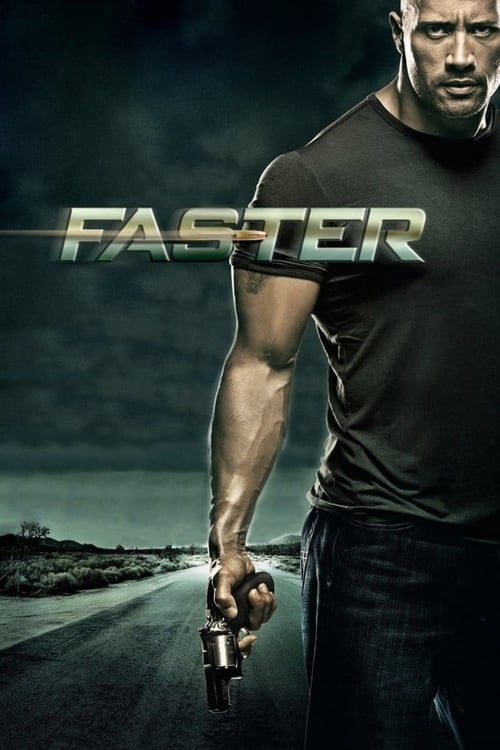
After 10 years in prison, Driver is now a free man with a single focus - hunting down the people responsible for brutally murdering his brother.
The film struggled financially against its respectable budget of $24.0M, earning $23.1M globally (-4% loss).


Plot Structure
Story beats plotted across runtime


Narrative Arc
Emotional journey through the story's key moments
Story Circle
Blueprint 15-beat structure
Arcplot Score Breakdown
Weighted: Precision (70%) + Arc (15%) + Theme (15%)
Faster (2010) reveals meticulously timed story structure, characteristic of George Tillman Jr.'s storytelling approach. This structural analysis examines how the film's 15-point plot structure maps to proven narrative frameworks across 1 hour and 38 minutes. With an Arcplot score of 6.7, the film balances conventional beats with creative variation.
Characters
Cast & narrative archetypes

Driver
Cop
Killer
Cicero
Lily
Main Cast & Characters
Driver
Played by Dwayne Johnson
A man released from prison who seeks revenge against those who murdered his brother during a botched bank robbery.
Cop
Played by Billy Bob Thornton
A veteran detective with an addiction problem who is tasked with tracking down Driver during his final days before retirement.
Killer
Played by Oliver Jackson-Cohen
A wealthy young hitman hired to eliminate Driver, who views the hunt as a game and personal challenge.
Cicero
Played by Carla Gugino
Cop's younger partner who assists in the investigation and provides support throughout the case.
Lily
Played by Maggie Grace
Killer's wife who is unaware of her husband's deadly profession and expects their first child.
Structural Analysis
The Status Quo at 1 minutes (1% through the runtime) establishes Driver is released from prison after ten years, hardened and consumed by a single purpose: vengeance for his brother's murder.. Of particular interest, this early placement immediately immerses viewers in the story world.
The inciting incident occurs at 12 minutes when Driver kills his first target in broad daylight at an office building, announcing his presence and setting law enforcement and the criminal underworld on alert.. At 13% through the film, this Disruption is delayed, allowing extended setup of the story world. This beat shifts the emotional landscape, launching the protagonist into the central conflict.
The First Threshold at 25 minutes marks the transition into Act II, occurring at 25% of the runtime. This demonstrates the protagonist's commitment to Driver crosses into more dangerous territory, confronting a target who fights back. First encounter with Killer, who shoots Driver but fails to kill him—both men now fully committed to their collision course., moving from reaction to action.
At 49 minutes, the Midpoint arrives at 50% of the runtime—precisely centered, creating perfect narrative symmetry. The analysis reveals that this crucial beat Driver confronts the preacher (one of the men who betrayed them) and learns the devastating truth: his brother may have been the one who set up the robbery, leading to his own death. False defeat—revenge may be meaningless., fundamentally raising what's at risk. The emotional intensity shifts, dividing the narrative into clear before-and-after phases.
The Collapse moment at 74 minutes (75% through) represents the emotional nadir. Here, Driver confronts the final name on his list and discovers the ultimate betrayal—the mastermind behind everything. Cop is shot. The whiff of death: everything Driver believed about his mission crumbles., reveals the protagonist at their lowest point. This beat's placement in the final quarter sets up the climactic reversal.
The Second Threshold at 79 minutes initiates the final act resolution at 81% of the runtime. Driver chooses to confront the true enemy. Killer decides to face Driver one final time, not for money but for resolution. Both men synthesize who they were with who they must become., demonstrating the transformation achieved throughout the journey.
Emotional Journey
Faster's emotional architecture traces a deliberate progression across 15 carefully calibrated beats.
Narrative Framework
This structural analysis employs systematic plot point analysis that identifies crucial turning points. By mapping Faster against these established plot points, we can identify how George Tillman Jr. utilizes or subverts traditional narrative conventions. The plot point approach reveals not only adherence to structural principles but also creative choices that distinguish Faster within the crime genre.
George Tillman Jr.'s Structural Approach
Among the 4 George Tillman Jr. films analyzed on Arcplot, the average structural score is 7.1, reflecting strong command of classical structure. Faster takes a more unconventional approach compared to the director's typical style. For comparative analysis, explore the complete George Tillman Jr. filmography.
Comparative Analysis
Additional crime films include The Bad Guys, Rustom and The Whole Ten Yards. For more George Tillman Jr. analyses, see The Longest Ride, Notorious and Men of Honor.
Plot Points by Act
Act I
SetupStatus Quo
Driver is released from prison after ten years, hardened and consumed by a single purpose: vengeance for his brother's murder.
Theme
Cop tells Killer: "Some debts you can't ever pay back." Theme of whether vengeance can bring closure or only perpetuates violence.
Worldbuilding
Three storylines established: Driver systematically hunting those who killed his brother, Cop (days from retirement) investigating the murders, and Killer (hired assassin) assigned to stop Driver.
Disruption
Driver kills his first target in broad daylight at an office building, announcing his presence and setting law enforcement and the criminal underworld on alert.
Resistance
Driver methodically works through his list. Cop pieces together the connection to the decade-old heist. Killer hesitates, struggling with his own crisis of meaning in his perfect, empty life.
Act II
ConfrontationFirst Threshold
Driver crosses into more dangerous territory, confronting a target who fights back. First encounter with Killer, who shoots Driver but fails to kill him—both men now fully committed to their collision course.
Mirror World
Killer's scenes with his girlfriend reveal the Mirror World: a man who kills for money questioning whether his controlled existence has meaning, contrasting Driver's passionate rage.
Premise
The "promise of the premise"—relentless revenge action. Driver works through targets with brutal efficiency. Cop digs deeper into the conspiracy. Killer trains and prepares for their next confrontation.
Midpoint
Driver confronts the preacher (one of the men who betrayed them) and learns the devastating truth: his brother may have been the one who set up the robbery, leading to his own death. False defeat—revenge may be meaningless.
Opposition
Driver continues despite doubt. Cop gets closer to the truth and the conspiracy's reach. Killer becomes more conflicted as his girlfriend leaves him. All three men spiral toward their intersection, stakes rising.
Collapse
Driver confronts the final name on his list and discovers the ultimate betrayal—the mastermind behind everything. Cop is shot. The whiff of death: everything Driver believed about his mission crumbles.
Crisis
Driver must choose: continue the cycle of violence or break free. Killer must decide if he'll complete his contract. Cop clings to life. The dark night where each man faces what they've become.
Act III
ResolutionSecond Threshold
Driver chooses to confront the true enemy. Killer decides to face Driver one final time, not for money but for resolution. Both men synthesize who they were with who they must become.
Synthesis
Final confrontations. Driver faces the real villain. Killer and Driver meet for their ultimate showdown. Resolution of all three storylines as the truth emerges and vengeance reaches its conclusion.
Transformation
Driver, having completed his mission, chooses mercy over final vengeance. The cycle breaks. Transformation from a man defined by rage to one who reclaims his humanity and future.