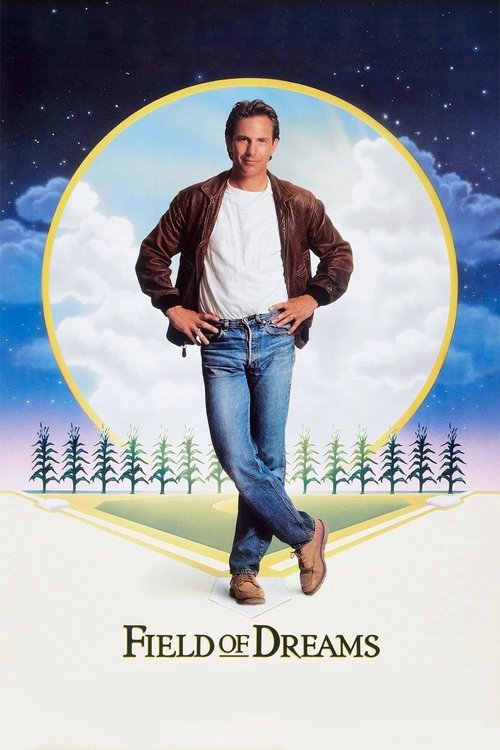
Field of Dreams
Ray Kinsella is an Iowa farmer who hears a mysterious voice telling him to turn his cornfield into a baseball diamond. He does, but the voice's directions don't stop -- even after the spirits of deceased ballplayers turn up to play.
Despite a mid-range budget of $15.0M, Field of Dreams became a solid performer, earning $84.4M worldwide—a 463% return.
Nominated for 3 Oscars. 9 wins & 14 nominations


Plot Structure
Story beats plotted across runtime


Narrative Arc
Emotional journey through the story's key moments
Story Circle
Blueprint 15-beat structure
Arcplot Score Breakdown
Weighted: Precision (70%) + Arc (15%) + Theme (15%)
Field of Dreams (1989) exhibits deliberately positioned narrative design, characteristic of Phil Alden Robinson's storytelling approach. This structural analysis examines how the film's 15-point plot structure maps to proven narrative frameworks across 1 hour and 45 minutes. With an Arcplot score of 6.1, the film takes an unconventional approach to traditional narrative frameworks.
Characters
Cast & narrative archetypes

Ray Kinsella
Annie Kinsella
Terence Mann
Shoeless Joe Jackson
Dr. Archibald "Moonlight" Graham
John Kinsella
Karin Kinsella
Mark
Main Cast & Characters
Ray Kinsella
Played by Kevin Costner
Iowa farmer who hears a mysterious voice telling him to build a baseball field in his cornfield, risking his family's financial security to follow his faith.
Annie Kinsella
Played by Amy Madigan
Ray's supportive wife who believes in her husband's vision despite the financial risks and skepticism from neighbors.
Terence Mann
Played by James Earl Jones
Reclusive author and former 1960s activist who becomes Ray's reluctant companion on his quest to understand the voice's message.
Shoeless Joe Jackson
Played by Ray Liotta
The ghost of the disgraced baseball player who emerges from the cornfield to play on Ray's field, representing lost dreams and redemption.
Dr. Archibald "Moonlight" Graham
Played by Burt Lancaster
Former ballplayer who played only one inning in the majors, became a beloved small-town doctor, and gets a chance to fulfill his dream.
John Kinsella
Played by Dwier Brown
Ray's deceased father, a former minor league player whose strained relationship with Ray is resolved through the magic of the field.
Karin Kinsella
Played by Gaby Hoffmann
Ray and Annie's young daughter who believes in the magic of the baseball field and supports her father's vision.
Mark
Played by Timothy Busfield
Annie's skeptical brother who pressures Ray to sell the farm to avoid bankruptcy, representing practical reality versus faith.
Structural Analysis
The Status Quo at 1 minutes (1% through the runtime) establishes Ray Kinsella narrates his childhood memories and introduces his ordinary life as an Iowa corn farmer with his wife Annie and daughter Karin, establishing a man who rejected his father's dreams but feels something is missing.. The analysis reveals that this early placement immediately immerses viewers in the story world.
The inciting incident occurs at 12 minutes when Ray hears a mysterious voice in the cornfield whisper, "If you build it, he will come," disrupting his ordinary farming life with an inexplicable supernatural call to action.. At 12% through the film, this Disruption aligns precisely with traditional story structure. This beat shifts the emotional landscape, launching the protagonist into the central conflict.
The First Threshold at 26 minutes marks the transition into Act II, occurring at 25% of the runtime. This illustrates the protagonist's commitment to Ray makes the active choice to plow under his corn and build the baseball field, committing to faith over reason despite the financial consequences, telling Annie "I'm going to do it."., moving from reaction to action.
At 53 minutes, the Midpoint arrives at 50% of the runtime—precisely centered, creating perfect narrative symmetry. Of particular interest, this crucial beat Ray and Terence both see "Go the distance" on the Fenway Park scoreboard, confirming Terence as part of the journey and raising the stakes as Ray must now travel further from his failing farm to find Moonlight Graham in Minnesota., fundamentally raising what's at risk. The emotional intensity shifts, dividing the narrative into clear before-and-after phases.
The Collapse moment at 78 minutes (74% through) represents the emotional nadir. Here, Mark threatens foreclosure and insists Ray must sell the farm, creating the darkest moment where Ray's dream—and his family's security—face death, while Ray still doesn't understand who "he" is or why he built the field., indicates the protagonist at their lowest point. This beat's placement in the final quarter sets up the climactic reversal.
The Second Threshold at 84 minutes initiates the final act resolution at 80% of the runtime. After Archie saves Karin and returns to the field as the young Doc Graham, Mark finally sees the players, giving Ray the realization that "people will come" to see the field, providing a solution to save the farm and validating Ray's faith., demonstrating the transformation achieved throughout the journey.
Emotional Journey
Field of Dreams's emotional architecture traces a deliberate progression across 15 carefully calibrated beats.
Narrative Framework
This structural analysis employs proven narrative structure principles that track dramatic progression. By mapping Field of Dreams against these established plot points, we can identify how Phil Alden Robinson utilizes or subverts traditional narrative conventions. The plot point approach reveals not only adherence to structural principles but also creative choices that distinguish Field of Dreams within the drama genre.
Phil Alden Robinson's Structural Approach
Among the 3 Phil Alden Robinson films analyzed on Arcplot, the average structural score is 6.7, demonstrating varied approaches to story architecture. Field of Dreams takes a more unconventional approach compared to the director's typical style. For comparative analysis, explore the complete Phil Alden Robinson filmography.
Comparative Analysis
Additional drama films include After Thomas, South Pacific and Dirty Dancing: Havana Nights. For more Phil Alden Robinson analyses, see Sneakers, The Sum of All Fears.
Plot Points by Act
Act I
SetupStatus Quo
Ray Kinsella narrates his childhood memories and introduces his ordinary life as an Iowa corn farmer with his wife Annie and daughter Karin, establishing a man who rejected his father's dreams but feels something is missing.
Theme
Annie passionately defends books and ideas at the PTA meeting, stating "If we don't stand up for what we believe in, we might as well not believe in anything," foreshadowing the story's core theme about faith and following your dreams despite opposition.
Worldbuilding
Establishment of Ray's life in Iowa: his relationship with Annie, their farm, daughter Karin, their community involvement, and Ray's backstory about his strained relationship with his deceased father who loved baseball.
Disruption
Ray hears a mysterious voice in the cornfield whisper, "If you build it, he will come," disrupting his ordinary farming life with an inexplicable supernatural call to action.
Resistance
Ray debates the meaning of the voice, sees a vision of a baseball field in his corn, resists the idea as insane, but Annie supports him. He researches Shoeless Joe Jackson and wrestles with the financial risk of plowing under his crops.
Act II
ConfrontationFirst Threshold
Ray makes the active choice to plow under his corn and build the baseball field, committing to faith over reason despite the financial consequences, telling Annie "I'm going to do it."
Mirror World
Shoeless Joe Jackson appears on the field and plays baseball, confirming the supernatural nature of Ray's mission and introducing the magical realism that will teach Ray about redemption and reconciliation with the past.
Premise
Ray experiences the wonder of his baseball field as more players appear, receives a second mysterious message to "ease his pain" about Terence Mann, travels to Boston to kidnap the reclusive author, and brings him to a baseball game where they both see a message on the scoreboard.
Midpoint
Ray and Terence both see "Go the distance" on the Fenway Park scoreboard, confirming Terence as part of the journey and raising the stakes as Ray must now travel further from his failing farm to find Moonlight Graham in Minnesota.
Opposition
Ray and Terence travel to Chisholm, Minnesota, encounter the ghost of young Doc Graham who joins them as Archie, return home to find the farm in financial crisis, and face pressure from brother-in-law Mark to sell the farm to save Ray's family from bankruptcy.
Collapse
Mark threatens foreclosure and insists Ray must sell the farm, creating the darkest moment where Ray's dream—and his family's security—face death, while Ray still doesn't understand who "he" is or why he built the field.
Crisis
Ray struggles with the imminent loss of his farm and his faith, arguing with Mark about the meaning of the field while Karin chokes and Archie sacrifices his chance to play baseball to save her, demonstrating the theme of selfless love.
Act III
ResolutionSecond Threshold
After Archie saves Karin and returns to the field as the young Doc Graham, Mark finally sees the players, giving Ray the realization that "people will come" to see the field, providing a solution to save the farm and validating Ray's faith.
Synthesis
Ray realizes the field will sustain itself as people pay to watch, Terence accepts his invitation to go into the corn with the players, and Ray discovers that "he" is actually his father John Kinsella, leading to their reconciliation through a game of catch.
Transformation
Ray plays catch with his father in the twilight, healing their broken relationship and transforming from a man running from his past into someone who has made peace with it, as car headlights approach in the distance symbolizing "people will come."