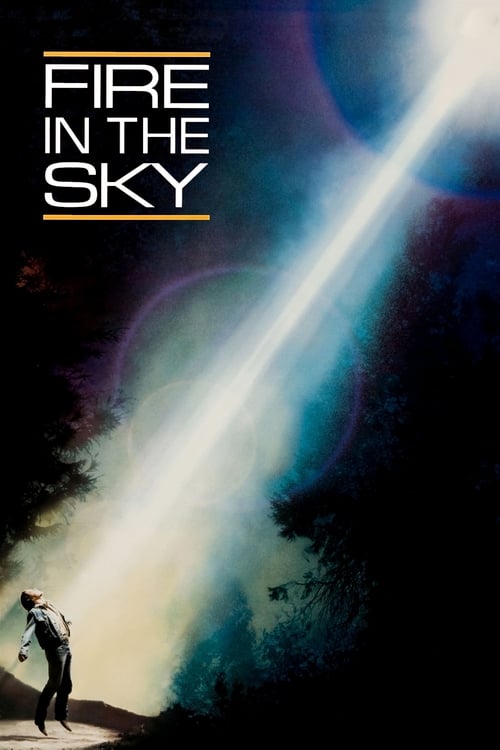
Fire in the Sky
After clearing brush for the government, a group of men return to town claiming their friend was abducted. Despite no apparent motive or evidence of foul play, no-one believes their story and his disappearance is treated as murder.
Working with a mid-range budget of $15.0M, the film achieved a steady performer with $19.9M in global revenue (+33% profit margin).


Plot Structure
Story beats plotted across runtime


Narrative Arc
Emotional journey through the story's key moments
Story Circle
Blueprint 15-beat structure
Arcplot Score Breakdown
Weighted: Precision (70%) + Arc (15%) + Theme (15%)
Fire in the Sky (1993) reveals carefully calibrated story structure, characteristic of Rob Lieberman's storytelling approach. This structural analysis examines how the film's 15-point plot structure maps to proven narrative frameworks across 1 hour and 49 minutes. With an Arcplot score of 7.3, the film balances conventional beats with creative variation.
Characters
Cast & narrative archetypes

Travis Walton
Mike Rogers
Allan Dallis
David Whitlock
Frank Watters
Dana Walton
Bobby Cogdill
Greg Hayes
Main Cast & Characters
Travis Walton
Played by D.B. Sweeney
Logger who claims to have been abducted by aliens, the central figure whose disappearance and return drives the story
Mike Rogers
Played by Robert Patrick
The crew boss and Travis's best friend who must defend himself and his crew against murder suspicions
Allan Dallis
Played by Craig Sheffer
Skeptical logger and crew member who becomes the most vocal doubter of Travis's abduction story
David Whitlock
Played by Peter Berg
Experienced logger and crew member who struggles with the truth of what he witnessed
Frank Watters
Played by James Garner
Lt. with the Arizona Department of Public Safety who investigates Travis's disappearance with deep suspicion
Dana Walton
Played by Kathleen Wilhoite
Travis's girlfriend who maintains faith in him throughout the ordeal and public scrutiny
Bobby Cogdill
Played by Bradley Gregg
Young crew member who witnesses the incident and struggles with fear and disbelief
Greg Hayes
Played by Noble Willingham
Logger and crew member caught between loyalty to his friends and pressure from authorities
Structural Analysis
The Status Quo at 2 minutes (1% through the runtime) establishes Mike Rogers and his logging crew work together in the Arizona wilderness, a tight-knit group of working-class men doing honest labor. The camaraderie and routine of their daily work establishes the normalcy about to be shattered.. Notably, this early placement immediately immerses viewers in the story world.
The inciting incident occurs at 12 minutes when While driving home through the forest at night, the crew encounters a massive glowing UFO hovering above the trees. Travis impulsively leaves the truck to investigate and is struck by a beam of light from the craft.. At 11% through the film, this Disruption aligns precisely with traditional story structure. This beat shifts the emotional landscape, launching the protagonist into the central conflict.
The First Threshold at 27 minutes marks the transition into Act II, occurring at 25% of the runtime. This illustrates the protagonist's commitment to Mike Rogers makes the active choice to stand by his story and his crew despite mounting pressure, fully committing to the truth even as he becomes the prime suspect in Travis' disappearance and possible murder., moving from reaction to action.
At 55 minutes, the Midpoint arrives at 50% of the runtime—precisely centered, creating perfect narrative symmetry. Significantly, this crucial beat Travis Walton suddenly reappears after five days, naked and traumatized, at a gas station. False victory: he's alive, but his return brings more questions than answers and intensifies the scrutiny rather than resolving it., fundamentally raising what's at risk. The emotional intensity shifts, dividing the narrative into clear before-and-after phases.
The Collapse moment at 81 minutes (75% through) represents the emotional nadir. Here, Travis fully remembers the trauma of his abduction and medical experimentation. The psychological death of his innocence and sense of safety. The crew is completely fractured, Mike has lost everything, and the truth has brought only suffering., shows the protagonist at their lowest point. This beat's placement in the final quarter sets up the climactic reversal.
The Second Threshold at 86 minutes initiates the final act resolution at 79% of the runtime. Mike and Travis choose to accept what happened and move forward together, synthesizing the truth with their need to rebuild their lives. They find peace in their bond and shared experience, regardless of external validation., demonstrating the transformation achieved throughout the journey.
Emotional Journey
Fire in the Sky's emotional architecture traces a deliberate progression across 15 carefully calibrated beats.
Narrative Framework
This structural analysis employs structural analysis methodology used to understand storytelling architecture. By mapping Fire in the Sky against these established plot points, we can identify how Rob Lieberman utilizes or subverts traditional narrative conventions. The plot point approach reveals not only adherence to structural principles but also creative choices that distinguish Fire in the Sky within the science fiction genre.
Rob Lieberman's Structural Approach
Among the 3 Rob Lieberman films analyzed on Arcplot, the average structural score is 7.0, reflecting strong command of classical structure. Fire in the Sky represents one of the director's most structurally precise works. For comparative analysis, explore the complete Rob Lieberman filmography.
Comparative Analysis
Additional science fiction films include The Postman, Mad Max 2 and AVP: Alien vs. Predator. For more Rob Lieberman analyses, see D3: The Mighty Ducks, All I Want For Christmas.
Plot Points by Act
Act I
SetupStatus Quo
Mike Rogers and his logging crew work together in the Arizona wilderness, a tight-knit group of working-class men doing honest labor. The camaraderie and routine of their daily work establishes the normalcy about to be shattered.
Theme
One of the crew members jokes about loyalty and sticking together "no matter what," foreshadowing the impossible test of friendship that lies ahead.
Worldbuilding
Introduction to the logging crew dynamics, small-town life in Snowflake, Arizona, family relationships, and the forest environment. We meet Mike Rogers as the responsible crew boss, Travis Walton as his best friend, and the other crew members.
Disruption
While driving home through the forest at night, the crew encounters a massive glowing UFO hovering above the trees. Travis impulsively leaves the truck to investigate and is struck by a beam of light from the craft.
Resistance
The terrified crew returns to town without Travis. They face immediate suspicion from law enforcement and the community. Mike debates whether to stick to their story or recant, knowing no one will believe them. The crew undergoes polygraph tests and intense interrogation.
Act II
ConfrontationFirst Threshold
Mike Rogers makes the active choice to stand by his story and his crew despite mounting pressure, fully committing to the truth even as he becomes the prime suspect in Travis' disappearance and possible murder.
Mirror World
The relationship between Mike and Travis's family (particularly his mother and brother) deepens, representing the emotional core of loyalty and faith. They must choose to believe in Mike and the impossible story.
Premise
The "premise" of the film unfolds: what happens when ordinary people are caught in an extraordinary event no one believes? The investigation intensifies, the town turns hostile, crew members crack under pressure, and Mike's life falls apart while maintaining his story.
Midpoint
Travis Walton suddenly reappears after five days, naked and traumatized, at a gas station. False victory: he's alive, but his return brings more questions than answers and intensifies the scrutiny rather than resolving it.
Opposition
Travis is hospitalized and interrogated, his fragmented memories beginning to return. The authorities and media pressure intensifies. Flashback sequences reveal Travis's horrifying abduction experience aboard the alien craft. The crew faces continued persecution and doubt.
Collapse
Travis fully remembers the trauma of his abduction and medical experimentation. The psychological death of his innocence and sense of safety. The crew is completely fractured, Mike has lost everything, and the truth has brought only suffering.
Crisis
Travis and Mike process the aftermath in darkness. They must decide whether the truth was worth the cost. The town remains divided, relationships are destroyed, but they sit with the weight of what they experienced.
Act III
ResolutionSecond Threshold
Mike and Travis choose to accept what happened and move forward together, synthesizing the truth with their need to rebuild their lives. They find peace in their bond and shared experience, regardless of external validation.
Synthesis
The final polygraph results, the crew's ultimate vindication (or continued ambiguity), and the resolution of relationships. Mike and Travis demonstrate their transformation through acceptance rather than the need to prove themselves.
Transformation
Final image of Mike and Travis together, forever changed but still standing by each other and their truth. The bond of loyalty has been tested beyond imagination and survived, contrasting with the initial carefree camaraderie of the opening.