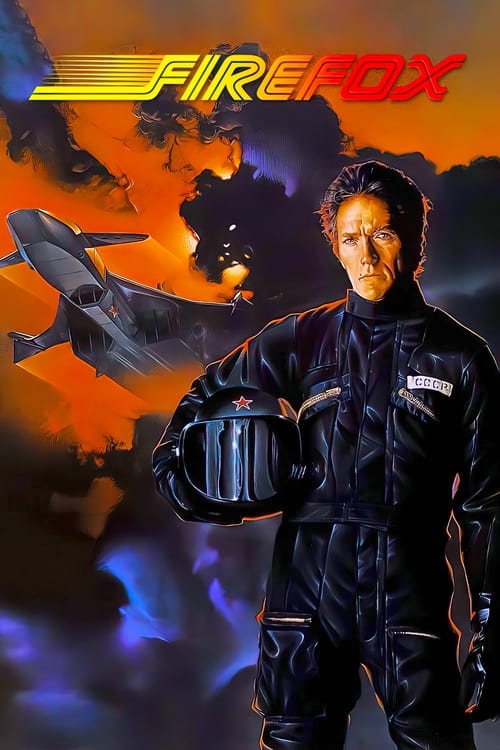
Firefox
The Soviets have developed a revolutionary new jet fighter, called 'Firefox'. Worried that the jet will be used as a first-strike weapon—as there are rumours that it is undetectable by radar—the British send ex-Vietnam War pilot, Mitchell Gant on a covert mission into the Soviet Union to steal the Firefox.
Despite a moderate budget of $18.0M, Firefox became a financial success, earning $70.7M worldwide—a 293% return.


Plot Structure
Story beats plotted across runtime


Narrative Arc
Emotional journey through the story's key moments
Story Circle
Blueprint 15-beat structure
Arcplot Score Breakdown
Weighted: Precision (70%) + Arc (15%) + Theme (15%)
Firefox (1982) reveals meticulously timed story structure, characteristic of Clint Eastwood's storytelling approach. This structural analysis examines how the film's 15-point plot structure maps to proven narrative frameworks across 2 hours and 16 minutes. With an Arcplot score of 7.4, the film balances conventional beats with creative variation.
Characters
Cast & narrative archetypes

Mitchell Gant
Kenneth Aubrey
Pavel Upenskoy
Natalia
Colonel Kontarsky
General Vladimirov
Buckholz
Main Cast & Characters
Mitchell Gant
Played by Clint Eastwood
A traumatized Vietnam War veteran pilot recruited to steal the Soviet Union's advanced Firefox fighter jet
Kenneth Aubrey
Played by Freddie Jones
British intelligence officer who masterminds the Firefox theft operation
Pavel Upenskoy
Played by Warren Clarke
Dissident Soviet scientist who aids Gant in infiltrating the airbase
Natalia
Played by Nigel Hawthorne
Soviet woman and underground contact who helps smuggle Gant through Moscow
Colonel Kontarsky
Played by Kenneth Colley
KGB officer hunting for the American infiltrator
General Vladimirov
Played by Klaus Löwitsch
Soviet Air Force general overseeing the Firefox project
Buckholz
Played by Ronald Lacey
American intelligence operative coordinating the mission
Structural Analysis
The Status Quo at 2 minutes (1% through the runtime) establishes Mitchell Gant lives isolated in Alaska, working as a pilot, suffering from severe Vietnam PTSD flashbacks that make him unstable and withdrawn from society.. Structural examination shows that this early placement immediately immerses viewers in the story world.
The inciting incident occurs at 16 minutes when Gant accepts the mission to infiltrate the Soviet Union and steal the Firefox prototype, despite his PTSD and the near-certain suicide nature of the operation.. At 12% through the film, this Disruption aligns precisely with traditional story structure. This beat shifts the emotional landscape, launching the protagonist into the central conflict.
The First Threshold at 34 minutes marks the transition into Act II, occurring at 25% of the runtime. This reveals the protagonist's commitment to Gant crosses into Soviet territory, entering the "upside-down" world where he must become someone else, speak only Russian, and rely on underground dissidents he's never met., moving from reaction to action.
At 69 minutes, the Midpoint arrives at 50% of the runtime—precisely centered, creating perfect narrative symmetry. Significantly, this crucial beat Gant arrives at the secret Bilyarsk airbase and sees the Firefox for the first time - sleek, black, magnificent. The goal seems achievable (false victory), but security is tighter than expected., fundamentally raising what's at risk. The emotional intensity shifts, dividing the narrative into clear before-and-after phases.
The Collapse moment at 102 minutes (75% through) represents the emotional nadir. Here, Pavel Upenskoy is killed helping Gant. The last contact is dead, Gant is alone and surrounded on a hostile airbase with no extraction plan - the mission appears to have failed., indicates the protagonist at their lowest point. This beat's placement in the final quarter sets up the climactic reversal.
The Second Threshold at 108 minutes initiates the final act resolution at 80% of the runtime. Gant steals a technician's uniform and approaches the Firefox. He remembers the key instruction: "You must think in Russian" to control the weapons. He synthesizes his Russian fluency with his pilot skills., demonstrating the transformation achieved throughout the journey.
Emotional Journey
Firefox's emotional architecture traces a deliberate progression across 15 carefully calibrated beats.
Narrative Framework
This structural analysis employs systematic plot point analysis that identifies crucial turning points. By mapping Firefox against these established plot points, we can identify how Clint Eastwood utilizes or subverts traditional narrative conventions. The plot point approach reveals not only adherence to structural principles but also creative choices that distinguish Firefox within the science fiction genre.
Clint Eastwood's Structural Approach
Among the 32 Clint Eastwood films analyzed on Arcplot, the average structural score is 6.5, demonstrating varied approaches to story architecture. Firefox represents one of the director's most structurally precise works. For comparative analysis, explore the complete Clint Eastwood filmography.
Comparative Analysis
Additional science fiction films include The Postman, Mad Max 2 and AVP: Alien vs. Predator. For more Clint Eastwood analyses, see True Crime, Million Dollar Baby and The Gauntlet.
Plot Points by Act
Act I
SetupStatus Quo
Mitchell Gant lives isolated in Alaska, working as a pilot, suffering from severe Vietnam PTSD flashbacks that make him unstable and withdrawn from society.
Theme
Buckholz tells Gant, "You're the only man who can do this" - establishing the theme that duty and mission can overcome personal trauma and give broken men purpose.
Worldbuilding
Establishment of Gant's psychological damage from Vietnam, his unique qualifications (fluent Russian, test pilot skills), and the Firefox aircraft - a Soviet MiG-31 capable of Mach 5+ with thought-controlled weapons.
Disruption
Gant accepts the mission to infiltrate the Soviet Union and steal the Firefox prototype, despite his PTSD and the near-certain suicide nature of the operation.
Resistance
Intensive preparation and briefing: Gant learns infiltration protocols, studies the aircraft systems, receives false identity as a drug-addicted businessman, debates whether he can mentally handle the mission.
Act II
ConfrontationFirst Threshold
Gant crosses into Soviet territory, entering the "upside-down" world where he must become someone else, speak only Russian, and rely on underground dissidents he's never met.
Mirror World
Gant meets Pavel Upenskoy and the network of Jewish dissidents risking everything to help him - they represent the sacrifice and courage that mirrors what Gant must find within himself.
Premise
The spy thriller delivers its premise: Gant navigates Moscow using a chain of contacts, assumes multiple disguises, evades KGB surveillance, and experiences the paranoid tension of deep-cover infiltration.
Midpoint
Gant arrives at the secret Bilyarsk airbase and sees the Firefox for the first time - sleek, black, magnificent. The goal seems achievable (false victory), but security is tighter than expected.
Opposition
KGB Colonel Kontarsky closes the net: contacts are arrested, Gant's cover is compromised, the base goes on alert. Gant's PTSD flashbacks intensify under pressure, threatening to expose him.
Collapse
Pavel Upenskoy is killed helping Gant. The last contact is dead, Gant is alone and surrounded on a hostile airbase with no extraction plan - the mission appears to have failed.
Crisis
Gant's darkest moment: alone in hostile territory, allies dead because of him, no way out. His PTSD threatens to overwhelm him completely. He must choose between surrender and one final desperate gambit.
Act III
ResolutionSecond Threshold
Gant steals a technician's uniform and approaches the Firefox. He remembers the key instruction: "You must think in Russian" to control the weapons. He synthesizes his Russian fluency with his pilot skills.
Synthesis
The finale: Gant steals the Firefox, escapes Soviet airspace, dogfights two pursuing MiG-31s using thought-controlled weapons, and makes the harrowing flight to Norway. His training, skill, and newfound purpose converge.
Transformation
Gant lands the Firefox safely on an ice floe near the Norwegian border. Exhausted but victorious, his eyes show clarity rather than trauma - the mission has given him redemption and purpose, healing his fractured psyche.