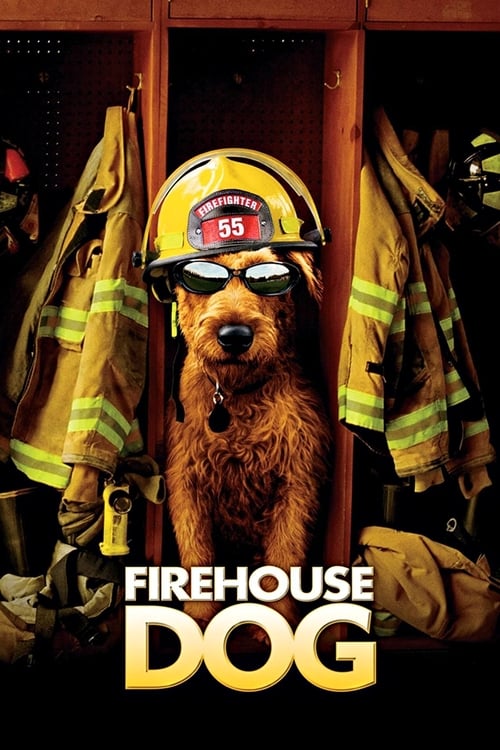
Firehouse Dog
Rexxx, Hollywood's top canine star, gets lost and is adopted into a shabby firehouse. He teams up with a young kid to get the station back on its feet.
The film earned $17.4M at the global box office.


Plot Structure
Story beats plotted across runtime


Narrative Arc
Emotional journey through the story's key moments
Story Circle
Blueprint 15-beat structure
Arcplot Score Breakdown
Weighted: Precision (70%) + Arc (15%) + Theme (15%)
Firehouse Dog (2007) demonstrates deliberately positioned narrative design, characteristic of Todd Holland's storytelling approach. This structural analysis examines how the film's 15-point plot structure maps to proven narrative frameworks across 1 hour and 51 minutes. With an Arcplot score of 7.2, the film balances conventional beats with creative variation.
Characters
Cast & narrative archetypes

Rexxx/Dewey
Shane Fahey
Connor Fahey
Trey Falcon
Joe Musto
Lionel Bradford
Zachary Hayden
Main Cast & Characters
Rexxx/Dewey
Played by Josh Hutcherson
A famous Hollywood dog who becomes lost and befriends a young firefighter's son, helping revitalize a struggling firehouse.
Shane Fahey
Played by Bruce Greenwood
A widowed firefighter and captain struggling to connect with his son while keeping his firehouse from closing.
Connor Fahey
Played by Josh Hutcherson
Shane's rebellious 12-year-old son who befriends the lost dog and finds purpose helping at the firehouse.
Trey Falcon
Played by Steven Culp
Rexxx's egotistical Hollywood owner and action star who is devastated by the loss of his famous dog.
Joe Musto
Played by Bill Nunn
A veteran firefighter at Dogpatch Station 55, loyal friend to Shane.
Lionel Bradford
Played by Steven Culp
A corrupt city fire inspector who schemes to shut down Station 55 for personal gain.
Zachary Hayden
Played by Dash Mihok
Trey Falcon's manipulative uncle and manager who sees Rexxx as a commodity.
Structural Analysis
The Status Quo at 1 minutes (1% through the runtime) establishes Rexxx, Hollywood's biggest canine star, performs an elaborate stunt sequence on a film set, establishing him as a pampered celebrity dog living a glamorous life.. Notably, this early placement immediately immerses viewers in the story world.
The inciting incident occurs at 13 minutes when During an aerial stunt, Rexxx's plane crashes and he falls into a tomato truck, disappearing. Meanwhile, a suspicious fire at the warehouse raises questions about arson. Both protagonists' worlds are disrupted.. At 11% through the film, this Disruption aligns precisely with traditional story structure. This beat shifts the emotional landscape, launching the protagonist into the central conflict.
The First Threshold at 27 minutes marks the transition into Act II, occurring at 25% of the runtime. This reveals the protagonist's commitment to Connor agrees to let Shane keep the dog (now named Dewey) at the firehouse on a trial basis. Shane commits to training him as a fire dog, entering the world of firefighting alongside his father., moving from reaction to action.
At 57 minutes, the Midpoint arrives at 51% of the runtime—precisely centered, creating perfect narrative symmetry. Significantly, this crucial beat Dewey becomes a media sensation, saving the firehouse from closure. Shane and Connor's relationship reaches a high point. False victory: everything seems solved, but Dewey's true identity remains hidden and the arsonist is still at large., fundamentally raising what's at risk. The emotional intensity shifts, dividing the narrative into clear before-and-after phases.
The Collapse moment at 82 minutes (74% through) represents the emotional nadir. Here, Connor is severely injured in a warehouse fire set by the arsonist (revealed to be Corbin Sellars, a corrupt city official). Dewey is taken back to Hollywood. Shane loses both his father figure and his dog, hitting rock bottom., reveals the protagonist at their lowest point. This beat's placement in the final quarter sets up the climactic reversal.
The Second Threshold at 88 minutes initiates the final act resolution at 79% of the runtime. Dewey escapes from Hollywood and races back to the firehouse. Shane discovers critical evidence about the arsonist. Father and son reconcile, with Connor recognizing Shane's bravery and growth., demonstrating the transformation achieved throughout the journey.
Emotional Journey
Firehouse Dog's emotional architecture traces a deliberate progression across 15 carefully calibrated beats.
Narrative Framework
This structural analysis employs structural analysis methodology used to understand storytelling architecture. By mapping Firehouse Dog against these established plot points, we can identify how Todd Holland utilizes or subverts traditional narrative conventions. The plot point approach reveals not only adherence to structural principles but also creative choices that distinguish Firehouse Dog within the family genre.
Todd Holland's Structural Approach
Among the 2 Todd Holland films analyzed on Arcplot, the average structural score is 7.2, reflecting strong command of classical structure. Firehouse Dog represents one of the director's most structurally precise works. For comparative analysis, explore the complete Todd Holland filmography.
Comparative Analysis
Additional family films include The Black Stallion, The Bad Guys and Ella Enchanted. For more Todd Holland analyses, see The Wizard.
Plot Points by Act
Act I
SetupStatus Quo
Rexxx, Hollywood's biggest canine star, performs an elaborate stunt sequence on a film set, establishing him as a pampered celebrity dog living a glamorous life.
Theme
Shane (the young protagonist) and his fire captain father discuss what it means to be a real hero versus just showing off - foreshadowing the film's theme about true heroism and finding one's purpose.
Worldbuilding
Dual setup: Rexxx's pampered Hollywood lifestyle with his agent Liz is contrasted with Shane's strained relationship with his workaholic fire captain father Connor and the struggling Dogpatch Engine Company 55.
Disruption
During an aerial stunt, Rexxx's plane crashes and he falls into a tomato truck, disappearing. Meanwhile, a suspicious fire at the warehouse raises questions about arson. Both protagonists' worlds are disrupted.
Resistance
Rexxx, now a stray and unrecognizable, wanders lost and filthy. Shane finds the dog and reluctantly brings him to the firehouse. Connor debates keeping the dog, while Shane argues they should give him a chance.
Act II
ConfrontationFirst Threshold
Connor agrees to let Shane keep the dog (now named Dewey) at the firehouse on a trial basis. Shane commits to training him as a fire dog, entering the world of firefighting alongside his father.
Mirror World
Shane bonds with Dewey and the firehouse crew, particularly developing his relationship with his father Connor. Dewey becomes the emotional bridge helping Shane understand what it means to be part of a team.
Premise
Dewey's amazing abilities emerge as he helps the crew fight fires and perform rescues. Shane trains him while uncovering his remarkable talents. The firehouse gains publicity and support, and Shane's relationship with his father improves.
Midpoint
Dewey becomes a media sensation, saving the firehouse from closure. Shane and Connor's relationship reaches a high point. False victory: everything seems solved, but Dewey's true identity remains hidden and the arsonist is still at large.
Opposition
Liz recognizes Dewey as Rexxx on TV and comes to reclaim him. The arson investigation intensifies, pointing toward someone close. Shane faces losing Dewey, while Connor gets closer to discovering the arsonist's identity.
Collapse
Connor is severely injured in a warehouse fire set by the arsonist (revealed to be Corbin Sellars, a corrupt city official). Dewey is taken back to Hollywood. Shane loses both his father figure and his dog, hitting rock bottom.
Crisis
Shane sits with his injured father in the hospital, facing his fears about loss. Dewey, miserable in Hollywood, realizes where he truly belongs. Both protagonists reflect on what really matters.
Act III
ResolutionSecond Threshold
Dewey escapes from Hollywood and races back to the firehouse. Shane discovers critical evidence about the arsonist. Father and son reconcile, with Connor recognizing Shane's bravery and growth.
Synthesis
Shane and Dewey confront the arsonist in a burning building. Using everything he learned, Shane works with Dewey to rescue people and expose Corbin. The firehouse crew arrives for the final rescue and arrest.
Transformation
Shane, now confident and bonded with his father, stands with Dewey at the firehouse as an official fire dog. The firehouse is saved, the family is whole, and both Shane and Dewey have found their true purpose as real heroes.