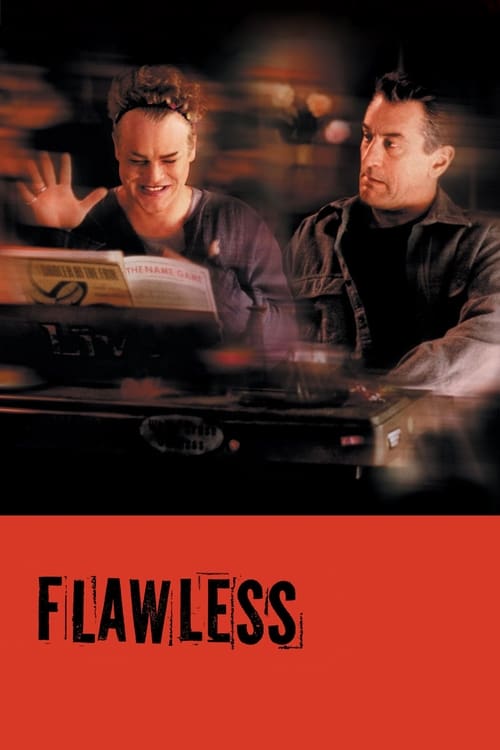
Flawless
An ultraconservative police officer suffers a debilitating stroke and is assigned to a rehabilitative program that includes singing lessons - with the drag queen next door.
The film commercial failure against its respectable budget of $15.0M, earning $4.5M globally (-70% loss). While initial box office returns were modest, the film has gained appreciation for its unique voice within the comedy genre.
3 wins & 4 nominations


Plot Structure
Story beats plotted across runtime


Narrative Arc
Emotional journey through the story's key moments
Story Circle
Blueprint 15-beat structure
Arcplot Score Breakdown
Weighted: Precision (70%) + Arc (15%) + Theme (15%)
Flawless (1999) demonstrates precise plot construction, characteristic of Joel Schumacher's storytelling approach. This structural analysis examines how the film's 15-point plot structure maps to proven narrative frameworks across 1 hour and 52 minutes. With an Arcplot score of 7.6, the film showcases strong structural fundamentals.
Characters
Cast & narrative archetypes

Walter Koontz
Rusty Zimmerman
Main Cast & Characters
Walter Koontz
Played by Robert De Niro
A conservative, homophobic ex-security guard recovering from a stroke who reluctantly accepts singing lessons from his drag queen neighbor.
Rusty Zimmerman
Played by Philip Seymour Hoffman
A compassionate drag queen performer who becomes Walter's unlikely vocal coach and helps him rediscover his humanity.
Structural Analysis
The Status Quo at 2 minutes (2% through the runtime) establishes Walt Koontz, a conservative security guard, patrols his New York apartment building with rigid discipline, looking down on the drag queens and misfits in his building, particularly his neighbor Rusty.. Structural examination shows that this early placement immediately immerses viewers in the story world.
The inciting incident occurs at 13 minutes when Walt suffers a massive stroke that paralyzes the right side of his body and severely impairs his speech, destroying his dreams and independence in a single moment.. At 12% through the film, this Disruption aligns precisely with traditional story structure. This beat shifts the emotional landscape, launching the protagonist into the central conflict.
The First Threshold at 28 minutes marks the transition into Act II, occurring at 25% of the runtime. This indicates the protagonist's commitment to Desperate to regain his speech and unable to afford proper therapy, Walt reluctantly agrees to take singing lessons from Rusty, the drag queen neighbor he has always despised, crossing into a world he's spent his life rejecting., moving from reaction to action.
At 56 minutes, the Midpoint arrives at 50% of the runtime—precisely centered, creating perfect narrative symmetry. Significantly, this crucial beat Walt shows significant progress in his speech recovery and shares a breakthrough moment of genuine connection with Rusty, perhaps defending him or showing vulnerability. False victory: Walt thinks he's getting better without having to change his views., fundamentally raising what's at risk. The emotional intensity shifts, dividing the narrative into clear before-and-after phases.
The Collapse moment at 82 minutes (73% through) represents the emotional nadir. Here, Violence erupts with the drug dealers, putting Rusty in grave danger, or Walt suffers a setback/says something cruel that destroys their friendship. The fragile connection between Walt and Rusty shatters. Literal or metaphorical "death" of their relationship., demonstrates the protagonist at their lowest point. This beat's placement in the final quarter sets up the climactic reversal.
The Second Threshold at 89 minutes initiates the final act resolution at 79% of the runtime. Walt makes the choice to fully embrace what Rusty taught him about acceptance and courage. He combines his old-world toughness with his new understanding of compassion, ready to stand up for Rusty and their friendship publicly., demonstrating the transformation achieved throughout the journey.
Emotional Journey
Flawless's emotional architecture traces a deliberate progression across 15 carefully calibrated beats.
Narrative Framework
This structural analysis employs structural analysis methodology used to understand storytelling architecture. By mapping Flawless against these established plot points, we can identify how Joel Schumacher utilizes or subverts traditional narrative conventions. The plot point approach reveals not only adherence to structural principles but also creative choices that distinguish Flawless within the comedy genre.
Joel Schumacher's Structural Approach
Among the 17 Joel Schumacher films analyzed on Arcplot, the average structural score is 7.0, reflecting strong command of classical structure. Flawless represents one of the director's most structurally precise works. For comparative analysis, explore the complete Joel Schumacher filmography.
Comparative Analysis
Additional comedy films include The Bad Guys, Ella Enchanted and The Evening Star. For more Joel Schumacher analyses, see Batman Forever, The Phantom of the Opera and Trespass.
Plot Points by Act
Act I
SetupStatus Quo
Walt Koontz, a conservative security guard, patrols his New York apartment building with rigid discipline, looking down on the drag queens and misfits in his building, particularly his neighbor Rusty.
Theme
Rusty or another character suggests that "everybody's got their own way of being beautiful" or speaks about acceptance and finding your own voice, establishing the film's theme of tolerance and self-discovery.
Worldbuilding
Introduction to Walt's isolated, judgmental world: his security job, his prejudices against the LGBTQ residents of his building, his dreams of becoming a private investigator, and his contentious relationship with Rusty and the drag community.
Disruption
Walt suffers a massive stroke that paralyzes the right side of his body and severely impairs his speech, destroying his dreams and independence in a single moment.
Resistance
Walt struggles through physical therapy and rehabilitation, resisting help and dealing with his new limitations. His doctor suggests unconventional therapy. Walt debates whether to accept his situation or fight against it with pride intact.
Act II
ConfrontationFirst Threshold
Desperate to regain his speech and unable to afford proper therapy, Walt reluctantly agrees to take singing lessons from Rusty, the drag queen neighbor he has always despised, crossing into a world he's spent his life rejecting.
Mirror World
Walt enters Rusty's flamboyant apartment for the first time and begins lessons. Rusty becomes the mirror character who embodies the acceptance and self-expression Walt lacks, representing the thematic journey Walt must take.
Premise
The unlikely partnership develops through awkward, humorous singing lessons. Walt slowly improves his speech while reluctantly learning about Rusty's world. Parallel subplot of building drug dealers threatens both characters. Walt begins to see Rusty as human.
Midpoint
Walt shows significant progress in his speech recovery and shares a breakthrough moment of genuine connection with Rusty, perhaps defending him or showing vulnerability. False victory: Walt thinks he's getting better without having to change his views.
Opposition
The drug dealers escalate their threats. Walt's old prejudices resurface, creating conflict with Rusty. External danger and internal resistance intensify. Walt's physical progress can't mask his emotional resistance to true change and acceptance.
Collapse
Violence erupts with the drug dealers, putting Rusty in grave danger, or Walt suffers a setback/says something cruel that destroys their friendship. The fragile connection between Walt and Rusty shatters. Literal or metaphorical "death" of their relationship.
Crisis
Walt confronts his bigotry and realizes what he's lost. He processes the pain of his isolation and recognizes that Rusty's friendship and the lessons (both vocal and life lessons) were what he truly needed, not just physical recovery.
Act III
ResolutionSecond Threshold
Walt makes the choice to fully embrace what Rusty taught him about acceptance and courage. He combines his old-world toughness with his new understanding of compassion, ready to stand up for Rusty and their friendship publicly.
Synthesis
Walt takes action to protect Rusty or reconcile with him, possibly confronting the drug dealers or defending Rusty's dignity in front of others. He uses both his recovered voice and his newfound acceptance to resolve the external and internal conflicts.
Transformation
Final image mirrors the opening but shows Walt transformed: perhaps singing with confidence, embracing Rusty openly, or standing among the drag community with acceptance. His voice restored, his heart opened, his prejudices gone.