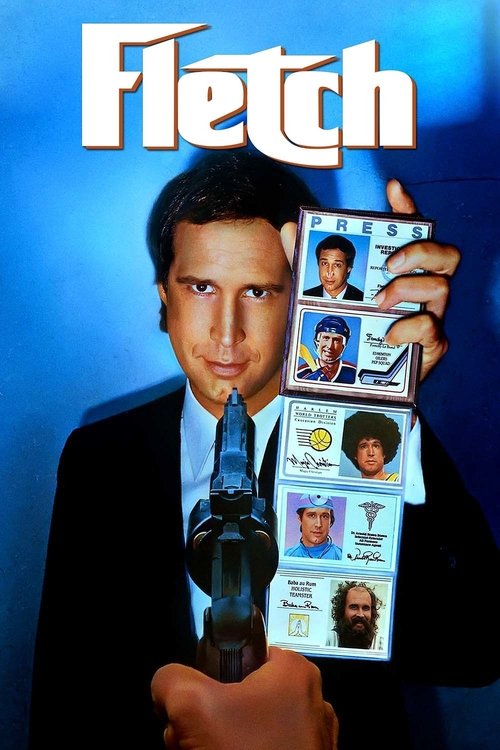
Fletch
When investigative reporter Irwin "Fletch" Fletcher goes undercover to write a piece on the drug trade at a local beach, he's approached by wealthy businessman Alan Stanwyk, who offers him $50,000 to murder him. With sarcastic wit and a knack for disguises, Fletch sets out to uncover Stanwyk's story.
Despite its modest budget of $8.0M, Fletch became a runaway success, earning $59.6M worldwide—a remarkable 645% return. The film's unconventional structure engaged audiences, confirming that strong storytelling can transcend budget limitations.


Plot Structure
Story beats plotted across runtime


Narrative Arc
Emotional journey through the story's key moments
Story Circle
Blueprint 15-beat structure
Arcplot Score Breakdown
Weighted: Precision (70%) + Arc (15%) + Theme (15%)
Fletch (1985) exemplifies precise story structure, characteristic of Michael Ritchie's storytelling approach. This structural analysis examines how the film's 15-point plot structure maps to proven narrative frameworks across 1 hour and 38 minutes. With an Arcplot score of 7.3, the film balances conventional beats with creative variation.
Characters
Cast & narrative archetypes

Irwin M. Fletcher
Alan Stanwyk
Chief Jerry Karlin
Gail Stanwyk
Frank Walker
Larry
Main Cast & Characters
Irwin M. Fletcher
Played by Chevy Chase
An investigative reporter going undercover on the beach who gets pulled into a murder-for-hire scheme while juggling multiple identities and aliases.
Alan Stanwyk
Played by Tim Matheson
A wealthy businessman who approaches Fletch with an unusual proposal to murder him, hiding dark secrets about drug trafficking and embezzlement.
Chief Jerry Karlin
Played by Joe Don Baker
The corrupt police chief involved in drug trafficking on the beach, serving as the main antagonist blocking Fletch's investigation.
Gail Stanwyk
Played by Dana Wheeler-Nicholson
Alan Stanwyk's wife who becomes romantically involved with Fletch during his investigation into her husband.
Frank Walker
Played by Richard Libertini
Fletch's editor at the newspaper who pressures him for the drug story and frequently clashes with his unorthodox methods.
Larry
Played by Geena Davis
A beach junkie and informant who provides Fletch with information about the drug operation.
Structural Analysis
The Status Quo at 1 minutes (1% through the runtime) establishes Fletch undercover on the beach as a homeless drifter, investigating drug trafficking. Establishes him as a clever investigative reporter who adopts disguises and false identities.. Notably, this early placement immediately immerses viewers in the story world.
The inciting incident occurs at 11 minutes when Wealthy businessman Alan Stanwyk approaches Fletch on the beach with a bizarre proposal: he claims he's dying of cancer and offers Fletch $50,000 to kill him, providing an escape plan to Brazil.. At 12% through the film, this Disruption aligns precisely with traditional story structure. This beat shifts the emotional landscape, launching the protagonist into the central conflict.
The First Threshold at 24 minutes marks the transition into Act II, occurring at 24% of the runtime. This reveals the protagonist's commitment to Fletch actively chooses to investigate Stanwyk fully while pretending to go along with the murder plot. Commits to uncovering the truth behind the proposal, diving into a world of corporate crime and corruption., moving from reaction to action.
At 50 minutes, the Midpoint arrives at 51% of the runtime—precisely centered, creating perfect narrative symmetry. Structural examination shows that this crucial beat False defeat: Fletch discovers Stanwyk is embezzling from his company and involved with drug smuggling. The stakes raise dramatically - this isn't just insurance fraud, it's organized crime. Fletch realizes he's in real danger., fundamentally raising what's at risk. The emotional intensity shifts, dividing the narrative into clear before-and-after phases.
The Collapse moment at 73 minutes (75% through) represents the emotional nadir. Here, Fletch is framed for drug possession and faces arrest. His investigation seems to have backfired completely. The police don't believe him, his editor abandons him, and Stanwyk has the upper hand. Loss of credibility and freedom., illustrates the protagonist at their lowest point. This beat's placement in the final quarter sets up the climactic reversal.
The Second Threshold at 78 minutes initiates the final act resolution at 80% of the runtime. Fletch synthesizes all the clues: Stanwyk plans to fake his own death, frame Fletch for murder, and escape with embezzled money and drug profits. Fletch realizes he must expose the entire conspiracy publicly with evidence., demonstrating the transformation achieved throughout the journey.
Emotional Journey
Fletch's emotional architecture traces a deliberate progression across 15 carefully calibrated beats.
Narrative Framework
This structural analysis employs structural analysis methodology used to understand storytelling architecture. By mapping Fletch against these established plot points, we can identify how Michael Ritchie utilizes or subverts traditional narrative conventions. The plot point approach reveals not only adherence to structural principles but also creative choices that distinguish Fletch within the comedy genre.
Michael Ritchie's Structural Approach
Among the 9 Michael Ritchie films analyzed on Arcplot, the average structural score is 7.4, reflecting strong command of classical structure. Fletch takes a more unconventional approach compared to the director's typical style. For comparative analysis, explore the complete Michael Ritchie filmography.
Comparative Analysis
Additional comedy films include The Bad Guys, Ella Enchanted and The Evening Star. For more Michael Ritchie analyses, see The Bad News Bears, A Simple Wish and Diggstown.
Plot Points by Act
Act I
SetupStatus Quo
Fletch undercover on the beach as a homeless drifter, investigating drug trafficking. Establishes him as a clever investigative reporter who adopts disguises and false identities.
Theme
Early dialogue about truth vs. deception, identity vs. disguise. The thematic core: who you pretend to be versus who you really are, and whether living through lies can reveal truth.
Worldbuilding
Fletch's world as an investigative reporter, his contentious relationship with editor Frank, his estranged wife, his methods of using fake names and personas. His beach investigation of drug dealers.
Disruption
Wealthy businessman Alan Stanwyk approaches Fletch on the beach with a bizarre proposal: he claims he's dying of cancer and offers Fletch $50,000 to kill him, providing an escape plan to Brazil.
Resistance
Fletch debates whether to accept, suspects Stanwyk is lying, begins investigating him. Consults his editor, researches Stanwyk's background, checks medical records. Discovers inconsistencies in Stanwyk's story.
Act II
ConfrontationFirst Threshold
Fletch actively chooses to investigate Stanwyk fully while pretending to go along with the murder plot. Commits to uncovering the truth behind the proposal, diving into a world of corporate crime and corruption.
Mirror World
Introduction of deeper relationship with Stanwyk's wife Gail. This subplot explores authentic connection versus the disguises Fletch uses. She represents the cost of living through deception.
Premise
The fun of watching Fletch use multiple disguises and personas to investigate: doctor, insurance agent, pilot. Comic sequences of him conning information from various sources while juggling the beach drug story.
Midpoint
False defeat: Fletch discovers Stanwyk is embezzling from his company and involved with drug smuggling. The stakes raise dramatically - this isn't just insurance fraud, it's organized crime. Fletch realizes he's in real danger.
Opposition
Police chief suspects Fletch of murder conspiracy. Stanwyk and his criminal associates close in. Fletch's editor threatens to fire him. His ex-wife's lawyer pursues him for alimony. Pressure from all sides.
Collapse
Fletch is framed for drug possession and faces arrest. His investigation seems to have backfired completely. The police don't believe him, his editor abandons him, and Stanwyk has the upper hand. Loss of credibility and freedom.
Crisis
Fletch processes the collapse, realizes he can't rely on institutional help. Must use his own skills and the truth he's uncovered to survive. Dark moment of recognizing he's truly alone in this fight.
Act III
ResolutionSecond Threshold
Fletch synthesizes all the clues: Stanwyk plans to fake his own death, frame Fletch for murder, and escape with embezzled money and drug profits. Fletch realizes he must expose the entire conspiracy publicly with evidence.
Synthesis
The finale: Fletch confronts Stanwyk at the airport, reveals the truth to Gail, exposes the police chief's corruption, and uses his journalistic evidence to bring down the conspiracy. The drug story and murder plot converge.
Transformation
Fletch drives away victorious, having solved both cases. But the final image shows him still using a fake identity - suggesting he's learned to embrace his gift for deception as a tool for truth, rather than rejecting it.