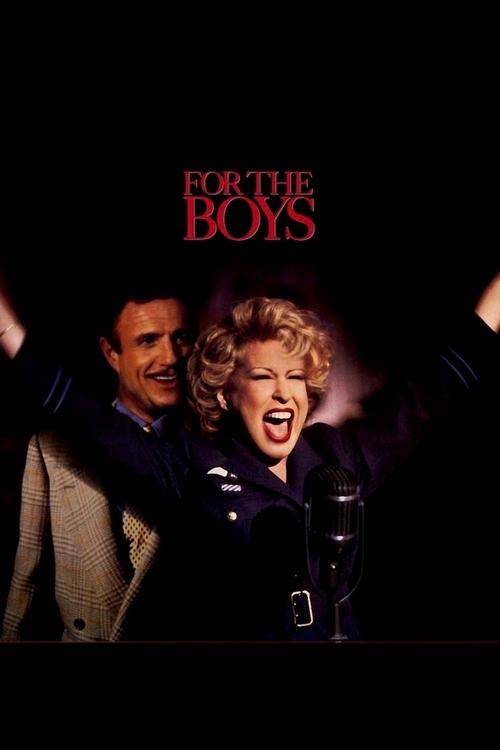
For the Boys
Talented USO entertainer Dixie Leonard and comedian Eddie Sparks deal with their relationship over the course of 5 decades from World War II to the Vietnam War era to their twilight era in the 90's.
The film struggled financially against its moderate budget of $40.0M, earning $23.2M globally (-42% loss). While initial box office returns were modest, the film has gained appreciation for its unconventional structure within the drama genre.
Nominated for 1 Oscar. 1 win & 3 nominations


Plot Structure
Story beats plotted across runtime


Narrative Arc
Emotional journey through the story's key moments
Story Circle
Blueprint 15-beat structure
Arcplot Score Breakdown
Weighted: Precision (70%) + Arc (15%) + Theme (15%)
For the Boys (1991) showcases meticulously timed narrative architecture, characteristic of Mark Rydell's storytelling approach. This structural analysis examines how the film's 15-point plot structure maps to proven narrative frameworks across 2 hours and 18 minutes. With an Arcplot score of 7.4, the film balances conventional beats with creative variation.
Characters
Cast & narrative archetypes

Dixie Leonard
Eddie Sparks
Art Silver
Danny Leonard
Main Cast & Characters
Dixie Leonard
Played by Bette Midler
A talented singer and performer who partners with Eddie Sparks to entertain troops across five decades, struggling with their complex personal and professional relationship.
Eddie Sparks
Played by James Caan
A charismatic comedian and entertainer who teams with Dixie to perform for servicemen from WWII through Vietnam, evolving from ambitious showman to aging performer.
Art Silver
Played by George Segal
Eddie's loyal manager and handler who helps orchestrate the USO tours and manages the partnership between Eddie and Dixie.
Danny Leonard
Played by Christopher Rydell
Dixie's son who serves in Vietnam, representing the generational divide and personal cost of war.
Structural Analysis
The Status Quo at 2 minutes (1% through the runtime) establishes 1991: Elderly Dixie Leonard receives notification that Eddie Sparks will be honored, triggering memories. Establishes her bitterness and their estrangement.. The analysis reveals that this early placement immediately immerses viewers in the story world.
The inciting incident occurs at 16 minutes when Danny, Dixie's husband and accompanist, is drafted and must leave. This separates Dixie from her stable life and pushes her toward Eddie's world.. At 12% through the film, this Disruption aligns precisely with traditional story structure. This beat shifts the emotional landscape, launching the protagonist into the central conflict.
The First Threshold at 35 minutes marks the transition into Act II, occurring at 25% of the runtime. This demonstrates the protagonist's commitment to Dixie commits to the USO tour with Eddie, boarding the plane to entertain troops overseas. She actively chooses this partnership and new world., moving from reaction to action.
At 70 minutes, the Midpoint arrives at 50% of the runtime—precisely centered, creating perfect narrative symmetry. Significantly, this crucial beat Danny is killed in action. False defeat: Dixie receives the devastating news. The war becomes personal. The cost of "giving the boys what they want" is revealed., fundamentally raising what's at risk. The emotional intensity shifts, dividing the narrative into clear before-and-after phases.
The Collapse moment at 103 minutes (75% through) represents the emotional nadir. Here, Dixie's son is killed in Vietnam. The ultimate "whiff of death" - history repeating, losing her child to war just as she lost her husband. Her world collapses., indicates the protagonist at their lowest point. This beat's placement in the final quarter sets up the climactic reversal.
The Second Threshold at 110 minutes initiates the final act resolution at 80% of the runtime. 1991: Confronting the past, Dixie decides to attend Eddie's tribute. She synthesizes forgiveness - understanding that they both paid the price, both gave everything., demonstrating the transformation achieved throughout the journey.
Emotional Journey
For the Boys's emotional architecture traces a deliberate progression across 15 carefully calibrated beats.
Narrative Framework
This structural analysis employs structural analysis methodology used to understand storytelling architecture. By mapping For the Boys against these established plot points, we can identify how Mark Rydell utilizes or subverts traditional narrative conventions. The plot point approach reveals not only adherence to structural principles but also creative choices that distinguish For the Boys within the drama genre.
Mark Rydell's Structural Approach
Among the 6 Mark Rydell films analyzed on Arcplot, the average structural score is 7.2, reflecting strong command of classical structure. For the Boys represents one of the director's most structurally precise works. For comparative analysis, explore the complete Mark Rydell filmography.
Comparative Analysis
Additional drama films include After Thomas, South Pacific and Dirty Dancing: Havana Nights. For more Mark Rydell analyses, see The Rose, Intersection and On Golden Pond.
Plot Points by Act
Act I
SetupStatus Quo
1991: Elderly Dixie Leonard receives notification that Eddie Sparks will be honored, triggering memories. Establishes her bitterness and their estrangement.
Theme
Flashback to 1942: Someone mentions "You gotta give the boys what they want" - establishing the tension between patriotic duty and personal cost, entertainment and exploitation.
Worldbuilding
1942: Introduction to young Dixie's life as a singer, her husband Danny, her talent, and the USO entertainment world. Eddie Sparks recruits her for his act.
Disruption
Danny, Dixie's husband and accompanist, is drafted and must leave. This separates Dixie from her stable life and pushes her toward Eddie's world.
Resistance
Dixie debates joining Eddie's USO tour. Initial rehearsals and friction with Eddie. She resists his crude style but sees the opportunity to support the troops and her career.
Act II
ConfrontationFirst Threshold
Dixie commits to the USO tour with Eddie, boarding the plane to entertain troops overseas. She actively chooses this partnership and new world.
Mirror World
Dixie and Eddie perform together for troops for the first time. Their chemistry onstage mirrors the central relationship that will define both their lives - complicated partnership.
Premise
WWII USO tour: The promise of the premise - performances, wartime romance, growing fame, Dixie and Eddie's act becomes legendary. Danny writes letters. Peak of their partnership.
Midpoint
Danny is killed in action. False defeat: Dixie receives the devastating news. The war becomes personal. The cost of "giving the boys what they want" is revealed.
Opposition
Korean War and Vietnam era: Years pass, their son grows up, Dixie and Eddie's relationship deteriorates. Political divisions over Vietnam. Eddie remains hawkish, Dixie questions the wars.
Collapse
Dixie's son is killed in Vietnam. The ultimate "whiff of death" - history repeating, losing her child to war just as she lost her husband. Her world collapses.
Crisis
Dixie blames Eddie for supporting the war, their partnership ends bitterly. Dark night of grief and rage. She withdraws from performing and from Eddie completely.
Act III
ResolutionSecond Threshold
1991: Confronting the past, Dixie decides to attend Eddie's tribute. She synthesizes forgiveness - understanding that they both paid the price, both gave everything.
Synthesis
The tribute event: Dixie and Eddie reunite, perform together one last time, reconcile their shared history and losses. They acknowledge their complicated legacy.
Transformation
Final image: Dixie and Eddie together, having made peace with their past. No longer bitter strangers, but old soldiers who survived together. Transformation from anger to understanding.