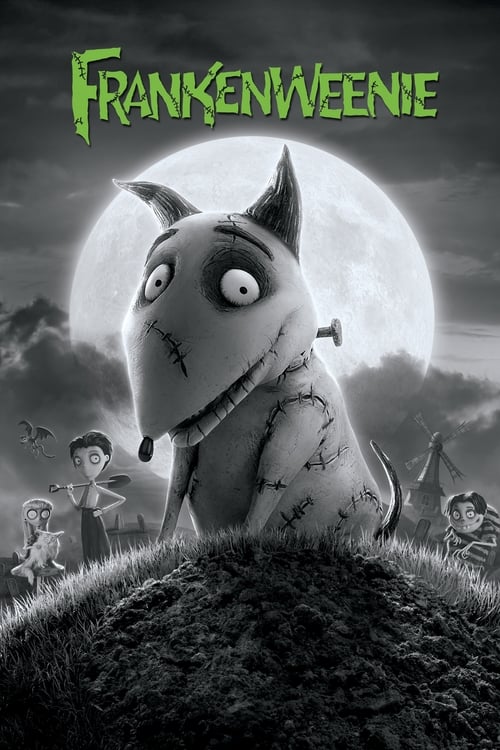
Frankenweenie
When a car hits young Victor's pet dog Sparky, Victor decides to bring him back to life the only way he knows how. But when the bolt-necked "monster" wreaks havoc and terror in the hearts of Victor's neighbors, he has to convince them that Sparky's still the good, loyal friend he was.
Despite a mid-range budget of $39.0M, Frankenweenie became a commercial success, earning $81.5M worldwide—a 109% return.
Nominated for 1 Oscar. 12 wins & 50 nominations


Plot Structure
Story beats plotted across runtime


Narrative Arc
Emotional journey through the story's key moments
Story Circle
Blueprint 15-beat structure
Arcplot Score Breakdown
Weighted: Precision (70%) + Arc (15%) + Theme (15%)
Frankenweenie (2012) exhibits deliberately positioned narrative architecture, characteristic of Tim Burton's storytelling approach. This structural analysis examines how the film's 15-point plot structure maps to proven narrative frameworks across 1 hour and 27 minutes. With an Arcplot score of 7.0, the film balances conventional beats with creative variation.
Structural Analysis
The Status Quo at 1 minutes (1% through the runtime) establishes Victor shows his homemade monster movie starring Sparky to his parents, establishing his love for science, filmmaking, and his dog - his only true friend in suburban New Holland.. The analysis reveals that this early placement immediately immerses viewers in the story world.
The inciting incident occurs at 10 minutes when Sparky chases a baseball into the street and is hit by a car, dying instantly. Victor loses his best friend and companion, shattering his world.. At 12% through the film, this Disruption aligns precisely with traditional story structure. This beat shifts the emotional landscape, launching the protagonist into the central conflict.
The First Threshold at 22 minutes marks the transition into Act II, occurring at 25% of the runtime. This reveals the protagonist's commitment to Victor makes the active choice to reanimate Sparky. He digs up the body, builds a laboratory in his attic, and during a thunderstorm harnesses lightning to bring Sparky back to life., moving from reaction to action.
At 44 minutes, the Midpoint arrives at 50% of the runtime—precisely centered, creating perfect narrative symmetry. Significantly, this crucial beat The other kids reanimate their own dead pets for the science fair, but without love or understanding - creating monsters. Mr. Rzykruski is fired and driven out of town. Victor realizes his secret has caused chaos and his "miracle" is spiraling out of control., fundamentally raising what's at risk. The emotional intensity shifts, dividing the narrative into clear before-and-after phases.
The Collapse moment at 65 minutes (75% through) represents the emotional nadir. Here, Edgar's reanimated nasty dog transforms into a giant Godzilla-like monster that threatens to destroy the town and captures Elsa. Sparky and Victor are rejected by everyone. Victor faces losing everything - his dog, his parents' trust, and his community., shows the protagonist at their lowest point. This beat's placement in the final quarter sets up the climactic reversal.
The Second Threshold at 69 minutes initiates the final act resolution at 80% of the runtime. Victor and Sparky work together to lure the monster to the windmill. The townspeople witness Sparky's loyalty and Victor's courage, realizing they were wrong. Victor gains allies as everyone finally understands that love, not science, was what mattered., demonstrating the transformation achieved throughout the journey.
Emotional Journey
Frankenweenie's emotional architecture traces a deliberate progression across 15 carefully calibrated beats.
Narrative Framework
This structural analysis employs systematic plot point analysis that identifies crucial turning points. By mapping Frankenweenie against these established plot points, we can identify how Tim Burton utilizes or subverts traditional narrative conventions. The plot point approach reveals not only adherence to structural principles but also creative choices that distinguish Frankenweenie within the animation genre.
Tim Burton's Structural Approach
Among the 19 Tim Burton films analyzed on Arcplot, the average structural score is 6.9, demonstrating varied approaches to story architecture. Frankenweenie represents one of the director's most structurally precise works. For comparative analysis, explore the complete Tim Burton filmography.
Comparative Analysis
Additional animation films include The Bad Guys, Puss in Boots and Violet Evergarden: Eternity and the Auto Memory Doll. For more Tim Burton analyses, see Beetlejuice, Dark Shadows and Pee-wee's Big Adventure.
Plot Points by Act
Act I
SetupStatus Quo
Victor shows his homemade monster movie starring Sparky to his parents, establishing his love for science, filmmaking, and his dog - his only true friend in suburban New Holland.
Theme
Victor's father suggests he needs to get out more and make human friends, hinting at the theme: "Sometimes you need to let go and connect with the world beyond what you can control."
Worldbuilding
Victor's isolated world is established: weird classmates, pressuring parents, science class with Mr. Rzykruski who teaches about electricity, and Victor's singular bond with Sparky. His father insists Victor join baseball to be "normal."
Disruption
Sparky chases a baseball into the street and is hit by a car, dying instantly. Victor loses his best friend and companion, shattering his world.
Resistance
Victor grieves deeply. Mr. Rzykruski demonstrates reanimation of a dead frog using electricity in science class, planting the idea. Victor debates whether it's possible - and right - to bring Sparky back, wrestling with hope and desperation.
Act II
ConfrontationFirst Threshold
Victor makes the active choice to reanimate Sparky. He digs up the body, builds a laboratory in his attic, and during a thunderstorm harnesses lightning to bring Sparky back to life.
Mirror World
Sparky comes back to life - stitched and bolted but still loving Victor. Their reunion is joyful, showing Victor that love can transcend death, though we see hints that this "miracle" may have consequences.
Premise
Victor secretly keeps Sparky hidden while enjoying having his friend back. He navigates keeping the secret from parents and neighbors. Edgar discovers the truth and blackmails Victor, and other classmates learn about reanimation, wanting to win the science fair.
Midpoint
The other kids reanimate their own dead pets for the science fair, but without love or understanding - creating monsters. Mr. Rzykruski is fired and driven out of town. Victor realizes his secret has caused chaos and his "miracle" is spiraling out of control.
Opposition
The reanimated creatures wreak havoc on New Holland during the science fair. Giant Sea-Monkeys, a were-rat, vampire cat, and mummy hamster terrorize the town. Victor and Sparky try to help, but the mob blames Victor for everything. His parents discover Sparky and are horrified.
Collapse
Edgar's reanimated nasty dog transforms into a giant Godzilla-like monster that threatens to destroy the town and captures Elsa. Sparky and Victor are rejected by everyone. Victor faces losing everything - his dog, his parents' trust, and his community.
Crisis
Victor must decide: hide in shame or take responsibility. He realizes that his love for Sparky was pure, but others acted from selfish motives. He chooses to face the monster and save the town, accepting that Sparky may be lost forever.
Act III
ResolutionSecond Threshold
Victor and Sparky work together to lure the monster to the windmill. The townspeople witness Sparky's loyalty and Victor's courage, realizing they were wrong. Victor gains allies as everyone finally understands that love, not science, was what mattered.
Synthesis
Victor and Sparky battle the monster at the burning windmill. Sparky sacrifices himself to save Victor and Elsa, pushing the monster into the flames. The windmill collapses. The town, moved by Sparky's heroism, helps revive him using their car batteries - communal love bringing him back properly.
Transformation
Victor walks Sparky through the neighborhood while neighbors greet them warmly. Sparky is accepted as he is - stitches and all. Victor has found community and learned that love shared and accepted is stronger than love that controls and hides.